
Feeling confused by calorie counts and why they don’t seem to work for you? You’re not alone. Women’s bodies are unique, and understanding your true energy needs is the key to lasting health and weight management.
Decoding Calorie Confusion for Women
It’s a scenario many women know all too well: you diligently track your calories, eat “less” than before, yet the scale barely budges, or worse, your energy crashes and you feel constantly hungry. The mainstream advice on calorie intake often feels like a one-size-fits-all solution that doesn’t account for the unique intricacies of female biology.
For years, women have been told to simply “eat less and move more” to manage their weight. While calorie balance is fundamental, this oversimplified message overlooks critical factors that profoundly impact a woman’s metabolism, hormone balance, and overall energy needs. We often find ourselves caught in a cycle of frustration, assuming we’re doing something wrong when, in fact, the guidance itself might be incomplete.
This confusion isn’t just about weight loss; it’s about understanding your body’s fundamental needs for energy to support everything from daily activities to hormonal health and reproductive function. Under-fueling can lead to a host of issues, including fatigue, mood swings, menstrual irregularities, and even bone density problems. On the other hand, consistently overestimating your needs can make weight management challenging.
In this comprehensive guide, we’re going to demystify one of the most crucial concepts in energy balance: Total Daily Energy Expenditure, or TDEE. We’ll explain what TDEE truly means for women, break down its components, and illustrate why it’s a far more accurate and empowering metric than just blindly cutting calories. Our goal is to provide you with evidence-based insights, helping you move beyond frustration to a place of informed, sustainable health practices, tailored to the unique rhythms of your body.
By the end of this article, you’ll have a clear understanding of your TDEE, how to estimate it, and why embracing this knowledge is a game-changer for women seeking balanced health, effective weight management, and vibrant energy. Let’s dive in and unlock the secrets to your unique energy blueprint.
What Does TDEE Mean? A Simple Explanation for Women
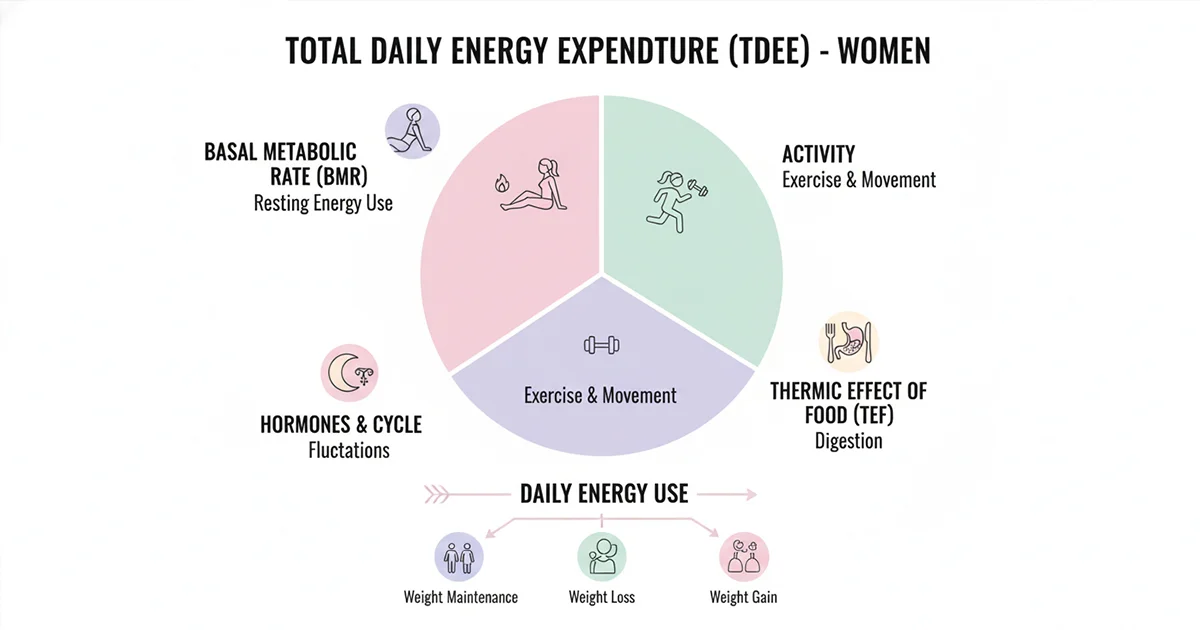
At its core, TDEE stands for Total Daily Energy Expenditure. In plain English, it’s the total number of calories your body burns in a 24-hour period to keep you alive and functioning. Think of it as your body’s daily energy budget – every calorie you eat either contributes to meeting this budget or, if in excess, gets stored.
Unlike simply looking at calorie intake from food, TDEE gives you the full picture of your body’s energy demands. It’s the sum of all the energy your body uses for every single process, from the beating of your heart to running a marathon.
Understanding your TDEE is crucial because it helps you align your calorie intake with your body’s actual needs. If you consistently eat below your TDEE without a strategic plan, your body might adapt in ways that hinder your goals. If you consistently eat above it, you’re likely to store the excess energy as fat. For women, who often face unique metabolic challenges and hormonal fluctuations, grasping TDEE is a foundational step towards sustainable health.
“The amount of energy expended by the body over a 24-hour period, including energy expended for basal metabolism, physical activity, and the thermic effect of food.”
– National Institutes of Health (NIH)
As Cleveland Clinic notes, recognizing the difference between the calories you consume and the energy your body expends is key to managing your weight and energy levels effectively. It’s not just about how much you eat, but how much your body truly needs to function optimally.
The 4 Core Components of TDEE (Very Important for Women)
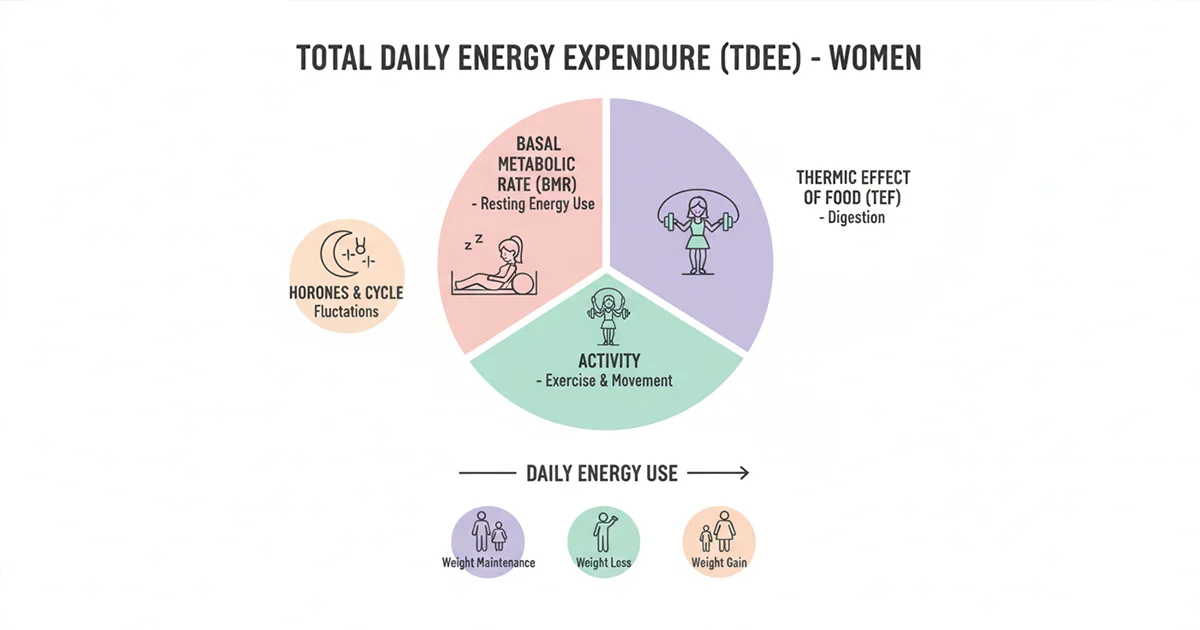
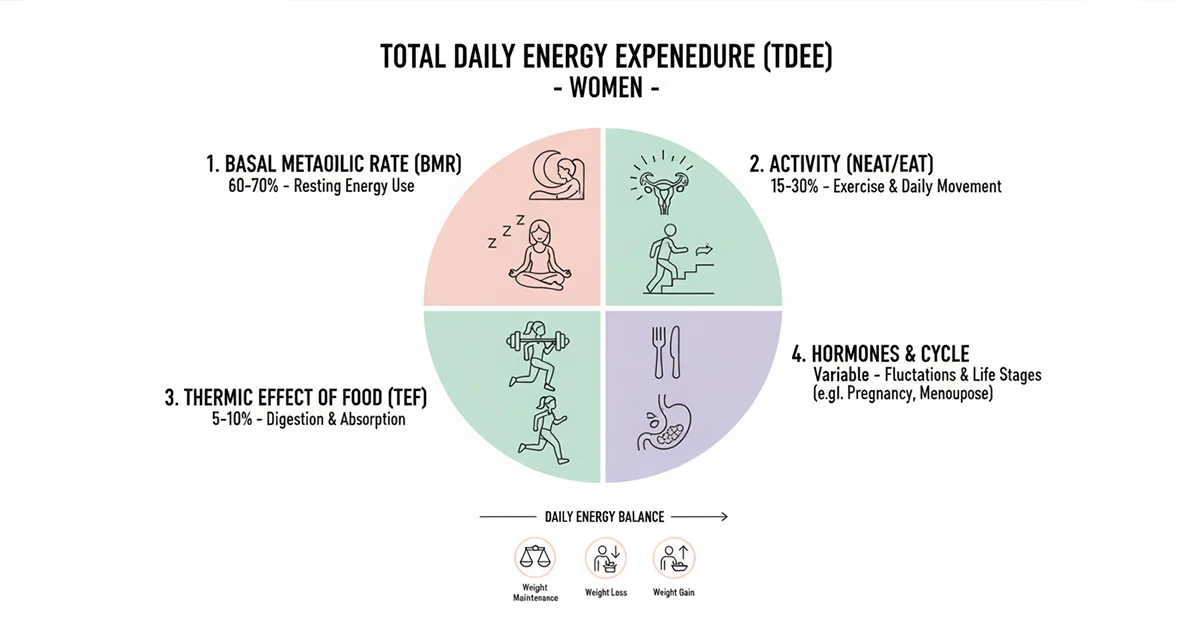
Your TDEE isn’t just one number; it’s the sum of four distinct ways your body uses energy throughout the day. For women, understanding each component is particularly insightful, as hormonal shifts and body composition can influence these factors differently than in men.
4.1 Basal Metabolic Rate (BMR)
Your Basal Metabolic Rate (BMR) is the number of calories your body burns at rest to maintain basic life-sustaining functions. This includes breathing, circulation, cell production, nutrient processing, and temperature regulation. Essentially, it’s the energy your body uses just to stay alive, even if you spent the entire day in bed.
Why women’s BMR differs: On average, women tend to have a lower BMR than men, primarily due to differences in body composition. Women naturally carry a higher percentage of body fat and less muscle mass compared to men. Since muscle tissue is metabolically more active than fat tissue, burning more calories at rest, this difference in composition contributes to a lower BMR for women. Hormones, particularly estrogen, also play a role, influencing metabolism and fat storage patterns.
“Your BMR is the energy your body needs to maintain basic physiological functions when you are at rest. This includes breathing, circulating blood, and maintaining body temperature.”
– Harvard Health Publishing
Building and maintaining muscle mass through strength training can be a powerful strategy for women to boost their BMR, which can be beneficial for overall metabolic health. The National Institutes of Health (NIH) consistently highlights the importance of lean body mass in determining resting energy expenditure.
4.2 Physical Activity & NEAT (Non-Exercise Activity Thermogenesis)
This component accounts for the calories you burn through movement. It’s often divided into two categories:
- Exercise Activity: Intentional, structured physical activity like running, lifting weights, swimming, or playing sports.
- Non-Exercise Activity Thermogenesis (NEAT): All the calories burned through movement that isn’t formal exercise. This includes walking, fidgeting, gardening, cleaning, standing, taking the stairs, and even talking.
Why NEAT matters for women: For many women, NEAT can contribute significantly to daily calorie expenditure. Sedentary jobs or lifestyles can drastically reduce NEAT, even if you exercise regularly. Increasing NEAT by simply moving more throughout the day can have a profound impact on your TDEE without requiring dedicated gym time. As the American Council on Exercise (ACE) points out, “NEAT can account for a substantial portion of daily energy expenditure and can be highly variable between individuals, influencing overall TDEE.”
4.3 Thermic Effect of Food (TEF)
The Thermic Effect of Food (TEF), also known as diet-induced thermogenesis (DIT), is the energy your body uses to digest, absorb, transport, and store the nutrients from the food you eat. It’s like a small energy tax on your meals.
Why protein matters: Different macronutrients have different TEF values. Protein has the highest TEF, meaning your body burns more calories to process protein than it does for carbohydrates or fats. Approximately 20-30% of the calories from protein are used for its digestion and metabolism, compared to 5-10% for carbs and 0-3% for fats. For women, ensuring adequate protein intake can therefore contribute to a slightly higher TDEE and support satiety, which is beneficial for weight management. The Academy of Nutrition and Dietetics emphasizes the metabolic advantages of protein-rich meals.
4.4 Hormones & Female Biology
This is where TDEE for women often gets more nuanced. Hormonal fluctuations throughout the menstrual cycle, pregnancy, perimenopause, and menopause can significantly influence a woman’s TDEE.
- Estrogen & Progesterone: These hormones play a role in metabolism and fat storage. During certain phases of the menstrual cycle, some women may experience slight metabolic shifts.
- Thyroid Hormones: Thyroid hormones are major regulators of metabolism. Hypothyroidism (underactive thyroid) can significantly lower BMR and TDEE, while hyperthyroidism (overactive thyroid) can increase it. Thyroid issues are more prevalent in women.
- Menstrual Cycle: Some research suggests a slight increase in BMR during the luteal phase (after ovulation) of the menstrual cycle, due to increased progesterone levels and a rise in body temperature. While often subtle, these fluctuations can collectively impact energy needs over time.
The Endocrine Society highlights the complex interplay between hormones and metabolism, underscoring that these biological factors make a woman’s TDEE a dynamic rather than static number, requiring a flexible approach to energy management.
Why TDEE Matters More for Women
While TDEE is a critical concept for everyone, its implications are particularly pronounced for women due to unique physiological and societal factors. Understanding why TDEE is so relevant for female health can help women navigate their wellness journeys with greater clarity and effectiveness.
Metabolic Adaptation and Under-fueling Risks
Women are often conditioned to believe that less is always more when it comes to calories, especially for weight loss. However, consistently eating significantly below your body’s TDEE can trigger a protective mechanism known as metabolic adaptation (also called adaptive thermogenesis). In simple terms, your body perceives this as a famine and attempts to conserve energy by slowing down your metabolism.
This can lead to a host of issues, including:
- Reduced BMR: Your body becomes more “efficient” at burning calories, meaning it needs fewer to function.
- Decreased NEAT: You might unconsciously move less, feel more fatigued, and have less energy for daily tasks.
- Hormonal Imbalances: Chronic under-fueling can disrupt the delicate balance of hormones like leptin (satiety), ghrelin (hunger), thyroid hormones, and sex hormones, leading to increased hunger, mood swings, and menstrual irregularities. The Mayo Clinic emphasizes the dangers of chronic energy restriction on hormonal health.
For women, who are already prone to certain hormonal sensitivities, under-fueling can quickly spiral into more serious health concerns beyond just a weight loss plateau. Harvard Health has extensively covered the detrimental effects of long-term calorie restriction on women’s bodies, including bone density loss and reproductive dysfunction.
Weight-Loss Plateaus Explained
Many women experience frustrating weight-loss plateaus, even when they feel they are “doing everything right.” A common reason for this is a misunderstanding of TDEE. As you lose weight, your body mass decreases, which naturally lowers your BMR. This means your TDEE also decreases. If you continue to eat the same amount of calories that previously led to weight loss, you might now be eating at your new maintenance level, or even in a surplus, leading to a plateau or even weight regain.
Furthermore, if metabolic adaptation has occurred due to aggressive calorie restriction, your body might be burning fewer calories than a standard TDEE calculator would predict for your current weight. This makes accurate TDEE estimation and regular adjustments even more crucial for women aiming for sustainable progress.
By understanding your TDEE, you can make informed adjustments to your calorie intake as your body changes, rather than blindly cutting further, which often backfires. It empowers you to work with your body, not against it, fostering a more sustainable and healthy relationship with food and fitness.
TDEE vs. BMR: What’s the Difference for Women?
These two terms are often used interchangeably, but for women, understanding their distinct meanings is critical. While related, BMR and TDEE represent very different aspects of your body’s energy needs, and mistaking one for the other can lead to inaccurate calorie targets.
Basal Metabolic Rate (BMR)
As we discussed, BMR is the energy your body expends purely for essential life functions at complete rest. It’s the minimum number of calories needed to keep your heart beating, lungs breathing, and organs functioning. Imagine lying perfectly still in a temperature-controlled room for 24 hours – the calories you burn would be your BMR.
Why BMR alone is misleading for women: Relying solely on your BMR to determine your daily calorie needs is a common mistake. Your BMR only accounts for about 60-75% of your total daily calorie expenditure. If a woman were to consume only her BMR calories, she would likely experience severe fatigue, nutrient deficiencies, and metabolic slowdown, as this figure does not account for any movement or digestion throughout the day. For most women, living a vibrant, active life requires significantly more calories than their BMR.
Total Daily Energy Expenditure (TDEE)
TDEE, on the other hand, is your BMR *plus* the calories you burn from all other activities throughout the day, including physical activity, NEAT, and the thermic effect of food. It’s the most comprehensive estimate of your total daily energy needs.
The practical explanation: TDEE is the number you want to pay attention to when considering your calorie intake for maintenance, weight loss, or weight gain. It reflects your actual daily energy burn, including your workouts, your job, your errands, and even the process of eating. For women, whose activity levels can fluctuate and whose bodies demand energy for complex hormonal processes, TDEE provides a far more realistic and actionable target.
Comparison Table: BMR vs. TDEE for Women
| Feature | Basal Metabolic Rate (BMR) | Total Daily Energy Expenditure (TDEE) |
|---|---|---|
| Definition | Calories burned at complete rest to maintain basic life functions. | Total calories burned in a 24-hour period, including BMR, activity, and digestion. |
| Components | Breathing, circulation, organ function, cell maintenance. | BMR + Physical Activity (exercise & NEAT) + Thermic Effect of Food + Hormonal factors. |
| Use for Calorie Goals | Not recommended as a direct calorie target; it’s a foundational component. | The most accurate estimate for daily calorie needs (maintenance, deficit, surplus). |
| Reflects Activity | No, assumes complete rest. | Yes, accounts for all levels of daily movement and exercise. |
| Best for Women Who Are… | Understanding their baseline metabolic function. | Planning calorie intake for any health goal (weight management, energy). |
In essence, think of BMR as the engine idling, and TDEE as the engine actually driving, accounting for all the stops, starts, and varied terrains of your day. For women navigating health and fitness, focusing on TDEE provides a more complete and empowering picture of their unique energy landscape.

How to Calculate Your TDEE Accurately
Estimating your TDEE is a powerful step towards understanding your body’s energy needs. While no calculator can be 100% precise (as individual variations are vast), using established formulas provides a strong starting point. The process generally involves two main steps: calculating your BMR, then applying an activity multiplier.
Step 1: Calculate Your Basal Metabolic Rate (BMR)
Several formulas exist to estimate BMR. The most common and widely cited for women are the Mifflin-St Jeor Equation and the Harris-Benedict Equation. Most online calculators use one of these or a similar variant.
The Mifflin-St Jeor Equation is generally considered more accurate for a wider population, including women:
For Women: BMR = (10 × weight in kg) + (6.25 × height in cm) – (5 × age in years) – 161
You’ll need your weight in kilograms (lbs / 2.2046), height in centimeters (inches × 2.54), and age in years. For example, a 30-year-old woman who is 5’4″ (162.5 cm) and weighs 140 lbs (63.5 kg) would calculate:
BMR = (10 × 63.5) + (6.25 × 162.5) – (5 × 30) – 161
BMR = 635 + 1015.625 – 150 – 161
BMR ≈ 1339.6 calories
Step 2: Apply an Activity Multiplier
Once you have your BMR, you multiply it by an activity factor that reflects your average daily movement and exercise level. This is where your individual lifestyle plays a significant role. Be honest with yourself here; most people tend to overestimate their activity levels.
- Sedentary: Little to no exercise, desk job (BMR x 1.2)
- Lightly Active: Light exercise/sports 1-3 days/week (BMR x 1.375)
- Moderately Active: Moderate exercise/sports 3-5 days/week (BMR x 1.55)
- Very Active: Hard exercise/sports 6-7 days/week (BMR x 1.725)
- Extra Active: Very hard exercise/physical job/training twice a day (BMR x 1.9)
Using our example woman with a BMR of ~1340 calories, if she is “Lightly Active” (e.g., goes for walks 2-3 times a week, otherwise has a desk job):
TDEE = 1340 × 1.375
TDEE ≈ 1842.5 calories
Why Formulas Vary and Realistic Expectations
It’s important to recognize that these are estimates. Different calculators might use slightly different formulas or activity factors, leading to minor variations. The goal isn’t absolute precision but rather a well-informed starting point. Your true TDEE can fluctuate day-to-day based on your specific activity, stress levels, and for women, hormonal shifts.
Think of your calculated TDEE as a dynamic baseline. It’s a fantastic tool for making informed decisions about your nutrition, but it’s crucial to also listen to your body and adjust as needed. Regularly reassessing your activity level and recalculating your TDEE (especially after significant weight changes) will ensure your calorie targets remain aligned with your body’s current needs.
Important Disclaimer: These calculations provide an estimate. They are not a substitute for professional medical or nutritional advice. Individual metabolic rates can vary. Always consult with a healthcare professional or registered dietitian for personalized guidance. Do NOT give exact calorie prescriptions.
Ready to get your personalized estimate? Our dedicated tool simplifies this process for you:

How TDEE Supports Healthy Weight Loss for Women
Once you understand your TDEE, you hold a powerful tool for achieving sustainable weight management. The concept is straightforward: to lose weight, you need to consume slightly fewer calories than your body burns – creating a calorie deficit. To maintain weight, you eat roughly at your TDEE. To gain weight, you eat slightly above it.
Maintenance vs. Deficit Concept
- Maintenance Calories: This is your TDEE. Eating at this level means you are supplying your body with enough energy to maintain your current weight, given your current activity level.
- Calorie Deficit: To lose weight, you need to create a deficit – meaning you consume fewer calories than your TDEE. A common recommendation for sustainable weight loss is a deficit of 300-500 calories per day below your TDEE. This typically leads to a healthy weight loss of 0.5 to 1 pound per week.
For example, if your TDEE is 2000 calories, a moderate deficit might involve consuming 1500-1700 calories per day. This approach is far more effective and sustainable than arbitrarily cutting calories or following restrictive diets that don’t account for your unique energy needs.
Safe, Sustainable Approach
The beauty of using TDEE for weight loss lies in its emphasis on a safe and sustainable approach. Rather than drastic, unsustainable cuts that can harm your metabolism and overall health (especially for women), TDEE allows for a controlled and manageable reduction in calories.
- Avoids Extreme Deficits: Understanding your TDEE helps you avoid cutting too many calories, which can trigger metabolic adaptation, lead to nutrient deficiencies, and disrupt hormonal balance. For women, this is particularly important to protect menstrual health, bone density, and overall vitality.
- Flexibility: TDEE provides a framework, not a rigid prison. You can adjust your calorie intake based on your activity levels. If you have a very active day, your TDEE is higher, and you might need slightly more fuel.
- Empowerment: Knowing your TDEE gives you agency. You’re not guessing; you’re making informed choices based on your body’s energy requirements, which can lead to better adherence and long-term success.
Remember, the goal is not just to lose weight, but to improve your health in a way that is lasting and nourishing for your body. Using TDEE helps you achieve this balance, ensuring you fuel your body adequately while still making progress towards your goals. If you’re interested in calculating your specific calorie deficit for healthy weight loss, our tool can help:
You can also learn more in-depth about sustainable weight loss strategies for women in our article: “How Many Calories Should a Woman Eat to Lose Weight?“
Special Considerations for Women and TDEE
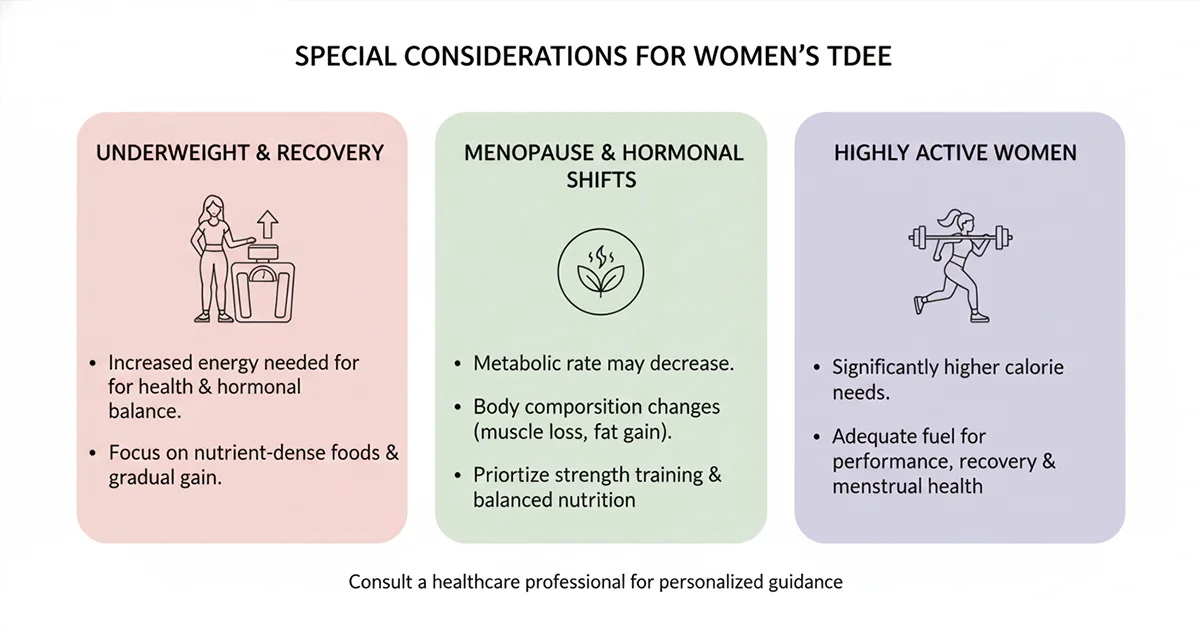
While the core principles of TDEE apply universally, women’s bodies undergo specific physiological changes that necessitate a nuanced approach to calculating and interpreting energy needs. Recognizing these factors is crucial for optimal health and effective management.
9.1 Underweight Women: No Weight-Loss Advice
Critical Safety Note: This article is NOT intended to provide weight-loss advice for underweight individuals. If you are underweight (typically defined as a BMI below 18.5, though individual assessments are key), focusing on weight loss can be detrimental to your health. Your priority should be on achieving a healthy weight and ensuring adequate nutrition for your body’s needs. Please consult a healthcare professional or registered dietitian for personalized guidance on safe weight management and nutritional support.
For underweight women, maintaining or gaining weight in a healthy manner often involves consuming calories at or above their TDEE, along with strength training to build muscle mass. The risks associated with being underweight include weakened immune function, nutrient deficiencies, bone loss, and reproductive issues. It’s imperative that underweight individuals prioritize overall health and seek expert advice rather than attempting to reduce calorie intake.
9.2 Perimenopause & Menopause: Metabolic Shifts
The transition through perimenopause and into menopause brings significant hormonal changes, primarily a decline in estrogen, which can impact a woman’s metabolism and body composition. Many women report struggling with weight gain around the midsection during this time, even without significant changes in diet or activity.
- Metabolic Slowdown: Estrogen plays a role in regulating metabolism. Its decline can contribute to a slight decrease in BMR.
- Body Composition Changes: There’s often a shift from fat storage around the hips and thighs to increased visceral fat (belly fat), which is metabolically less active. This can further contribute to a lower TDEE.
- Reduced Muscle Mass: Age-related muscle loss (sarcopenia) accelerates during this period if not actively countered with strength training, further lowering BMR.
The North American Menopause Society emphasizes that during this life stage, women often need to adjust their TDEE estimates, potentially slightly lowering calorie intake or increasing activity levels to maintain weight. Prioritizing nutrient-dense foods, adequate protein, and consistent strength training becomes even more vital to preserve muscle mass and support metabolic health.
9.3 Active / Athletic Women: Energy Availability and RED-S Awareness
For highly active or athletic women, calculating TDEE accurately is paramount, not just for performance, but for preventing a condition called Relative Energy Deficiency in Sport (RED-S).
- High Energy Demands: Elite athletes or women engaged in intense training have significantly higher TDEE due to their elevated activity levels. Under-fueling can have severe consequences.
- Relative Energy Deficiency in Sport (RED-S): This syndrome, highlighted by the International Olympic Committee (IOC) guidelines, describes impaired physiological function caused by low energy availability (LEA). LEA occurs when an athlete’s dietary energy intake is insufficient to meet the energy expenditure required for daily living, growth, and exercise.
- Symptoms of RED-S in Women: This can manifest as menstrual dysfunction (amenorrhea), impaired bone health (stress fractures), compromised immune function, decreased performance, increased injury risk, and psychological disturbances.
Active women must ensure their calorie intake adequately matches their elevated TDEE to support training, recovery, and overall health. Overly restrictive dieting in the pursuit of leanness can be counterproductive and dangerous. TDEE calculations for very active women need to be vigilant and often require professional guidance to ensure sufficient energy availability.
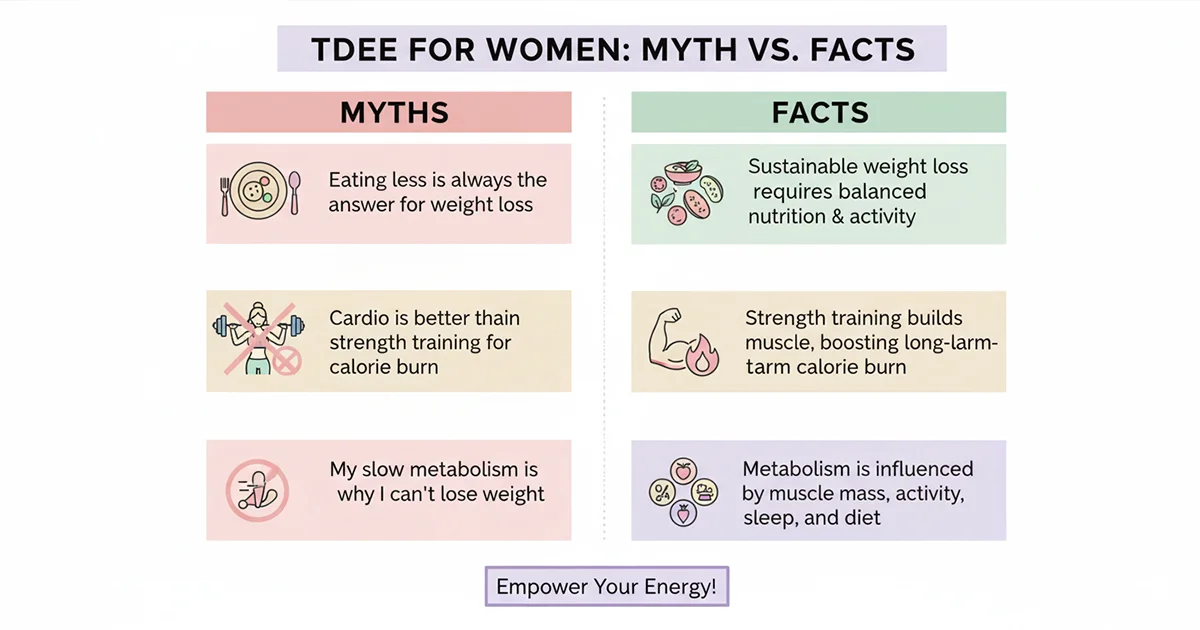
Common Myths About TDEE and Women
Misinformation often circulates around metabolic health, and TDEE is no exception. Let’s debunk some common myths that particularly impact women’s understanding of their energy needs.
Myth 1: “My TDEE is fixed and never changes.”
Fact: Your TDEE is a dynamic number that can fluctuate based on several factors. While your BMR is relatively stable, it can decrease with age and muscle loss, and slightly increase with muscle gain. Your activity level, including both structured exercise and NEAT, can vary significantly day-to-day and week-to-week, directly impacting your TDEE. For women, hormonal shifts during the menstrual cycle or life stages like perimenopause can also cause subtle changes. Regularly reassessing your activity and TDEE is crucial for accuracy.
Myth 2: “Lowering calories as much as possible is always better for weight loss.”
Fact: This is one of the most damaging myths, especially for women. While a calorie deficit is necessary for weight loss, an extreme or prolonged deficit can be counterproductive and harmful. As discussed, your body can enter metabolic adaptation, slowing down your metabolism and leading to plateaus. More critically, severe calorie restriction can cause hormonal imbalances, nutrient deficiencies, fatigue, mood disturbances, and for women, impact menstrual cycles and bone density. A moderate, sustainable deficit based on your TDEE is far more effective and healthier in the long run.
Myth 3: “Online TDEE calculators don’t work, they’re always inaccurate.”
Fact: While no online calculator can be 100% perfectly precise for every individual (due to unique genetics, specific body composition, and minute daily variations), reputable TDEE calculators use scientifically validated formulas (like Mifflin-St Jeor) to provide a very good estimate. They offer an excellent starting point and are far more accurate than guessing your calorie needs. The key is to be honest about your activity level and to understand that the number is a guide, not an absolute. Using an online TDEE calculator is a practical and accessible way for most women to get a realistic estimate of their energy expenditure.
Myth 4: “My metabolism is ‘broken’ because I’m a woman.”
Fact: While women’s metabolisms do differ from men’s (e.g., typically lower BMR due to body composition, hormonal fluctuations), this does not mean a woman’s metabolism is inherently “broken” or destined for struggle. These are natural biological differences. Understanding your TDEE helps you work *with* your unique female physiology, not against it. Factors like muscle mass, activity levels, sleep, stress, and nutrition play a far more significant role in metabolic health than gender alone. Empowering yourself with knowledge about your TDEE allows you to optimize these factors for your body.
Frequently Asked Questions About TDEE for Women
What is a “good” TDEE for women?
There isn’t a single “good” TDEE, as it’s highly individual. A healthy TDEE for a woman depends on her age, height, weight, and activity level. For example, a very active young woman might have a TDEE of 2500 calories, while a lightly active older woman might have a TDEE of 1700 calories. Both could be perfectly “good” for their individual needs. The “good” TDEE is the one that accurately reflects your body’s current energy expenditure.
Does TDEE change with age for women?
Yes, TDEE typically decreases with age for women. This is mainly due to a natural decline in Basal Metabolic Rate (BMR) as muscle mass tends to decrease and hormonal changes (like menopause) occur. Lifestyle changes, such as becoming less active, also contribute to a lower TDEE over time. Regular strength training can help mitigate age-related muscle loss and keep TDEE higher.
How often should women recalculate their TDEE?
It’s a good idea to recalculate your TDEE if there are significant changes in your life:
- If you’ve lost or gained a significant amount of weight (e.g., 10+ pounds).
- If your activity level substantially changes (e.g., starting a new exercise routine, changing jobs from active to sedentary).
- Periodically, every 3-6 months, just to ensure accuracy, especially as you age.
Small daily fluctuations don’t require recalculation, but significant shifts do.
Can a woman’s TDEE be too low?
While TDEE is a reflection of energy expenditure, it’s possible for a woman’s metabolic rate to be suppressed due to chronic under-eating, excessive exercise without adequate fuel, or underlying health conditions (like hypothyroidism). If your calculated TDEE seems unusually low for your body size and activity, or if you experience symptoms like extreme fatigue, hormonal disruptions, or constant hunger, it might be an indication to consult a healthcare professional. A “too low” TDEE usually points to a body in distress due to insufficient energy availability.
Is TDEE the same every day?
No, TDEE is not exactly the same every day. While your BMR is relatively constant, your physical activity (both exercise and NEAT) varies daily. On a highly active day, your TDEE will be higher than on a sedentary day. Hormonal fluctuations during the menstrual cycle can also cause slight daily variations in TDEE. Therefore, TDEE is best understood as an average daily expenditure over a week or longer.
Do hormones affect TDEE for women?
Absolutely. Hormones play a significant role in a woman’s TDEE. Estrogen and progesterone influence metabolism and fat storage. Thyroid hormones are major regulators of BMR. Changes during the menstrual cycle, pregnancy, and menopause can all lead to shifts in energy expenditure. For instance, some women experience a slight increase in BMR during the luteal phase of their cycle. Understanding these hormonal influences helps women better interpret their energy needs.
Conclusion: Your Empowered Path to Energy Balance
Navigating the world of calories, metabolism, and weight management can feel overwhelming, especially for women whose bodies are uniquely dynamic. However, by truly understanding your Total Daily Energy Expenditure (TDEE), you gain an invaluable tool – a personalized roadmap to better health, sustainable weight management, and abundant energy.
We’ve explored how TDEE is more than just a number; it’s a comprehensive reflection of your body’s energy demands, encompassing your Basal Metabolic Rate, the energy from all your daily movements (NEAT and exercise), the calories burned through digestion, and the intricate dance of your hormones. For women, recognizing the profound impact of these individual components, particularly hormonal fluctuations and the risks of under-fueling, is not just beneficial, it’s essential.
Moving beyond the restrictive “eat less” mentality, TDEE empowers you to work intelligently with your body, not against it. It allows for a sustainable calorie deficit when weight loss is desired, supports healthy energy availability for active lifestyles, and encourages thoughtful adjustments during significant life stages like perimenopause.
Remember, your journey to health is unique. Embrace this knowledge, listen to your body, and don’t hesitate to seek professional guidance when needed. You are now equipped with the understanding to make informed choices that nourish your body, support your metabolism, and help you thrive.
Take the next step in understanding your body’s unique energy needs today: