
If you’ve ever stood in front of your fridge wondering whether you should eat that snack or skip it, you’re not alone. Figuring out how many calories you should eat to lose weight can feel overwhelming, especially with so much conflicting information out there. But here’s the good news: understanding your calorie needs doesn’t have to be complicated, and it’s one of the most empowering steps you can take toward sustainable weight loss.
Whether you’re juggling a full-time job, raising kids, managing stress, or simply trying to feel more comfortable in your own skin, this guide is here to help you navigate the numbers with confidence and compassion. Let’s break down exactly what you need to know about calories, deficits, and creating a plan that works for your real life.
Most women need between 1,200 to 1,800 calories per day to lose weight safely. The exact number depends on your age, current weight, height, activity level, and metabolism. A safe calorie deficit is typically 500-750 calories below your Total Daily Energy Expenditure (TDEE), resulting in 1-1.5 pounds of weight loss per week.
Understanding Your Calorie Needs: The Foundation
What Are Calories, Really?
Let’s start with the basics. Calories are simply units of energy that your body uses to function. Every breath you take, every step you walk, every thought you think, your body needs energy for all of it. The food and drinks you consume provide that energy in the form of calories.
Think of calories like the fuel you put in your car. Just as your car needs the right amount of gas to run efficiently, your body needs the right amount of calories to maintain your current weight. Consume more than your body uses, and you’ll store the excess as fat. Consume less, and your body will tap into those fat stores for energy, leading to weight loss.
Why Women’s Calorie Needs Are Unique
Here’s something that might frustrate you: women generally need fewer calories than men. It’s not fair, but it’s biology. Women typically have less muscle mass and more body fat than men, and muscle burns more calories at rest than fat does. Additionally, women’s bodies are designed to hold onto fat stores more efficiently for reproductive purposes.
But that’s not all. Your calorie needs as a woman also fluctuate based on:
- Hormonal cycles: You might notice you’re hungrier right before your period; that’s real, and it’s because your body’s energy needs actually do increase slightly during the luteal phase of your menstrual cycle.
- Age: As we get older, our metabolism naturally slows down. Women over 40 often find they need fewer calories than they did in their twenties.
- Life stage: Pregnancy, breastfeeding, and menopause all significantly impact your calorie needs.
- Stress levels: Chronic stress affects hormones like cortisol, which can influence both your appetite and how your body stores fat.
The Three Components of Daily Calorie Burn
Your body burns calories in three main ways, and understanding this helps you see the bigger picture of weight loss:
1. Basal Metabolic Rate (BMR)
This is the number of calories your body needs just to keep the lights on, breathing, circulating blood, producing cells, and processing nutrients. Your BMR accounts for about 60-75% of your total daily calorie burn. Even if you stayed in bed all day, your body would still burn these calories.
2. Activity Thermogenesis
This includes both structured exercise (like your morning jog or yoga class) and non-exercise activity thermogenesis, or NEAT. NEAT is all the movement you do throughout the day that isn’t planned exercise, walking to your car, doing laundry, fidgeting at your desk, playing with your kids. NEAT can account for anywhere from 15-30% of your daily calorie burn, and it’s more variable than people realize.
3. Thermic Effect of Food (TEF)
Believe it or not, your body burns calories digesting food. This accounts for about 10% of your daily calorie burn. Protein has the highest thermic effect, which is one reason why higher-protein diets can support weight loss.
Calculating Your Calorie Needs for Weight Loss
Step 1: Determine Your TDEE
Your Total Daily Energy Expenditure (TDEE) is the total number of calories you burn in a day. It’s your BMR plus all your activities. This is the magic number you need to know because your calorie deficit will be based on this.
While there are several formulas to calculate TDEE, the Mifflin-St Jeor equation is considered one of the most accurate for women:
Mifflin-St Jeor Formula for Women:
BMR = (10 × weight in kg) + (6.25 × height in cm) − (5 × age in years) − 161
Then multiply your BMR by your activity level:
- Sedentary (little or no exercise): BMR × 1.2
- Lightly active (light exercise 1-3 days/week): BMR × 1.375
- Moderately active (moderate exercise 3-5 days/week): BMR × 1.55
- Very active (hard exercise 6-7 days/week): BMR × 1.725
- Extremely active (physical job or training twice per day): BMR × 1.9
Don’t want to do the math yourself? That’s completely understandable. You can use our TDEE Calculator to get your personalized number in seconds.
Step 2: Create Your Calorie Deficit
Once you know your TDEE, weight loss comes down to creating a calorie deficit. This means eating fewer calories than your body burns. But here’s where many women go wrong: they create too large a deficit, thinking faster is better.
A safe and sustainable calorie deficit for women is typically 500-750 calories below your TDEE. This translates to losing about 1-1.5 pounds per week, which research shows is ideal for preserving muscle mass and keeping your metabolism healthy.
| Activity Level | TDEE Range | Weight Loss Calorie Range |
|---|---|---|
| Sedentary (desk job, minimal activity) | 1,600-1,800 calories | 1,200-1,300 calories |
| Lightly Active (light exercise 1-3 days) | 1,800-2,000 calories | 1,300-1,500 calories |
| Moderately Active (exercise 3-5 days) | 2,000-2,200 calories | 1,500-1,700 calories |
| Very Active (intense exercise 6-7 days) | 2,200-2,400 calories | 1,700-1,900 calories |
Note: These are general estimates for women aged 25-50 of average height (5’4″-5’6″). Individual needs vary.
The 1,200 Calorie Minimum: Why It Matters
You’ll notice that none of the recommendations above go below 1,200 calories. That’s intentional and important. 1,200 calories per day is generally considered the minimum for women to get adequate nutrition and support basic bodily functions.
Going below this threshold regularly can lead to:
- Nutrient deficiencies that affect your hair, skin, energy, and immune system
- Muscle loss, which actually slows your metabolism
- Hormonal imbalances, including disrupted menstrual cycles
- Extreme hunger and fatigue that make the diet unsustainable
- A damaged relationship with food and your body
Important Note: If calculations suggest you need fewer than 1,200 calories to lose weight, it’s time to focus on increasing your activity level rather than further decreasing calories. Consider consulting with a registered dietitian or healthcare provider for personalized guidance.
Factors That Influence Your Personal Calorie Needs
Age and Metabolism
Here’s a truth that might sting a little: your metabolism slows down as you age. Starting around age 30, women lose about 3-8% of muscle mass per decade, and this accelerates after 60. Since muscle burns more calories than fat, this means your calorie needs naturally decrease over time.
Women in their 20s might maintain their weight at 2,000 calories, while women in their 50s might need only 1,600-1,700 calories for maintenance. This doesn’t mean weight loss becomes impossible as you age; it just means you need to adjust your expectations and strategies.
Current Weight and Body Composition
It might seem counterintuitive, but heavier bodies burn more calories at rest because there’s simply more tissue to maintain. This means if you have more weight to lose, you might be able to eat more calories and still create a deficit. As you lose weight, your calorie needs will decrease, and you’ll need to adjust your intake accordingly.
Body composition matters too. Two women of the same weight and height can have very different calorie needs if one has significantly more muscle mass. This is why strength training is so valuable for weight loss; more muscle means a higher metabolic rate.
Activity Level: Be Honest With Yourself
This is where many women overestimate. A 30-minute walk three times per week doesn’t make you “very active,” even though it’s great for your health. Most women with desk jobs and moderate exercise routines fall into the “lightly active” or “moderately active” categories.
When in doubt, start by calculating your needs using a lower activity multiplier. You can always adjust upward if you’re losing weight too quickly or feeling overly fatigued.
Hormones and Medical Conditions
Conditions like polycystic ovary syndrome (PCOS), hypothyroidism, and insulin resistance can make weight loss more challenging by affecting your metabolism and how your body stores fat. If you have any of these conditions, the standard calorie calculations might not work perfectly for you, and working with a healthcare provider becomes even more important.
Similarly, certain medications, including some antidepressants, birth control pills, and corticosteroids, can affect appetite and metabolism. If you’re on medication and struggling with weight loss despite creating a calorie deficit, talk to your doctor about alternatives or additional strategies.
Sleep and Stress: The Hidden Factors
Here’s something you might not expect in a calorie guide: your sleep quality and stress levels significantly impact how your body responds to a calorie deficit.
Poor sleep disrupts hormones like leptin and ghrelin, which regulate hunger and fullness. When you’re sleep-deprived, you tend to feel hungrier and crave high-calorie foods. Research from the National Institutes of Health shows that women who sleep fewer than six hours per night have higher rates of obesity.
Chronic stress keeps cortisol levels elevated, which can promote fat storage, especially around your midsection. It also increases cravings for comfort foods. Managing stress through exercise, meditation, or therapy isn’t just good for your mental health; it’s a legitimate weight loss strategy.
Creating a Sustainable Calorie Deficit
The Diet vs. Lifestyle Mindset
Let’s be real for a moment: if you’re thinking of your calorie goal as a temporary diet you’ll follow until you reach your goal weight, it’s probably not going to work long-term. Most diets fail not because women lack willpower, but because they’re unsustainable.
Instead of a diet, think of this as finding your new normal. The eating pattern that helps you lose weight should be one you can maintain afterward for weight maintenance, just with slightly more calories. This is why extreme calorie restriction rarely works. You can’t eat 1,000 calories a day for three months, lose weight, and then go back to 2,200 calories without regaining the weight.
Tracking vs. Intuitive Eating: Finding Your Balance
There are two main approaches to managing your calorie deficit, and the right one depends on your personality and history with food.
Calorie Tracking
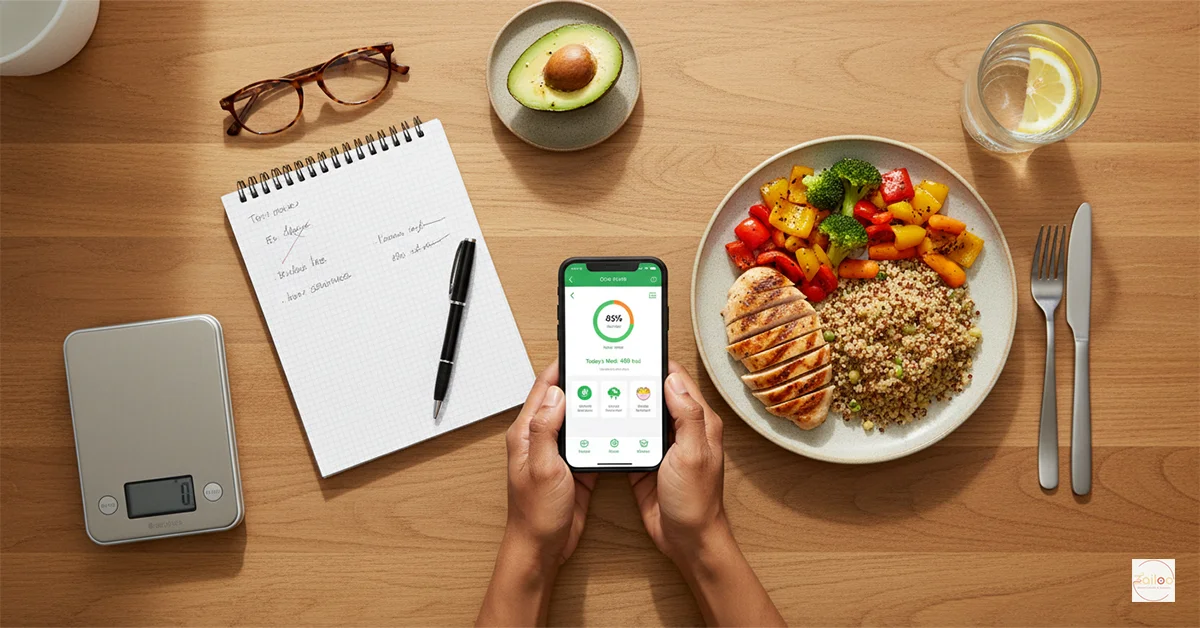
Using an app like MyFitnessPal or Lose It! to log everything you eat gives you precise control and can be incredibly educational. Many women are genuinely surprised to learn how many calories are in their regular meals. Tracking helps you identify patterns, understand portion sizes, and stay accountable.
However, tracking isn’t for everyone. Some women find it triggers obsessive thoughts about food or exacerbates disordered eating patterns. If you’ve struggled with an eating disorder or find that tracking makes you anxious, this might not be the right approach for you.
Intuitive Eating Principles
An alternative approach involves learning to recognize your body’s hunger and fullness cues, eating mindfully, and making generally healthier choices without counting every calorie. This might include strategies like:
- Using smaller plates to naturally reduce portions
- Filling half your plate with vegetables at each meal
- Eating slowly and stopping when you’re 80% full
- Distinguishing between physical hunger and emotional eating
You can also try a hybrid approach: track your food for a week or two to get a baseline understanding of your intake, then transition to more intuitive eating while occasionally checking in with tracking to make sure you’re on target.
The Power of Small Changes
A 500-calorie deficit might sound daunting, but it can come from surprisingly simple swaps:
- Switching from a large latte with whole milk to a medium with almond milk saves about 100 calories
- Using cooking spray instead of a tablespoon of oil saves 120 calories
- Choosing grilled chicken instead of fried saves 200+ calories
- Swapping regular soda for sparkling water saves 150 calories per can
- Eating a smaller serving of pasta (1 cup instead of 2) saves 200 calories
You don’t have to overhaul your entire life overnight. Small, consistent changes add up to significant results over time.

What to Eat: Quality Matters as Much as Quantity
Macronutrients: The Building Blocks
While calories are important for weight loss, what those calories come from matters for how you feel, your energy levels, and your ability to stick with your plan. The three macronutrients, protein, carbohydrates, and fat, each play unique roles in your body.
| Macronutrient | Role in Weight Loss | Recommended Percentage |
|---|---|---|
| Protein | Builds and preserves muscle, increases satiety, has highest thermic effect | 25-35% of calories |
| Carbohydrates | Provides energy, fuels workouts, supports brain function | 40-50% of calories |
| Fat | Supports hormone production, aids nutrient absorption, provides satiety | 20-30% of calories |
Prioritize Protein
If there’s one piece of nutrition advice that consistently helps women lose weight and keep it off, it’s eating more protein. Protein keeps you fuller longer, helps preserve muscle mass during weight loss, and has the highest thermic effect of all macronutrients.
Aim for at least 0.7-1 gram of protein per pound of your goal body weight daily. For a woman whose goal weight is 140 pounds, that’s 98-140 grams of protein per day.
Good protein sources include:
- Chicken breast, turkey, lean beef
- Fish and seafood
- Greek yogurt and cottage cheese
- Eggs and egg whites
- Legumes, tofu, and tempeh
- Protein powder (whey, casein, or plant-based)
Don’t Fear Carbs or Fat
Despite what diet culture might tell you, you don’t need to eliminate carbs or fat to lose weight. Both are essential for your health and can be part of a successful weight loss plan.
Focus on quality carbohydrates like whole grains, fruits, vegetables, and legumes rather than refined options like white bread and sugary snacks. These provide fiber, vitamins, and sustained energy.
Choose healthy fats from sources like avocados, nuts, seeds, olive oil, and fatty fish. These support brain health, hormone production, and help you feel satisfied after meals.
Fiber: Your Secret Weapon
Fiber is like the unsung hero of weight loss. It adds bulk to your meals without adding many calories, helps regulate blood sugar, keeps your digestive system happy, and promotes feelings of fullness. Women should aim for at least 25 grams of fiber daily.
High-fiber foods include vegetables, fruits, whole grains, beans, lentils, and chia seeds. If you’re not used to eating much fiber, increase your intake gradually and drink plenty of water to avoid digestive discomfort.
Common Pitfalls and How to Avoid Them
The “I’m Not Losing Weight” Troubleshooting Guide
You’ve calculated your calories, you’re tracking diligently, but the scale isn’t budging. Before you give up in frustration, consider these common issues:
1. You’re Not Tracking Accurately
This is the most common culprit. Studies show that people typically underestimate their calorie intake by 20-30%. Are you measuring your portions or eyeballing them? Are you tracking cooking oils, condiments, and beverages? That “small handful” of almonds might actually be 200 calories. Using a food scale for a week or two can be eye-opening.
2. You’re Burning Fewer Calories Than You Think
That fitness tracker saying you burned 500 calories in spin class? It’s probably overestimating. Most wearable devices and cardio machines inflate calorie burn by 10-30%. Don’t eat back all your exercise calories unless you’re certain about the burn.
3. You’re Retaining Water
Water retention can mask fat loss on the scale. You might retain water due to high sodium intake, starting a new exercise program, hormonal fluctuations during your menstrual cycle, or even hot weather. Give it time and focus on non-scale victories like how your clothes fit.
4. You’ve Hit a Plateau
As you lose weight, your calorie needs decrease. What worked when you weighed 180 pounds won’t work the same way at 160 pounds. Every 10-15 pounds lost, recalculate your TDEE and adjust your calorie target accordingly. You might need our Calorie Deficit Calculator to reassess your numbers.
Weekend Calorie Creep
Here’s a scenario that plays out constantly: you’re strict with your calories Monday through Friday, but then the weekend hits. Saturday brunch with mimosas, dinner out with wine, Sunday relaxation with snacks while watching TV. Before you know it, you’ve wiped out most or all of your weekly deficit.
The math is unforgiving: if you create a 500-calorie deficit five days per week (2,500 total), but then eat 1,000 calories over maintenance two days per week (2,000 total), you’re left with only a 500-calorie deficit for the entire week, that’s less than a quarter pound of weight loss.
The solution isn’t to be rigid every single day, but rather to be more consistent across the week. Plan for weekend meals you enjoy while still maintaining a moderate deficit overall.
The All-or-Nothing Trap
You had a bigger lunch than planned, so you figure the day is ruined and might as well have pizza and ice cream for dinner too. Sound familiar? This all-or-nothing thinking is one of the biggest obstacles to sustainable weight loss.
Remember: one meal or even one day over your calorie goal won’t undo weeks of progress. Get back on track with your next meal. Don’t let a minor detour turn into giving up entirely.
Exercise and Calorie Balance
You Can’t Out-Exercise a Bad Diet (But Exercise Still Matters)
There’s a saying in the fitness world: “You can’t out-run your fork.” It’s crude but true. A 30-minute jog might burn 250-300 calories, which is easily canceled out by a single Starbucks muffin. Exercise alone, without attention to your calorie intake, rarely produces significant weight loss.
However, this doesn’t mean exercise isn’t valuable. Regular physical activity offers benefits far beyond calorie burn:
- Builds and preserves muscle mass, keeping your metabolism higher
- Improves insulin sensitivity and blood sugar control
- Boosts mood and reduces stress (remember how stress affects cortisol and weight?)
- Supports heart health and bone density
- Often leads to better food choices and improved sleep
- Makes weight maintenance easier after you’ve reached your goal
The Best Exercise for Weight Loss
Honestly? The best exercise is the one you’ll actually do consistently. That said, here’s what research tells us about different types of exercise for women trying to lose weight:
Strength Training
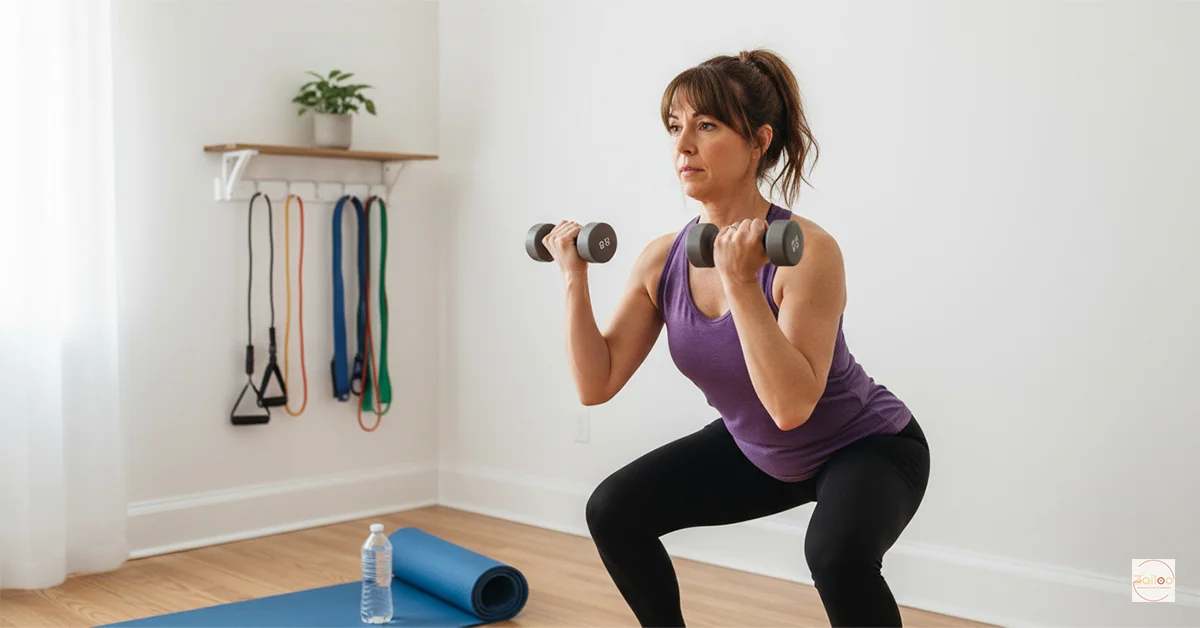
Lifting weights, using resistance bands, or doing bodyweight exercises is arguably the most important type of exercise for weight loss. It helps you maintain and build muscle as you lose fat, which keeps your metabolism higher and improves your body composition. You’ll look and feel better at your goal weight if you’ve been strength training throughout your journey.
Aim for at least 2-3 strength training sessions per week, targeting all major muscle groups.
Cardiovascular Exercise
Walking, running, cycling, swimming, or dancing burns calories and improves cardiovascular health. It’s especially helpful if you struggle to create a large enough calorie deficit through diet alone. Even just 30 minutes of brisk walking daily can burn an extra 150-200 calories.
NEAT (Non-Exercise Activity Thermogenesis)
Don’t underestimate the power of daily movement that isn’t formal exercise. Taking the stairs, parking farther away, doing household chores, playing with your kids, these activities add up. Some women increase their NEAT by 200-300 calories per day just by being more conscious about moving throughout the day.
Should You Eat Back Exercise Calories?
This is a common question, and the answer is: it depends. If you’re exercising moderately (3-4 days per week, 30-45 minutes per session), your activity factor in the TDEE calculation already accounts for this, and you don’t need to eat back those calories.
However, if you’re training intensely or for long durations, think training for a half-marathon or doing CrossFit five times per week, you might need to eat more to fuel your workouts and recovery. Listen to your body. If you’re constantly exhausted, your performance is suffering, or you’re losing weight too rapidly (more than 2 pounds per week), you likely need to eat a bit more.
Special Considerations for Different Life Stages
Weight Loss in Your 20s and 30s
This is often when women have the most metabolic flexibility. Your body may respond well to calorie deficits, and you likely recover quickly from workouts. However, this is also when you’re establishing habits that will carry forward.
Focus on building a positive relationship with food and exercise now rather than engaging in extreme dieting that could lead to yo-yo weight cycles. The habits you build in these decades will serve you for life.
Weight Loss in Your 40s and 50s
Perimenopause and menopause bring hormonal changes that can make weight loss more challenging. Declining estrogen levels can lead to muscle loss, increased belly fat, and a slower metabolism. You might find that strategies that worked in your 30s don’t work as well anymore.
Key strategies for this life stage:
- Prioritize strength training even more to combat muscle loss
- Be especially mindful of protein intake (aim for the higher end of the range)
- Accept that you might need to eat slightly fewer calories than you did in your younger years
- Focus on stress management and quality sleep, as these become even more important
- Consider working with a healthcare provider if you’re experiencing severe symptoms
Pregnancy and Postpartum
This guide is not appropriate for weight loss during pregnancy. If you’re pregnant, your focus should be on healthy nutrition to support your baby’s development, not calorie restriction.
After giving birth, many women are eager to lose baby weight, but this requires patience. If you’re breastfeeding, you need extra calories, typically 300-500 more per day than your pre-pregnancy needs. Trying to create too large a deficit can affect your milk supply.
Give yourself grace during this time. Your body just did something amazing. Focus on nourishing foods, gentle movement, and getting as much sleep as possible (we know that’s challenging with a newborn!). The weight will come off, but it might take 6-12 months, and that’s completely normal.
Medical Disclaimer: If you’re pregnant, breastfeeding, have a history of eating disorders, or any medical conditions, please consult with your healthcare provider before making significant changes to your calorie intake or starting a weight loss program.
Monitoring Progress Beyond the Scale
Why the Scale Isn’t Everything
Step on the scale in the morning. It’s up two pounds. You feel discouraged. This cycle is exhausting and often misleading. Your body weight fluctuates daily based on water retention, digestive contents, hormone levels, and more. None of these fluctuations reflect actual fat gain or loss.
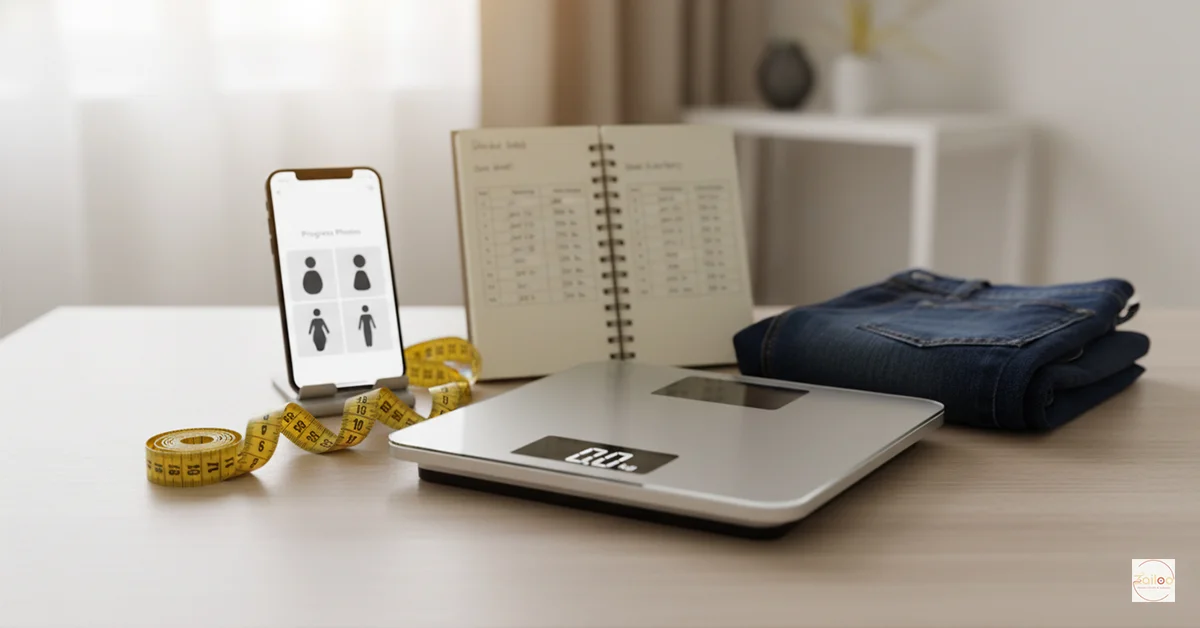
A better approach is to weigh yourself at the same time, under the same conditions (e.g., first thing in the morning after using the bathroom), and track the weekly average rather than obsessing over daily changes. Even better, use multiple metrics to assess your progress:
Body Measurements
Measure your waist, hips, chest, arms, and thighs once per month. You might be losing inches even when the scale isn’t moving, especially if you’re building muscle through strength training.
How Your Clothes Fit
Do your jeans feel looser? Can you button that dress that was tight last month? These are real, meaningful indicators of progress.
Progress Photos
Take photos in the same lighting and clothing every 2-4 weeks. Visual changes are often more apparent in photos than you notice day-to-day in the mirror.
Energy and Performance
Are you sleeping better? Do you have more energy throughout the day? Can you lift heavier weights or walk farther than when you started? These non-scale victories matter tremendously for your overall health.
Health Markers
Improvements in blood pressure, cholesterol levels, blood sugar control, and other health metrics are often more important than the number on the scale.

Frequently Asked Questions
Is 1,200 calories a day enough for weight loss?
For many women, yes, 1,200 calories can create an appropriate deficit for weight loss. However, it should be considered a minimum threshold, not a goal to aim below. Taller, more active, or younger women may need more calories and still lose weight effectively. Always prioritize getting adequate nutrition over eating as little as possible.
How do I know if I’m eating too few calories?
Warning signs include constant fatigue, difficulty concentrating, feeling cold all the time, hair loss, irregular or absent periods, constant hunger and food obsession, poor workout recovery, irritability and mood swings, and extreme restriction followed by binges. If you’re experiencing these symptoms, you likely need to increase your calorie intake.
Can I have cheat days and still lose weight?
The concept of “cheat days” can be problematic because it implies certain foods are bad or that you’re doing something wrong. A better approach is flexible eating, incorporating foods you enjoy in moderation within your overall calorie goals. That said, one higher-calorie day per week is fine as long as your weekly average still creates a deficit. Just avoid the mindset that weekends are “off days” where calories don’t count.
How long will it take to reach my goal weight?
A safe rate of weight loss is 1-2 pounds per week, though it may be slower as you get closer to your goal. If you have 30 pounds to lose, that could take 15-30 weeks (roughly 4-7 months) of consistent effort. Remember that slower weight loss is often more sustainable and helps preserve muscle mass.
Do I need to count calories forever?
Not necessarily. Many women find that after tracking for several months, they’ve learned enough about portion sizes and their eating patterns that they can transition to more intuitive eating. Some prefer to continue tracking for accountability. Others track loosely (tracking on weekdays only, or during maintenance to prevent weight regain). Find what works for your lifestyle and personality.
What if I have PCOS or thyroid issues?
These conditions can make weight loss more challenging due to hormonal imbalances and metabolic changes. You may need to create a slightly larger deficit or be more patient with results. Working with an endocrinologist and registered dietitian who specialize in these conditions can be incredibly helpful. Managing your condition with appropriate medication and lifestyle interventions will support your weight loss efforts.
Is intermittent fasting necessary for weight loss?
No. Intermittent fasting (IF) is simply one tool for creating a calorie deficit by restricting your eating window. Some women find it helpful because it naturally limits snacking and simplifies meal planning. Others find it makes them ravenously hungry or doesn’t fit their lifestyle. IF isn’t magic; it works when it helps you maintain a calorie deficit, and it doesn’t work when it doesn’t. Choose an eating pattern you can sustain long-term.
When to Seek Professional Help
While this guide provides comprehensive information, there are times when working with professionals becomes important or even necessary:
Consider Consulting a Registered Dietitian If:
- You have significant weight to lose (50+ pounds) and want personalized guidance
- You have medical conditions like diabetes, kidney disease, or heart conditions that affect your nutritional needs
- You’re experiencing symptoms of nutrient deficiencies
- You’ve tried multiple approaches and consistently struggle to lose weight
- You’re an athlete or very active person trying to balance performance with weight loss
- You want help creating meal plans and shopping strategies specific to your preferences and budget
Consider Consulting a Healthcare Provider If:
- You have unexplained weight gain or difficulty losing weight despite consistent efforts
- You have symptoms of hormonal imbalances (irregular periods, excessive fatigue, hair loss)
- You’re considering weight loss medications or surgical options
- You have a history of eating disorders or current disordered eating behaviors
- You experience concerning symptoms like chest pain, dizziness, or severe fatigue during your weight loss journey
Consider Consulting a Mental Health Professional If:
- You struggle with emotional eating or binge eating
- Your thoughts about food and weight are consuming and distressing
- You have a history of eating disorders
- You’re using extreme behaviors like purging, excessive exercise, or very low calorie intake
- Your self-worth feels entirely tied to the number on the scale
Remember that seeking help isn’t a sign of weakness or failure. Professionals have specialized training and can provide personalized guidance that a general article simply can’t match.
Your Journey Forward
So, how many calories should you eat to lose weight? For most women, it’s somewhere between 1,200 and 1,800 calories per day, but your specific number depends on your unique circumstances, goals, and lifestyle.
The truth is, there’s no perfect one-size-fits-all answer. What matters most isn’t finding the “perfect” calorie number but rather finding a sustainable approach that honors your body, fits your life, and moves you toward better health.
Here’s what I hope you take away from this guide:
- Weight loss is a marathon, not a sprint. Sustainable results come from consistent, moderate changes, not extreme restrictions.
- You deserve to eat enough food to feel energized, think clearly, and enjoy your life while losing weight.
- The scale is just one metric. Your health, energy, strength, and how you feel in your body matter more than a number.
- Your worth as a person has nothing to do with your weight or the size of your jeans.
- Some weeks you’ll lose weight. Some weeks you won’t. That’s normal, not failure.
- Building healthy habits now will serve you for decades, far beyond reaching any specific goal weight.
Trust yourself. Your body is not the enemy; it’s been working incredibly hard to keep you alive and healthy. By providing it with adequate nutrition, regular movement, proper sleep, and stress management, you’re supporting it in becoming the healthiest version it can be.
You’ve got this. One meal, one day, one week at a time.