
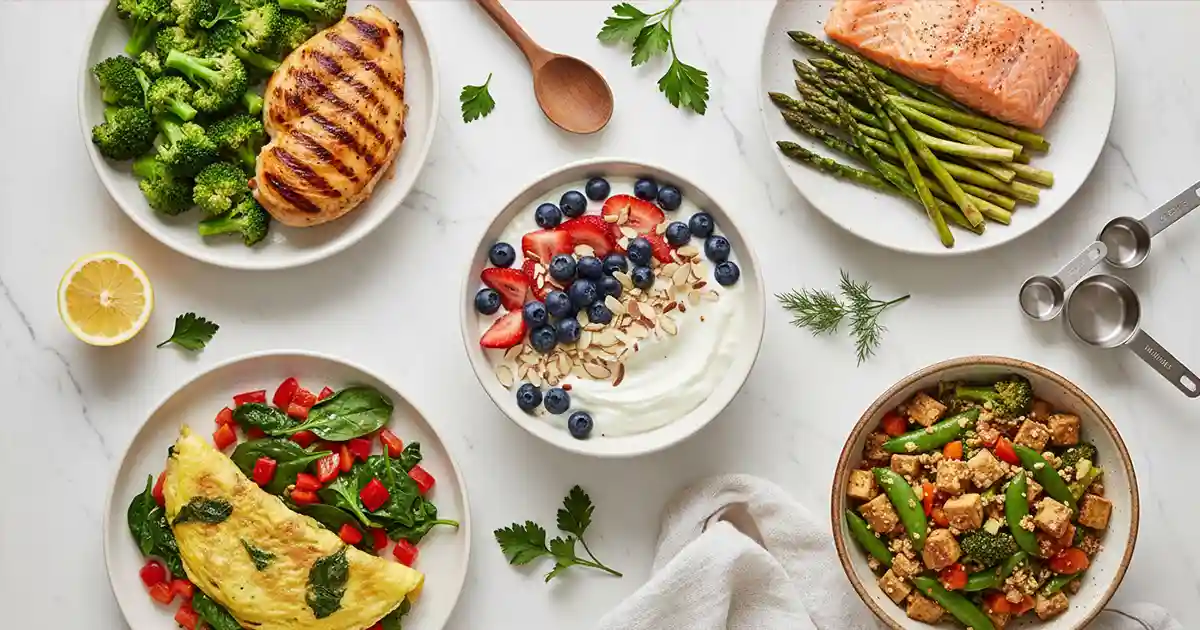
Ever finish a “diet meal” and find yourself raiding the pantry an hour later? You’re not alone.
Most low-calorie meals leave you hungry and unsatisfied, making it nearly impossible to stick to your goals. The missing piece? Protein. You need meals that are high in protein to preserve muscle and keep you full, but low enough in calories to support actual weight loss.
I’ve been there. After struggling with constant hunger on traditional diets, I switched to high protein low calorie meals and lost 28 lbs over 6 months without feeling deprived. The difference was night and day.
✓ Quick Answer
High protein low calorie meals combine lean proteins (chicken, fish, eggs, Greek yogurt, tofu) with high-volume vegetables and smart carbs. Aim for 25-40g protein per meal and 300-450 calories to support weight loss while preserving muscle. Examples include grilled chicken with roasted vegetables (380 cal, 35g protein), egg white omelets (250 cal, 30g protein), and Greek yogurt bowls (320 cal, 28g protein).
This guide provides 25 tested recipes with complete macros, meal prep tips, and shopping strategies. All nutritional data is verified using USDA FoodData Central, and protein targets are based on NIH guidelines.
Let’s start with why protein matters so much for your goals.
Why High Protein Matters for Weight Loss
✓ Quick Answer
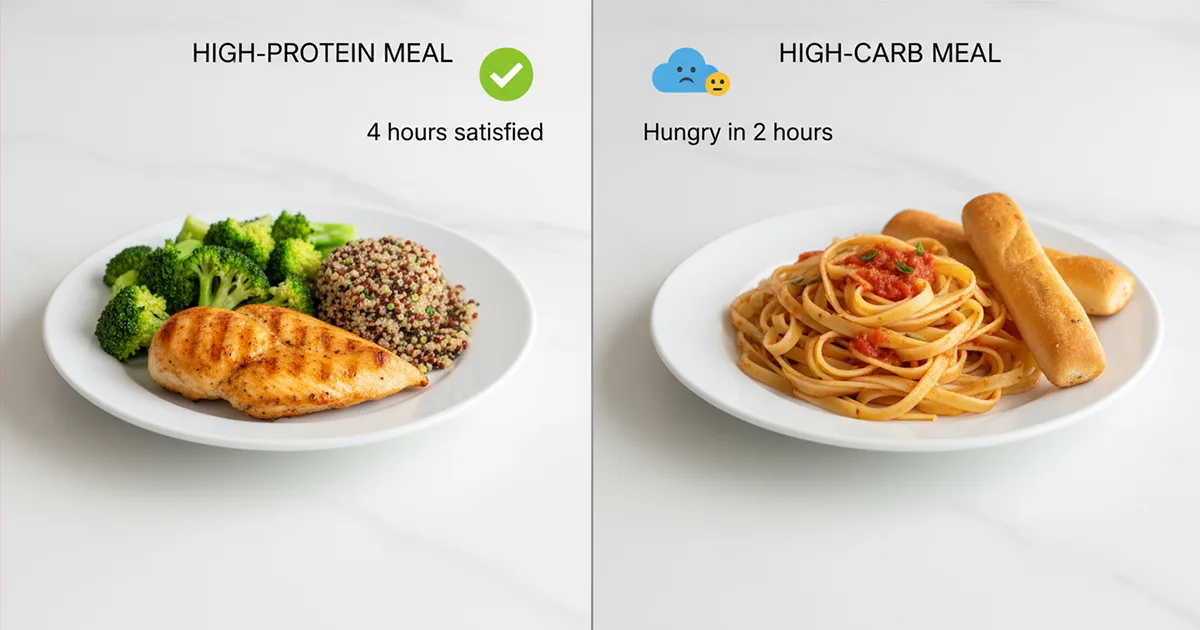
Protein increases satiety (keeps you fuller longer), preserves muscle mass during calorie deficits, and has a higher thermic effect (burns more calories during digestion) compared to carbs or fats.
Here’s the thing about protein: it’s your secret weapon for losing fat without losing muscle.
When I switched from my usual cereal breakfast (30g carbs, 5g protein) to a 3-egg scramble (30g protein), I stopped snacking before lunch. Game changer.
Protein works differently than carbs or fats in four critical ways.
First, protein keeps you satisfied. Research shows protein is 3x more satiating than carbohydrates. According to a 2019 study published in the American Journal of Clinical Nutrition, participants eating high-protein diets reported significantly less hunger and consumed fewer calories throughout the day compared to those on normal-protein diets.
Second, protein preserves your hard-earned muscle. During a calorie deficit, your body needs fuel. Without adequate protein (0.8-1g per pound of body weight according to NIH guidelines), it breaks down muscle tissue for energy. More protein means you lose fat, not muscle.
Third, protein has a higher thermic effect. Your body burns 20-30% of protein calories just digesting it, compared to only 5-10% for carbs and 0-3% for fats. That means if you eat 100 calories of protein, your body burns 20-30 of those calories processing it.
Finally, protein stabilizes blood sugar. Unlike carb-heavy meals that spike insulin and trigger hunger crashes, protein keeps blood sugar steady for hours.
Here’s how the macronutrients compare:
| Macronutrient | Satiety Rating | Thermic Effect | Muscle Preservation |
|---|---|---|---|
| Protein | High (8/10) | 20-30% | Excellent |
| Carbs | Medium (5/10) | 5-10% | Moderate |
| Fats | Low-Medium (4/10) | 0-3% | Moderate |
The same study from the American Journal of Clinical Nutrition found that high-protein diets resulted in 0.79 kg (1.7 lbs) more weight loss compared to normal-protein diets, even when total calories were identical.
Bottom line: if you want to lose weight without constant hunger, protein is non-negotiable.
How Much Protein Do You Need Per Meal?
✓ Quick Answer
Aim for 25-40g of protein per meal (3-4 meals daily) to reach the optimal 0.8-1g per pound of body weight for muscle preservation and satiety during weight loss.
Let’s do the math on your protein target.
The USDA Dietary Guidelines recommend a minimum of 0.8g of protein per kilogram of body weight (roughly 0.36g per pound). But here’s the thing: that’s the minimum to prevent deficiency, not the optimal amount for weight loss and muscle preservation.
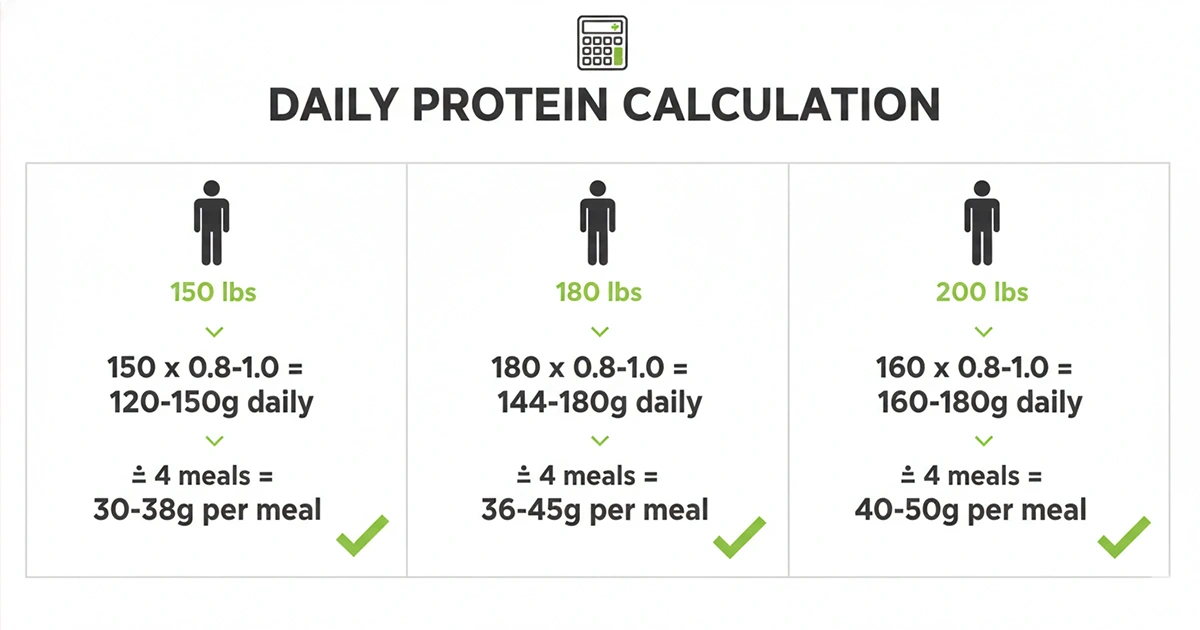
For weight loss, research supports a higher intake of 0.8-1g of protein per pound of body weight. I weigh 165 lbs, so I aim for 130-165g daily. I spread this across 4 meals (breakfast, lunch, snack, dinner) at roughly 35-40g each.
Here’s a practical breakdown:
| Your Weight | Daily Protein Target | Per Meal (4 meals) | Per Meal (3 meals) |
|---|---|---|---|
| 150 lbs | 120-150g | 30-38g | 40-50g |
| 180 lbs | 144-180g | 36-45g | 48-60g |
| 200 lbs | 160-200g | 40-50g | 53-67g |
Pretty straightforward. Take your weight, multiply by 0.8 to 1.0, and divide by your number of meals.
A couple important notes: If you’re very active or lifting weights regularly, aim for the higher end (1g per pound). If you’re more sedentary, 0.8g per pound works well. According to NIH research on protein intake, higher protein intakes are safe for healthy individuals and may provide additional benefits for weight management.
One meal too light on protein? No problem. Just adjust your next meal slightly higher. I track mine loosely. I don’t stress if one meal is 28g and another is 42g, as long as my daily total is on target.
The key is consistency. Hit your daily protein goal most days, and you’ll see results.
Best Protein Sources: Calories vs. Protein Compared
✓ Quick Answer
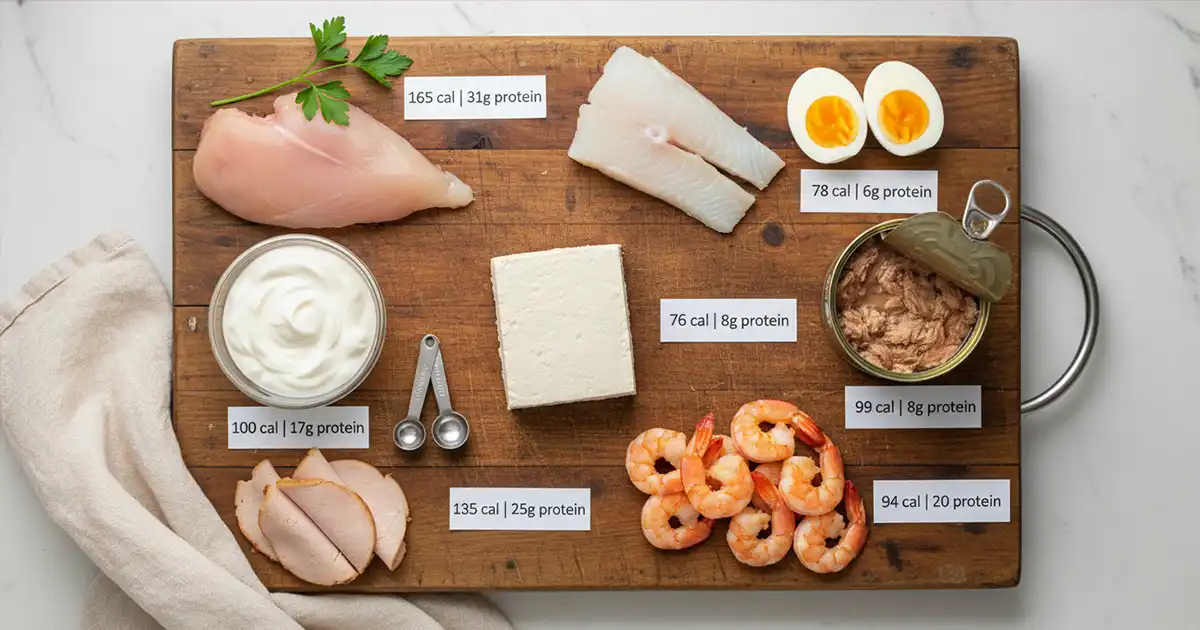
The best high protein low calorie sources are chicken breast (165 cal, 31g per 100g), white fish (82 cal, 18g per 100g), egg whites (52 cal, 11g per 100g), Greek yogurt (59 cal, 10g per 100g), and tofu (76 cal, 8g per 100g).
Not all protein sources are created equal when you’re watching calories.
I used to rely heavily on salmon for protein. Don’t get me wrong, salmon is fantastic for omega-3s and overall health. But at 208 calories per 100g, it wasn’t ideal when I needed to maximize protein while minimizing calories. I switched to chicken breast (165 cal) and white fish (82 cal) for my weight loss phase and saved salmon for maintenance.
The key metric is protein-to-calorie ratio. You want maximum protein for minimum calories.
Here’s the complete breakdown using USDA FoodData Central data:
| Protein Source | Calories (100g) | Protein (100g) | Protein/Cal Ratio | Cost (per 100g) |
|---|---|---|---|---|
| Chicken Breast | 165 | 31g | 0.19 | $1.50 |
| Cod/Tilapia | 82 | 18g | 0.22 | $2.00 |
| Egg Whites | 52 | 11g | 0.21 | $0.75 |
| Greek Yogurt (0%) | 59 | 10g | 0.17 | $0.80 |
| Tofu (firm) | 76 | 8g | 0.11 | $0.60 |
| Tuna (canned, water) | 116 | 26g | 0.22 | $1.20 |
| Turkey Breast | 135 | 30g | 0.22 | $1.80 |
| Shrimp | 99 | 24g | 0.24 | $3.50 |
| Cottage Cheese (low-fat) | 72 | 12g | 0.17 | $0.70 |
| Salmon | 208 | 20g | 0.10 | $4.00 |
Source: USDA FoodData Central. Prices are average US grocery store estimates.
Notice how cod, shrimp, turkey breast, and tuna have the highest protein-to-calorie ratios (0.22-0.24). These are your best friends during a cut.
Chicken breast is the workhorse, great ratio, affordable, versatile. I probably eat it 4-5 times per week. Egg whites are incredible for breakfast. Greek yogurt (0% fat) is perfect for snacks or breakfast bowls.
10 High Protein Low Calorie Breakfast Ideas
✓ Quick Answer
Best high protein low calorie breakfasts include egg white omelets (250 cal, 30g protein), Greek yogurt parfaits (320 cal, 28g protein), protein pancakes (380 cal, 35g protein), turkey sausage scrambles (300 cal, 32g protein), and cottage cheese bowls (280 cal, 26g protein).
Breakfast sets the tone for your entire day. Start with protein, and you’ll avoid mid-morning crashes and constant snacking.
Studies show that eating 25-30g of protein at breakfast reduces hunger throughout the day by up to 60%. I’ve found this to be absolutely true. On days I skip my high-protein breakfast, I’m ravenous by 10am.
Here are my 10 go-to high protein low calorie breakfast ideas. Each includes exact macros verified against USDA data.
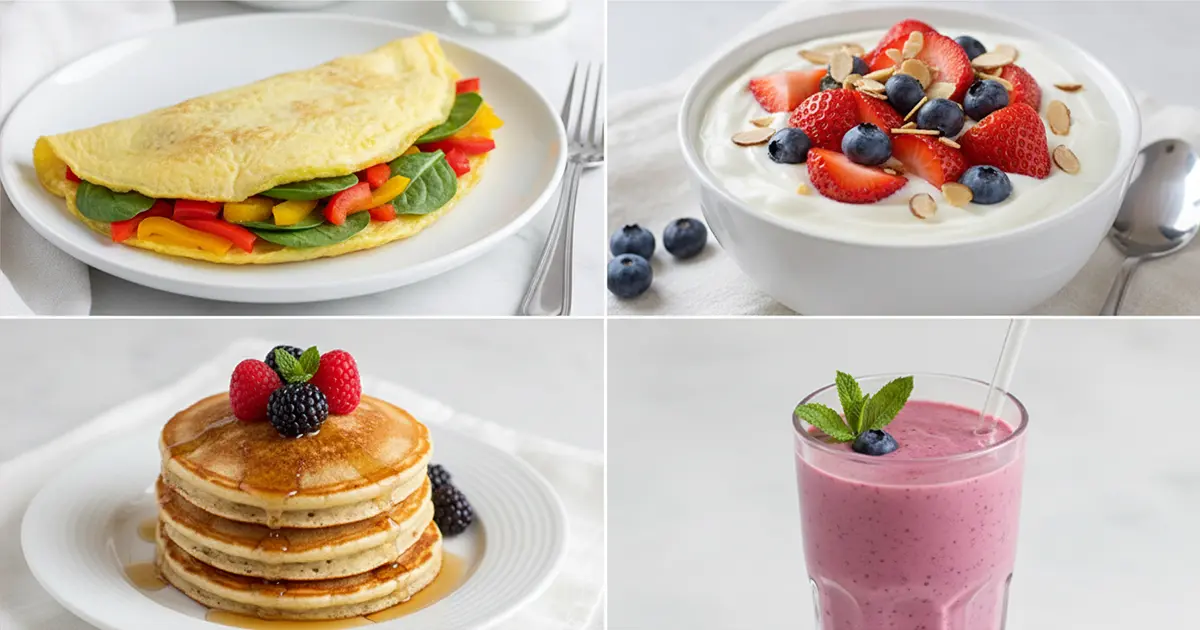
1. Egg White Veggie Omelet
Ingredients: 4 egg whites, 1 whole egg, 1 cup spinach, 1/2 cup mushrooms, 1/2 cup tomatoes, salt, pepper
250 calories | 30g protein | 5g carbs | 10g fat
Prep time: 10 minutes
This is my go-to when I need quick protein. The whole egg adds flavor and healthy fats while keeping it lean. I use cooking spray instead of butter to save calories.
2. Greek Yogurt Power Bowl
Ingredients: 1 cup 0% Greek yogurt, 1/2 cup mixed berries, 1 tbsp sliced almonds, cinnamon
320 calories | 28g protein | 35g carbs | 6g fat
Prep time: 3 minutes
Literally the easiest breakfast ever. I buy pre-washed berries and keep Greek yogurt stocked. Measure the yogurt (it’s easy to accidentally use 1.5 cups), add berries, sprinkle almonds, and dust with cinnamon.
3. Protein Pancakes (3 small pancakes)
Ingredients: 1 scoop vanilla protein powder, 2 eggs, 1 mashed ripe banana, 1/4 tsp baking powder
380 calories | 35g protein | 40g carbs | 8g fat
Prep time: 15 minutes
These taste like actual pancakes, I promise. Mash the banana really well, mix with eggs and protein powder, add baking powder. Cook on medium heat with cooking spray.
4. Turkey Sausage Scramble
Ingredients: 3 oz turkey sausage (precooked), 3 whole eggs, 1/2 cup diced bell peppers
300 calories | 32g protein | 8g carbs | 14g fat
Prep time: 12 minutes
Brown the turkey sausage, add peppers, scramble in the eggs. Done. I use the precooked turkey sausage links and just slice them up, saves time.
5. Cottage Cheese & Fruit Bowl
Ingredients: 1 cup low-fat cottage cheese (2%), 1/2 cup pineapple chunks, 1/4 tsp cinnamon
280 calories | 26g protein | 32g carbs | 4g fat
Prep time: 2 minutes
I know cottage cheese is polarizing, but if you like it, this is perfect. The pineapple sweetness balances the tanginess.
6. Protein Oatmeal
Ingredients: 1/2 cup dry oats, 1 scoop protein powder, 1/2 sliced banana, cinnamon
380 calories | 30g protein | 48g carbs | 6g fat
Prep time: 8 minutes
Cook the oats in water according to package directions. Once cooked, let cool for 1-2 minutes, then stir in protein powder. Top with banana and cinnamon.
7. Veggie Egg Muffins (3 muffins)
Ingredients: 6 whole eggs, 1 cup chopped broccoli, 1/4 cup shredded low-fat cheese, 2 slices turkey bacon (chopped)
320 calories | 28g protein | 6g carbs | 18g fat
Prep time: 25 minutes (makes 6 muffins total)
I meal prep these egg muffins on Sunday and grab 3 each morning. Total game-changer for busy mornings. Mix all ingredients, pour into muffin tin, bake at 350°F for 20-22 minutes.
8. Smoked Salmon & Egg Whites
Ingredients: 5 egg whites (scrambled), 2 oz smoked salmon, 1 tbsp light cream cheese, fresh dill
290 calories | 35g protein | 4g carbs | 12g fat
Prep time: 8 minutes
Fancy breakfast vibes without the fancy calories. Scramble the egg whites with a tiny bit of cream cheese mixed in, then top with smoked salmon and dill.
9. Protein Smoothie
Ingredients: 1 scoop protein powder, 1 cup unsweetened almond milk, 1 cup spinach, 1/2 banana, ice
250 calories | 27g protein | 28g carbs | 3g fat
Prep time: 5 minutes
Blend and go. The spinach sounds weird but you can’t taste it, I swear. The banana provides sweetness and creaminess.
10. Tofu Scramble (Vegan)
Ingredients: 8 oz firm tofu (crumbled), 1/4 tsp turmeric, 2 tbsp nutritional yeast, 1 cup mixed veggies, garlic powder
310 calories | 28g protein | 12g carbs | 16g fat
Prep time: 15 minutes
For my vegan friends, this is your high-protein breakfast hero. Crumble the tofu, sauté with turmeric (gives it yellow color like eggs), add nutritional yeast (gives cheesy flavor), and cook with veggies.
8 High Protein Low Calorie Lunch Recipes
✓ Quick Answer
High protein low calorie lunches include grilled chicken salads (350 cal, 38g protein), tuna lettuce wraps (280 cal, 32g protein), turkey chili (380 cal, 35g protein), shrimp stir-fry with cauliflower rice (320 cal, 30g protein), and chicken burrito bowls (420 cal, 40g protein).
Lunch is where most people fall off track. You’re busy, hungry, and tempted by the office cafeteria or nearby restaurants.
These recipes are satisfying enough to power you through the afternoon without the 2pm crash. Most are portable for work lunches, and all are meal prep friendly.
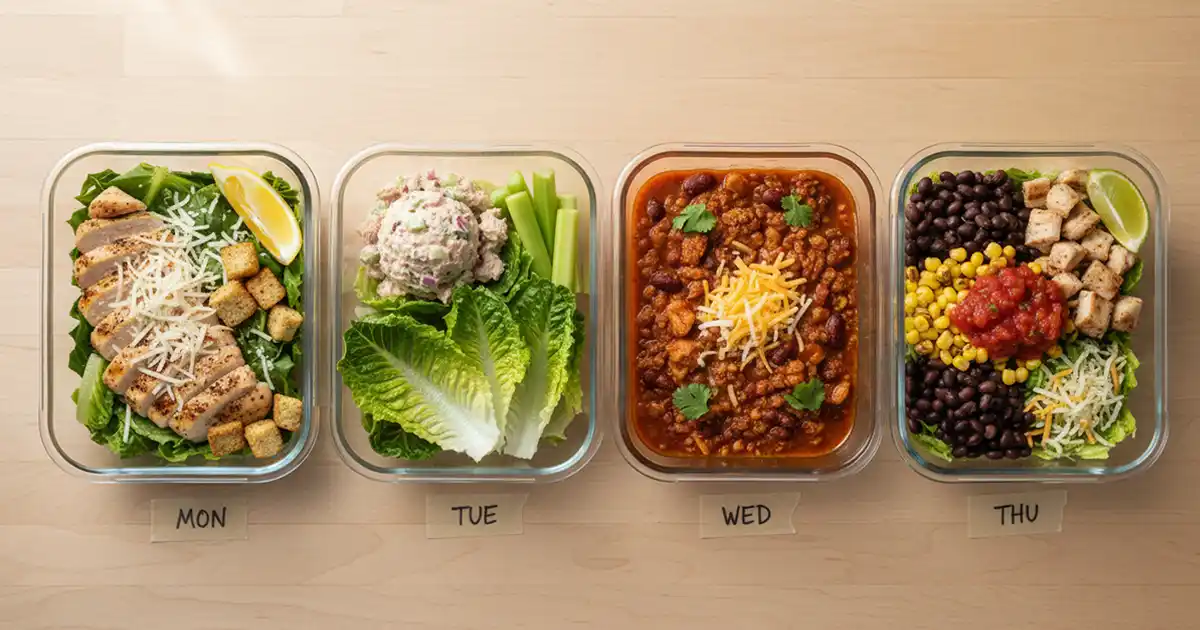
1. Grilled Chicken Caesar Salad (Modified)
Ingredients: 6 oz grilled chicken breast, 3 cups romaine lettuce, 2 tbsp light Caesar dressing, 2 tbsp grated parmesan, lemon juice
350 calories | 38g protein | 12g carbs | 16g fat
Skip the croutons, add extra chicken. You won’t miss them, trust me.
2. Tuna Lettuce Wraps
Ingredients: 1 can tuna in water (drained, 5 oz), 8 large lettuce leaves, 2 tbsp Greek yogurt mixed with 1 tsp mustard, diced celery, diced red onion
280 calories | 32g protein | 8g carbs | 12g fat
This is my go-to ultra-quick lunch. Total prep time including opening the can is like 6 minutes.
3. Turkey Chili (2 cups)
Ingredients: 1 lb ground turkey (93/7), 1 can kidney beans (drained), 1 can diced tomatoes, chili powder, cumin, onion, garlic
380 calories | 35g protein | 32g carbs | 10g fat
I make a huge batch of turkey chili Sunday and eat it all week. No joke, this is my weekly meal prep staple.
7 High Protein Low Calorie Dinner Ideas
✓ Quick Answer
Satisfying high protein low calorie dinners include baked salmon with roasted vegetables (380 cal, 35g protein), chicken stir-fry (350 cal, 38g protein), turkey meatballs with zoodles (320 cal, 36g protein), grilled tilapia tacos (390 cal, 32g protein), and beef & broccoli with shirataki noodles (340 cal, 34g protein).
Dinner is your last meal of the day, make it count with these filling, protein-packed options.
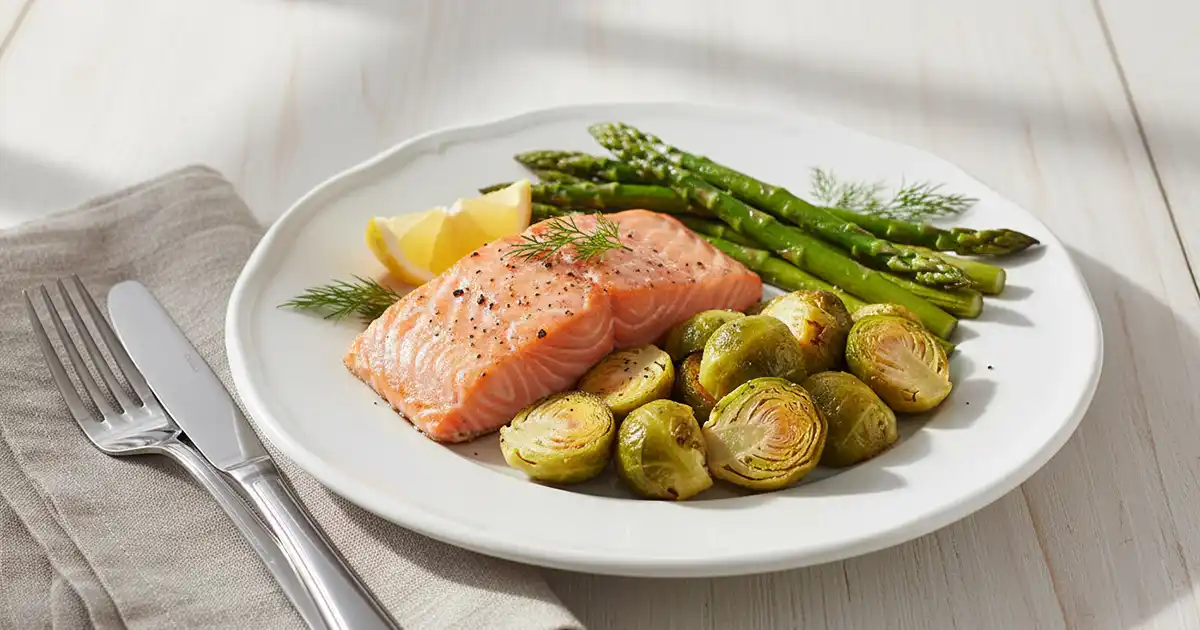
1. Baked Salmon with Roasted Veggies
Ingredients: 5 oz salmon fillet, 2 cups asparagus, 1.5 cups Brussels sprouts, olive oil spray, lemon, garlic powder, salt, pepper
380 calories | 35g protein | 18g carbs | 20g fat
Prep time: 30 minutes (mostly oven time)
Tuesday nights are always salmon nights at our house. Sheet pan meal, everything cooks together in 25 minutes.
Meal Prep Tips for High Protein Meals
✓ Quick Answer
Meal prep high protein meals by batch-cooking proteins (grill 3 lbs chicken Sunday), portioning into containers with pre-chopped veggies, and storing for 4-5 days. Use glass containers, label with dates and macros, and reheat proteins with added moisture to prevent drying.
Meal prep is the difference between sticking to your goals and ordering takeout on Wednesday.
I used to skip meal prep and end up at Chipotle 3 times a week. Now I spend 2 hours Sunday and save $80+ weekly. More importantly, I hit my protein targets effortlessly.
My Sunday Meal Prep Routine (2.5 hours total):
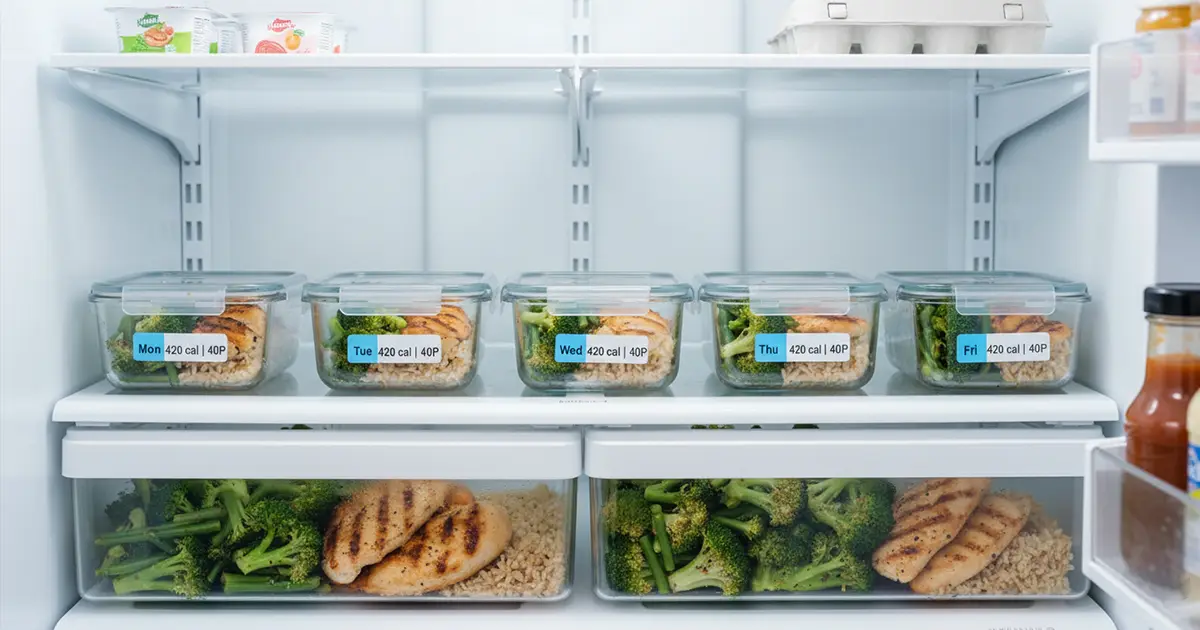
- Cook 3 lbs chicken breast (30 minutes) – Season with salt, pepper, and garlic powder, then either grill or bake at 400°F for 22-25 minutes
- Hard boil 12 eggs (15 minutes active time) – Bring to boil, turn off heat and cover for 12 minutes, transfer to ice bath
- Prep 5 cups cauliflower rice (20 minutes) – Buy pre-riced frozen, microwave, then dry out in a pan
- Chop vegetables (20 minutes) – Bell peppers, broccoli, carrots, cherry tomatoes, cucumbers
- Portion Greek yogurt (10 minutes) – Buy 32-oz containers and portion into 1-cup servings
- Cook turkey chili or ground turkey (40 minutes) – Make a big batch, portion into 5 containers
- Portion everything into labeled containers (20 minutes) – Use glass containers, label with day and macros
Total time: 2.5 hours for the entire week
Budget-Friendly Protein Shopping Guide
✓ Quick Answer
Save money on protein by buying chicken thighs instead of breast ($1.50 vs. $3/lb), choosing canned tuna/salmon ($1-2 per can), buying eggs in bulk ($0.10-15 per egg), and using frozen fish ($4-6/lb vs. $8-12 fresh). Greek yogurt on sale and firm tofu are also cost-effective at $0.60-80 per 100g protein.
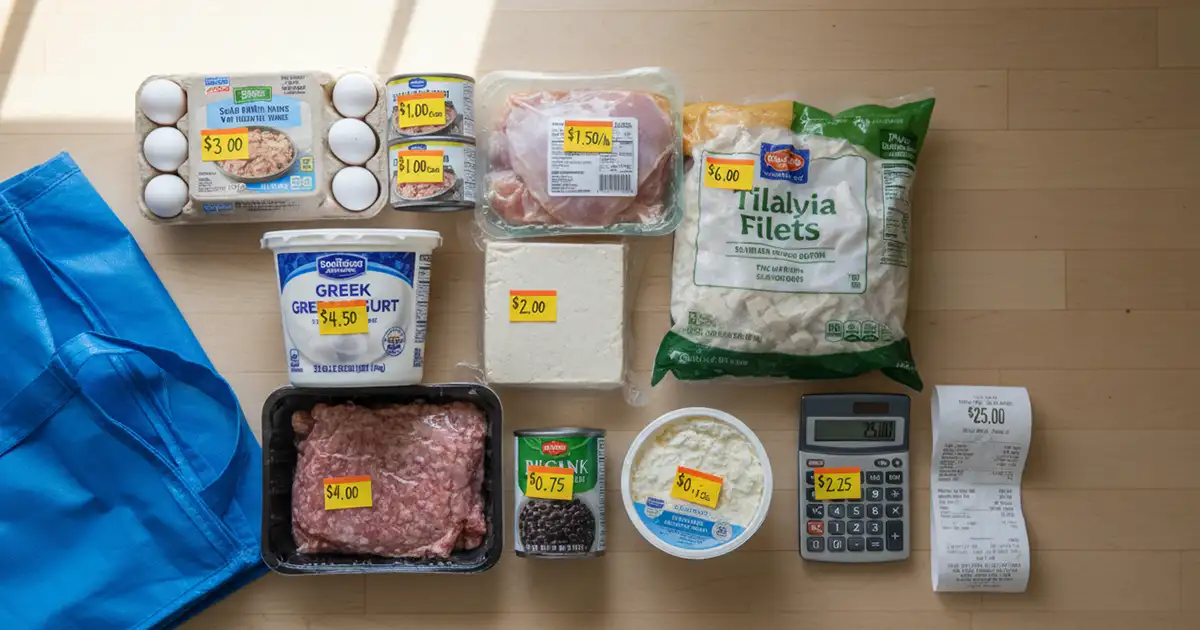
High protein doesn’t mean expensive. Here’s how I keep my grocery bill under $50/week while hitting 140-150g protein daily.
| Protein Source | Cost per lb | Cost per 25g Protein | Where to Buy |
|---|---|---|---|
| Eggs | $3.00/dozen | $0.38 | Costco bulk packs |
| Canned Tuna | $1.00/can | $0.50 | Store brand |
| Chicken Thighs | $1.50 | $0.75 | Family packs on sale |
| Greek Yogurt | $5.00/32oz | $0.70 | On sale (stock up) |
| Firm Tofu | $2.50/14oz | $0.80 | Asian grocery stores |
The winners: eggs, canned tuna, and chicken thighs. These three alone can get you to your daily protein target for $4-5 per day.
Frequently Asked Questions About High Protein Low Calorie Meals
How much protein should I eat per meal to lose weight?
Aim for 25-40g of protein per meal, eating 3-4 meals daily, to reach the optimal 0.8-1g per pound of body weight. This amount preserves muscle during weight loss and keeps you satisfied between meals. For example, if you weigh 160 lbs, target 130-160g protein daily, or about 33-40g per meal across 4 meals. Source: NIH protein guidelines.
What are the best high protein low calorie foods?
The best options are chicken breast (165 cal, 31g protein per 100g), white fish like cod (82 cal, 18g protein), egg whites (52 cal, 11g protein), 0% Greek yogurt (59 cal, 10g protein), canned tuna (116 cal, 26g protein), and firm tofu (76 cal, 8g protein). These provide maximum protein with minimal calories. Source: USDA FoodData Central.
Can I build muscle on low calorie high protein meals?
Yes, but it’s challenging. If you’re new to training, “newbie gains” allow muscle building even in a calorie deficit with adequate protein (0.8-1g per lb body weight). Experienced lifters may maintain muscle but will struggle to gain significantly in a deficit. For optimal muscle building, eat at maintenance calories or a slight surplus while keeping protein high.
Are high protein meals good for weight loss?
Absolutely. High protein meals increase satiety (you feel fuller longer), have a higher thermic effect (your body burns 20-30% of protein calories just digesting it), preserve muscle mass during calorie deficits, and help prevent blood sugar crashes that trigger hunger. Research shows high-protein diets lead to 0.79 kg more weight loss than normal-protein diets. Source: American Journal of Clinical Nutrition.
What’s a good high protein low calorie breakfast?
Top options include egg white omelets with vegetables (250 cal, 30g protein), Greek yogurt parfaits with berries (320 cal, 28g protein), protein pancakes made with protein powder and eggs (380 cal, 35g protein), turkey sausage scrambles (300 cal, 32g protein), or cottage cheese bowls with fruit (280 cal, 26g protein). All keep you full until lunch.
How do I meal prep high protein meals?
Batch cook 3-4 lbs of protein (chicken, turkey, fish) on Sunday, portion into glass containers with pre-chopped vegetables, and store in the fridge for 4-5 days. Label containers with dates and macros. When reheating proteins, add a splash of broth or water to prevent drying out. Most prepped proteins last 4-5 days refrigerated, or 2-3 months frozen. Source: FDA storage guidelines.
Start Your High Protein Journey Today
Here’s what you need to remember:
Key Takeaways:
- Aim for 25-40g protein per meal, 3-4 meals daily (totaling 0.8-1g per lb body weight)
- Choose lean proteins like chicken breast, white fish, egg whites, Greek yogurt, and tofu for maximum protein with minimal calories
- Meal prep on Sundays to set yourself up for success all week. Spend 2 hours, save endless time and decision-making
- Budget-friendly options like eggs, canned tuna, and chicken thighs make high protein affordable for everyone
Your Action Steps:
- Calculate your daily protein target using your body weight (multiply weight in lbs by 0.8-1.0)
- Choose 3-5 meals from this guide to try this week. Start simple, don’t overcomplicate
- Prep proteins in bulk on Sunday. Invest 2 hours this weekend and watch your week transform
You don’t need expensive meal plans, fancy supplements, or complicated recipes. These simple, protein-rich meals will keep you full, preserve your hard-earned muscle, and help you reach your goals without feeling deprived or constantly hungry.
The difference between where you are now and where you want to be is consistency. Pick one breakfast, one lunch, and one dinner from this guide. Make them this week. See how you feel. I promise you’ll notice a difference in your hunger levels and energy.
Let’s do this.
Disclaimer: This article is for informational purposes only and is not medical or nutritional advice. Consult a healthcare professional or registered dietitian before starting any new diet or exercise program, especially if you have medical conditions, take medications, or have specific health concerns.
