

You’re standing in the kitchen at 3 PM, staring into the fridge. You’re not starving, but you’re definitely not fine. The problem? Everything in there feels like either a full meal or a calorie trap wrapped in a “healthy” label.
Sound familiar? You’re not alone. According to the USDA Dietary Guidelines for Americans, the average American gets 400–500 calories from snacks every single day, roughly 20–25% of total daily intake. That’s a huge chunk of your calorie budget, and most of us aren’t spending it wisely.
✓ Quick Answer
The best low calorie snacks combine fiber, protein, or high water content to keep you full on fewer calories. Top options include plain Greek yogurt (under 100 cal), celery with peanut butter (~95 cal), air-popped popcorn (~90 cal for 3 cups), hard-boiled eggs (~78 cal), and fresh berries (~50 cal per cup), most under 150 calories per serving.
Here’s the thing: eating low calorie doesn’t mean eating sad, tiny portions that leave you hungrier than before. It means being strategic. This guide gives you 25 real, tested snack ideas, organized by craving type, with exact calorie counts, quick prep notes, and pairing tips that actually keep you full. All calorie data comes straight from USDA FoodData Central; you can trust the numbers.
Let’s get into it.
What Counts as a Low Calorie Snack?
✓ Quick Answer
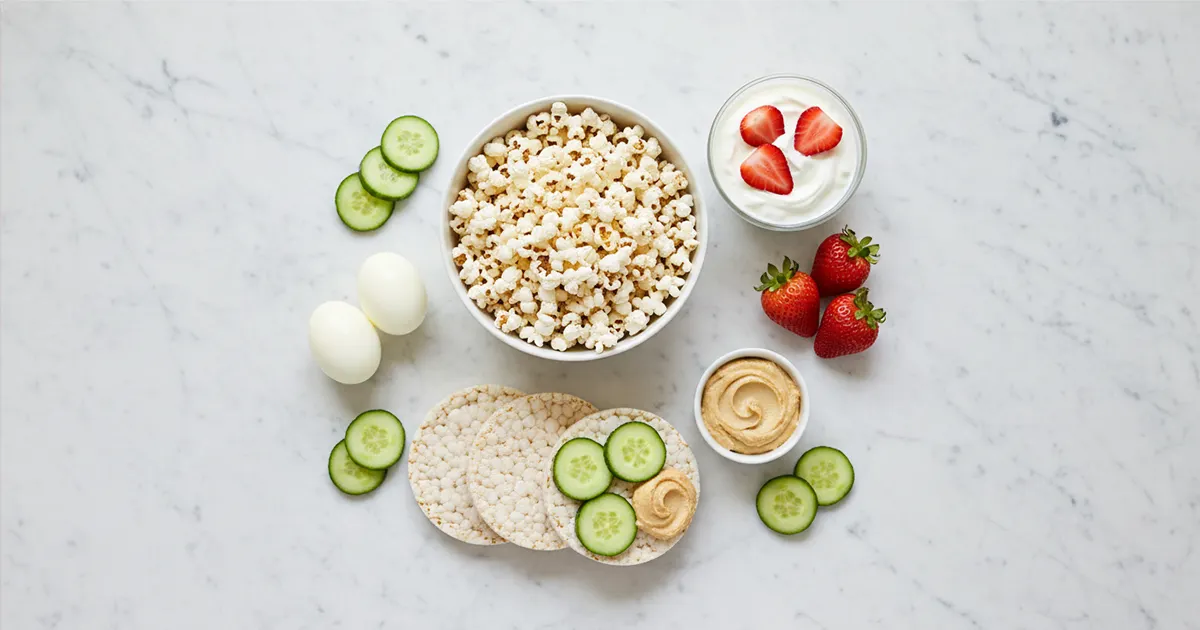
A low calorie snack typically falls between 50 and 200 calories per serving. Most nutrition experts and weight loss programs target the 100–150 calorie range, enough to curb hunger without eating into your daily calorie goals.
Before we get into the list, let’s clear something up. “Low calorie” isn’t a strict legal term; it’s a range. But in practice, most dietitians and weight management programs define a snack as low calorie if it comes in under 200 calories, with the sweet spot sitting around 100–150 calories per serving.
What matters more than the number alone is calorie efficiency, how full you feel per calorie consumed. A 150-calorie snack of Greek yogurt with berries is going to keep you satisfied for 2–3 hours. A 150-calorie handful of pretzels? You’ll be hungry again in 40 minutes.
Why Calorie Density Matters More Than Portion Size
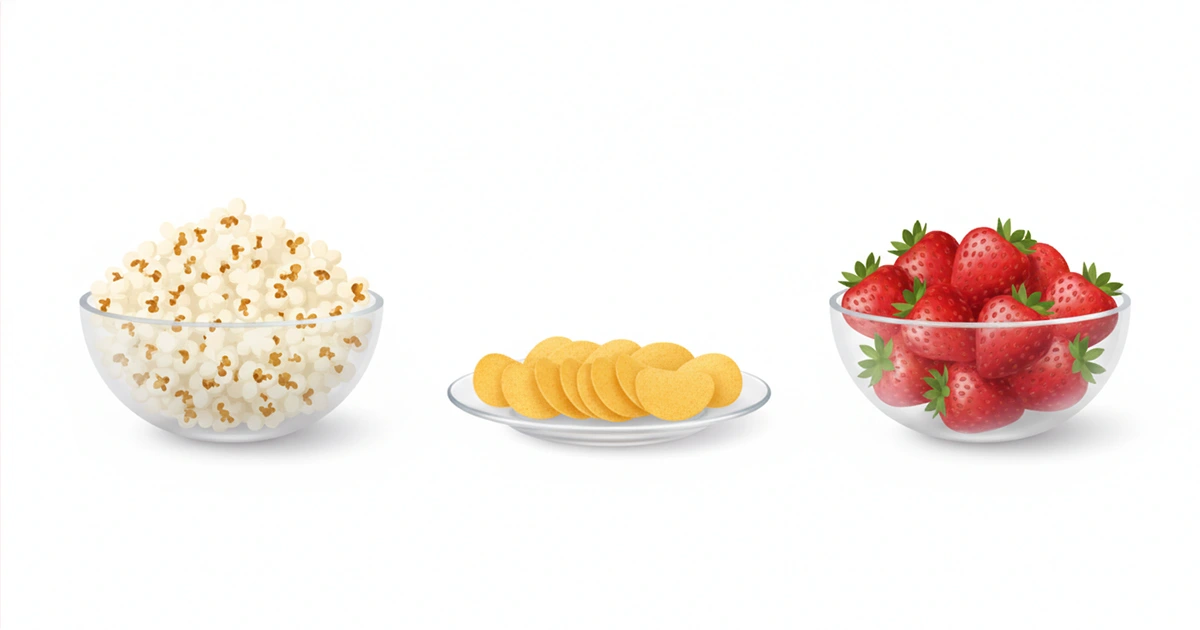
Here’s the concept that changes everything: calorie density. Some foods pack a lot of calories into a small space. Others give you huge volume for very few calories. According to USDA FoodData Central, air-popped popcorn contains about 31 calories per ounce, while regular potato chips clock in at 140+ calories per ounce. Same crunch, wildly different calorie density.
Foods with high water content (like cucumbers, watermelon, and celery) and high fiber content (like berries, apples, and edamame) let you eat more food for fewer calories. That’s the foundation of smart low calorie snacking.
| Snack | Serving Size | Approx. Calories |
|---|---|---|
| Celery sticks | 2 cups | ~30 cal |
| Air-popped popcorn | 3 cups | ~90 cal |
| Strawberries | 1 cup | ~50 cal |
| Hard-boiled egg | 1 large | ~78 cal |
| Plain Greek yogurt | ½ cup | ~65 cal |
| Cucumber slices | 2 cups | ~30 cal |
| Almonds | 1 oz (23 nuts) | ~160 cal |
Source: USDA FoodData Central
The Role of Fiber and Protein in Keeping You Full
Fiber slows digestion. Protein suppresses hunger hormones. Together, they’re your best friends in low calorie snacking. Research published via the NIH National Library of Medicine consistently shows that snacks containing protein lead to lower calorie consumption at the next meal, meaning a smart 100-calorie snack now can actually save you 200+ calories at dinner.
I used to think that low calorie snacks were just about willpower and tiny portions. Turns out, it’s mostly about picking the right foods. Once I understood that, snacking got a lot easier.
For more on building a diet around satiety-focused foods, check out our guide to high fiber foods for weight loss.
Sweet Low Calorie Snacks That Actually Satisfy (Snacks 1–6)
✓ Quick Answer
The best sweet low calorie snacks use natural sugars from fruit or protein-rich bases like Greek yogurt to satisfy cravings without a blood sugar spike, most come in under 120 calories per serving.
Sweet cravings are responsible for more blown calorie budgets than almost anything else. You tell yourself you’ll just have one cookie, and then suddenly the whole sleeve is gone. These six sweet options give your taste buds what they want without the damage.
Snack 1: Fresh Strawberries with a Dark Chocolate Drizzle – ~90 calories
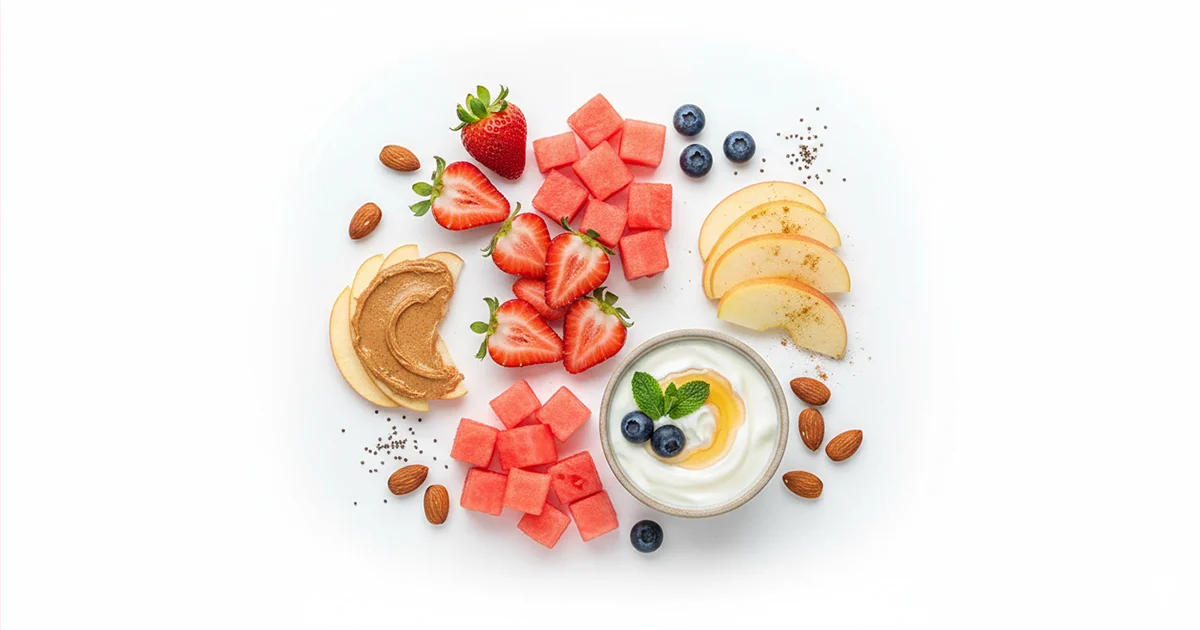
One cup of strawberries is only about 50 calories according to USDA FoodData Central. Add a small drizzle of melted dark chocolate (about half a teaspoon) and you’re still under 90 calories total. It looks fancy, tastes indulgent, and takes two minutes to make. This is my go-to when I want something that feels like dessert but isn’t.
Snack 2: Plain Greek Yogurt with Honey and Cinnamon – ~100 calories
Half a cup of plain non-fat Greek yogurt runs about 65 calories and packs around 9 grams of protein. Add a half-teaspoon of honey and a shake of cinnamon, and you’ve got a creamy, slightly sweet snack for roughly 100 calories. The protein is the key here; it turns this from a quick sugar hit into something that actually holds you over.
Snack 3: Frozen Banana “Nice Cream” – ~105 calories
Peel a ripe banana, freeze it overnight, then blend it. That’s it. The result is a thick, creamy texture that genuinely resembles soft-serve ice cream. One medium banana comes in around 105 calories per USDA data, and you get fiber and potassium along with it. Add a tiny pinch of sea salt to make the banana flavor pop.
Snack 4: Apple Slices with 1 Teaspoon Almond Butter – ~110 calories
A medium apple is about 95 calories. One teaspoon of almond butter adds roughly 30 calories and about 1g of protein. Together, ~110 calories with fiber, natural sugar, and a little fat for satiety. The fat and fiber combo slows digestion significantly, you’ll notice a big difference in how long this keeps you full compared to eating the apple alone.
Snack 5: Watermelon Cubes (2 Cups) – ~80 calories
Watermelon is 92% water, which is why you can eat a genuinely large portion for very few calories. Two cups of cubed watermelon comes to about 80 calories, per USDA data. On a hot day, I keep a big container pre-cut in the fridge. It feels indulgent, it’s refreshing, and it barely registers on your calorie count.
Snack 6: Rice Cake with Nut Butter and Banana – ~130 calories
Two plain rice cakes (~70 cal) topped with half a teaspoon of almond butter and a few banana slices hits around 130 calories. It’s got crunch, creaminess, and sweetness all in one snack. For anyone who misses having a “real” snack with texture, this one checks a lot of boxes.
A 2022 study indexed on PubMed found that snackers who chose whole fruit over processed sweets consumed significantly fewer total daily calories, largely because whole fruit’s fiber slows absorption and reduces follow-up hunger. Worth keeping in mind next time the vending machine calls your name.
Savory Low Calorie Snacks for When You Want Something Real (Snacks 7–12)
✓ Quick Answer
Savory low calorie snacks like cucumber with hummus, turkey roll-ups, and edamame satisfy salt cravings while delivering fiber or protein, most come in between 70–150 calories per serving.
Sometimes fruit just doesn’t cut it. When you want something that feels like actual food rather than a dessert appetizer, these savory options are where it’s at. They work especially well as afternoon snacks or as a pre-dinner hunger stopper to prevent you from overeating at the table.
Snack 7: Cucumber Slices + 2 Tablespoons Hummus – ~80 calories
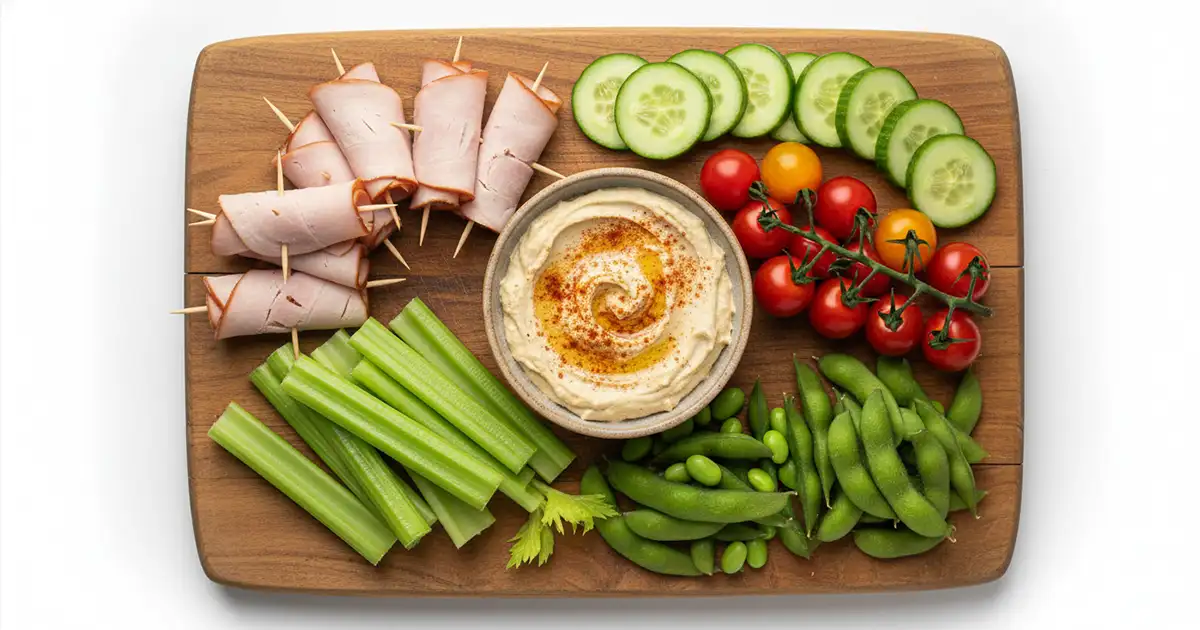
Cucumbers are almost pure water and fiber. Two cups of cucumber slices are about 30 calories. Add 2 tablespoons of store-bought hummus (around 50 calories) and you’ve got a crunchy, creamy, satisfying snack for 80 calories total. The chickpea base in hummus adds a small protein boost that makes this more filling than it looks.
Snack 8: Turkey and Cheese Roll-Up – ~90 calories
Two slices of deli turkey (about 50 cal) wrapped around one slice of part-skim string cheese (about 80 cal), but since you’re sharing the cheese, call it 40 cal, comes in around 90 calories. No bread needed. Honestly, this became my standard office snack because it requires zero prep if you keep deli turkey in the fridge. Roll it, eat it, move on.
Snack 9: Edamame (½ Cup Shelled) with Sea Salt – ~95 calories
Edamame is genuinely one of the most underrated low calorie snacks. Half a cup of shelled edamame comes in around 95 calories with 8–9 grams of protein and 4 grams of fiber, according to USDA FoodData Central. Buy the frozen kind, microwave for 3 minutes, sprinkle with sea salt. It’s warm, savory, and surprisingly filling.
Snack 10: Cherry Tomatoes + Fresh Mozzarella (5 Each) – ~110 calories
This is basically a mini Caprese salad. Five cherry tomatoes (~15 cal) and five small fresh mozzarella balls (~80 cal) with a pinch of sea salt and a torn basil leaf comes to about 110 calories. It feels fancy, takes one minute to assemble, and hits that savory-creamy flavor combination that makes snacking feel worthwhile.
Snack 11: Celery Sticks + 1 Tablespoon Peanut Butter – ~95 calories
Celery is one of the few foods that’s legitimately almost zero calories, about 6 calories per stalk. One tablespoon of peanut butter adds around 90 calories but brings 4 grams of protein and nearly 1 gram of fiber. Together, ~95 calories. The texture contrast between the crunch and the creaminess makes this genuinely satisfying in a way that plain celery absolutely is not.
Snack 12: Roasted Chickpeas (¼ Cup) – ~120 calories
Buy them pre-made or roast canned chickpeas yourself with a spray of olive oil and your spice of choice (smoked paprika is excellent). A quarter cup runs about 120 calories with 5 grams of protein and 5 grams of fiber. They’re crunchy, salty, and feel more like a “real snack” than most options on this list.
Research from Harvard T.H. Chan School of Public Health emphasizes that protein-rich snacks reduce subsequent meal intake, which means these savory options aren’t just satisfying in the moment, they’re actually helping you eat less overall.
For more savory meal ideas that fit a calorie-conscious diet, see our healthy meal prep for beginners guide.
High Protein Low Calorie Snacks That Keep You Full for Hours (Snacks 13–17)
✓ Quick Answer
High protein low calorie snacks like hard-boiled eggs, cottage cheese, and single-serve tuna provide 6–17 grams of protein for under 180 calories, making them the most filling options on this list.
Protein is the most filling macronutrient, full stop. It takes longer to digest than carbs, it suppresses hunger hormones more effectively, and it preserves muscle mass when you’re eating at a calorie deficit. A meta-analysis published in PubMed Central found that high-protein snacks reduced overall daily energy intake by an average of 9% compared to high-carb snacks. That’s not a small effect.
Why Protein Is the MVP of Low Calorie Snacking
Here’s what happens when you eat protein: your body releases satiety hormones (peptide YY, GLP-1) and suppresses ghrelin, the hunger hormone. The practical result is that you feel full sooner and stay full longer. Per the NIH Office of Dietary Supplements, most adults need 0.8 grams of protein per kilogram of bodyweight daily, and snacking is a legitimate way to hit that target.
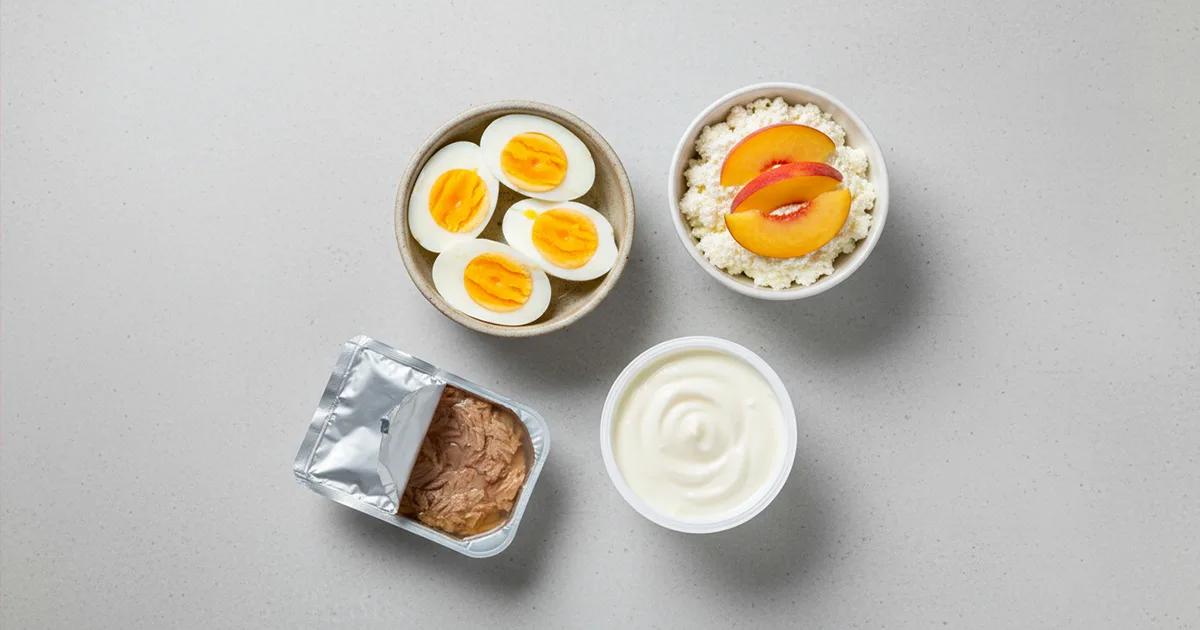
| Snack | Calories | Protein | Satiety (1–5) |
|---|---|---|---|
| Single-serve tuna pouch | ~80 cal | 17g | ⭐⭐⭐⭐⭐ |
| Cottage cheese (½ cup) | ~110 cal | 12–14g | ⭐⭐⭐⭐⭐ |
| Non-fat Greek yogurt (½ cup) | ~65 cal | 9g | ⭐⭐⭐⭐ |
| Hard-boiled egg (1 large) | ~78 cal | 6g | ⭐⭐⭐⭐ |
| String cheese (1 stick, part-skim) | ~80 cal | 7g | ⭐⭐⭐ |
Source: USDA FoodData Central
Snack 13: Hard-Boiled Egg – ~78 calories, 6g protein
Prep a batch of six on Sunday and you’ve got a week’s worth of grab-and-go protein. One large hard-boiled egg is 78 calories with 6 grams of complete protein. Sprinkle with everything bagel seasoning if plain eggs bore you. It works.
Snack 14: Cottage Cheese with Sliced Peaches – ~120 calories, 12g protein
Half a cup of low-fat cottage cheese runs about 90 calories and 12–14 grams of protein per USDA data. Add a few peach slices (fresh or canned in juice, not syrup) and you’re around 120 calories total. The sweetness of the peaches offsets the mild tang of cottage cheese in a way that makes this feel like a real treat.
Snack 15: Single-Serve Tuna Pouch – ~80 calories, 17g protein
I kept single-serve tuna pouches in my desk drawer for months, and they changed my afternoon snacking completely. No can opener, no mess, 17 grams of protein for 80 calories. Eat it straight from the pouch with a few whole-grain crackers (add ~60 cal) for a complete snack under 150 calories. Sounds basic. Works brilliantly.
Snack 16: String Cheese (1 Stick, Part-Skim) – ~80 calories, 7g protein
One part-skim mozzarella string cheese stick is about 80 calories and 7 grams of protein. It’s portable, requires no refrigeration for a couple of hours, and takes zero prep. Pair it with a small apple for a sweet-savory combo around 175 calories with solid protein and fiber.
Snack 17: Non-Fat Greek Yogurt (½ Cup Plain) – ~65 calories, 9g protein
Half a cup of plain non-fat Greek yogurt is only 65 calories with 9 grams of protein. On its own it’s a bit tart, but a half-teaspoon of honey and some cinnamon brings it to life without adding many calories. This is one of the most calorie-efficient snacks on this entire list.
For more high-protein eating ideas, our high protein diet beginner’s guide breaks down exactly how to hit your protein targets without overhauling your whole diet.
Crunchy Low Calorie Snacks (Because Sometimes You Need That Crunch) (Snacks 18–21)
✓ Quick Answer
Air-popped popcorn, rice cakes, roasted seaweed, and sliced bell peppers deliver genuine crunch for under 100 calories per serving, making them the best low calorie alternatives to chips and crackers.
The crunch craving is one of the hardest to satisfy with healthy swaps. Most people grab chips, crackers, or pretzels, and suddenly they’ve eaten 400 calories without thinking about it. These four options are the real deal for crunch seekers.
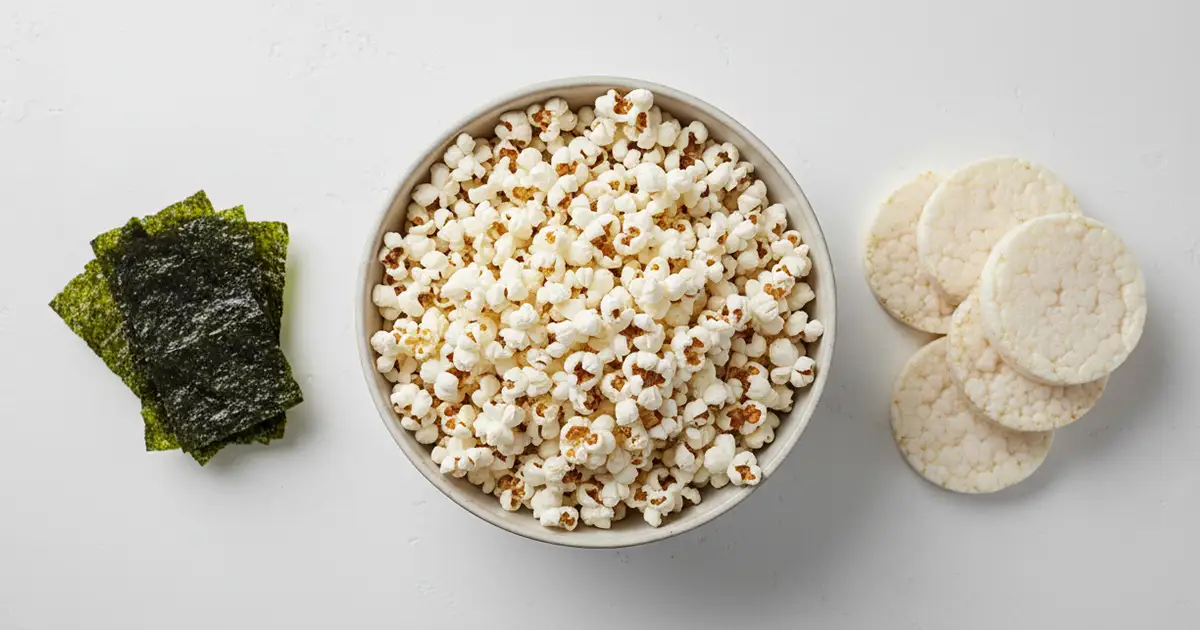
Instead of This → Try This
| High-Calorie Crunch | Calories | Low-Cal Swap | Calories Saved |
|---|---|---|---|
| Regular potato chips (1 oz) | 152 cal | Air-popped popcorn (1 oz, ~3 cups) | ~90 cal → save 62 cal |
| Pretzels (1 oz) | 108 cal | Plain rice cakes (2) | ~70 cal → save 38 cal |
| Crackers (6 standard) | ~120 cal | Sliced bell pepper strips | ~30 cal → save 90 cal |
| Pork rinds (1 oz) | 154 cal | Roasted seaweed pack (0.35 oz) | ~25 cal → save 129 cal |
Source: USDA FoodData Central
Snack 18: Air-Popped Popcorn (3 Cups) – ~90 calories
Three cups of air-popped popcorn is 90 calories. That’s a big bowl. Regular potato chips give you maybe 15–20 chips for 150 calories. The math isn’t close. Air-popped popcorn has a calorie density of roughly 31 calories per ounce, compared to 140+ per ounce for most chips, per USDA FoodData Central data. Season with nutritional yeast for a cheesy flavor, or smoked paprika and sea salt for something savory.
Snack 19: Plain Rice Cakes (2 Cakes) – ~70 calories
Two plain rice cakes are about 70 calories. They’re not exciting on their own, but top them with something (avocado, nut butter, cottage cheese, a slice of turkey) and they become a real snack vehicle with great texture. More on pairing in Section 8.
Snack 20: Roasted Seaweed Snack (1 Package) – ~25 calories
No joke, a full package of roasted seaweed snacks is 25 calories. They’re salty, crispy, and genuinely satisfying in a snack-y way. I can eat two packs and still be well under 100 calories. They’re also high in iodine and trace minerals, which is a nice bonus. Find them at most American grocery stores in the Asian foods aisle or snack aisle.
Snack 21: Sliced Bell Pepper Strips with Salsa – ~60 calories
Half a large bell pepper sliced into strips (~30 cal) with 3 tablespoons of salsa (~25 cal) is a 60-calorie snack with crunch, flavor, and a dose of vitamin C. The color matters here, honestly, red and yellow peppers taste sweeter than green, so if you find raw peppers bitter, go red.
For more swaps that replace junk food without sacrificing satisfaction, see our healthy alternatives to junk food guide.
On-the-Go Low Calorie Snacks for Busy Americans (Snacks 22–25)
✓ Quick Answer
The best portable low calorie snacks require no refrigeration or prep, a single-serve nut pack, banana, turkey jerky, or a low-calorie protein bar all pack under 160 calories and survive a work bag or gym tote.
Eating healthy on the go is where most diets fall apart, not from lack of willpower, but from lack of preparation. When you’re hungry and the only thing available is a vending machine, you’re going to make a bad decision. These four snacks are designed to prevent that moment from ever happening.
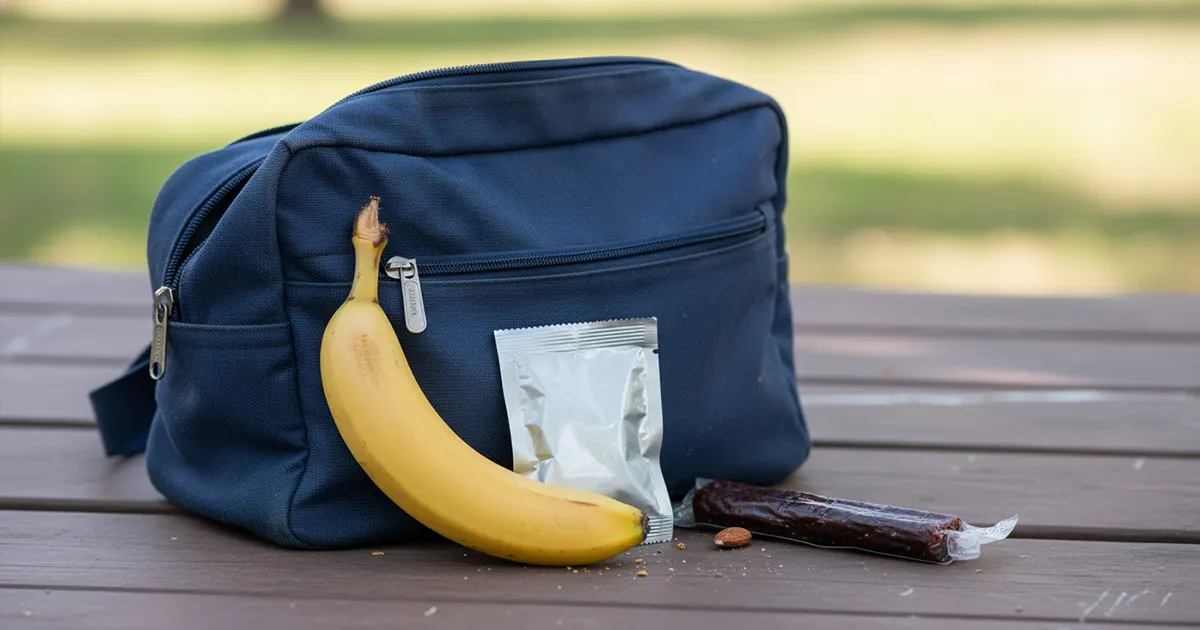
The CDC’s nutrition resources note that adults who plan and pack their own snacks consume significantly fewer calories from snacking than those who rely on convenience store or vending machine options. That’s not surprising, it’s just a numbers game. Planned snacks are lower calorie. Convenience snacks are engineered to be as calorie-dense as possible.
Snack 22: Single-Serve Almond Pack (1 oz, ~23 almonds) – ~160 calories
Almonds are on the higher end of “low calorie” snacks at 160 calories per ounce, but they earn their keep. A 2021 study indexed on PubMed found that regular almond consumption was associated with reduced belly fat and better cholesterol levels. More importantly: they’re filling, they’re shelf-stable, and they’re available pre-portioned in 100-calorie packs at virtually every American grocery store. Grab a few and throw them in your bag Monday morning. Problem solved.
Snack 23: Banana (Medium) – ~105 calories
A medium banana is 105 calories with 3 grams of fiber and a dose of potassium and vitamin B6, per USDA data. It comes in its own packaging. It doesn’t need refrigeration. It takes zero prep. If you want to make it more filling, pair it with a small nut pack, the fat and protein slow digestion and turn a quick energy snack into something that lasts 2–3 hours.
Snack 24: Turkey Jerky (1 oz, Low-Sodium) – ~70 calories
One ounce of turkey jerky is roughly 70 calories and about 11 grams of protein. It’s shelf-stable, portable, and has a satisfying chew that makes it feel like a legitimate snack. Watch the sodium, some brands pack 400–600mg per serving, which is a lot. Look for low-sodium versions, or brands like Chomps that keep it under 230mg per stick.
Snack 25: Low-Calorie Protein Bar (Under 150 calories) – ~140–150 calories
Not all protein bars are created equal. Many “healthy” bars have 250–300 calories and more sugar than a candy bar. But there are genuinely good options under 150 calories. KIND Protein bars (some varieties), RXBARs (check the label, some are 200+ cal), and ThinkThin Lean options can work. Always check the label. The front of the package means nothing. Flip it over.
Build the habit of prepping a small “snack kit” on Sunday, a few nut packs, a couple of bananas, some jerky sticks, and whatever shelf-stable options you like. It takes ten minutes and removes all decision-making during the week.
Store-Bought vs. Homemade Low Calorie Snacks: Which Should You Choose?
✓ Quick Answer
Neither is automatically better, the best low calorie snack is the one you’ll actually eat instead of raiding the vending machine. Homemade gives you more control; store-bought gives you convenience. Reading the nutrition label is what separates good choices from traps.
Real talk: most snacking happens on impulse, not during a planned meal prep session. So having both good homemade options and reliable store-bought picks is the practical approach. Here’s how to navigate both.
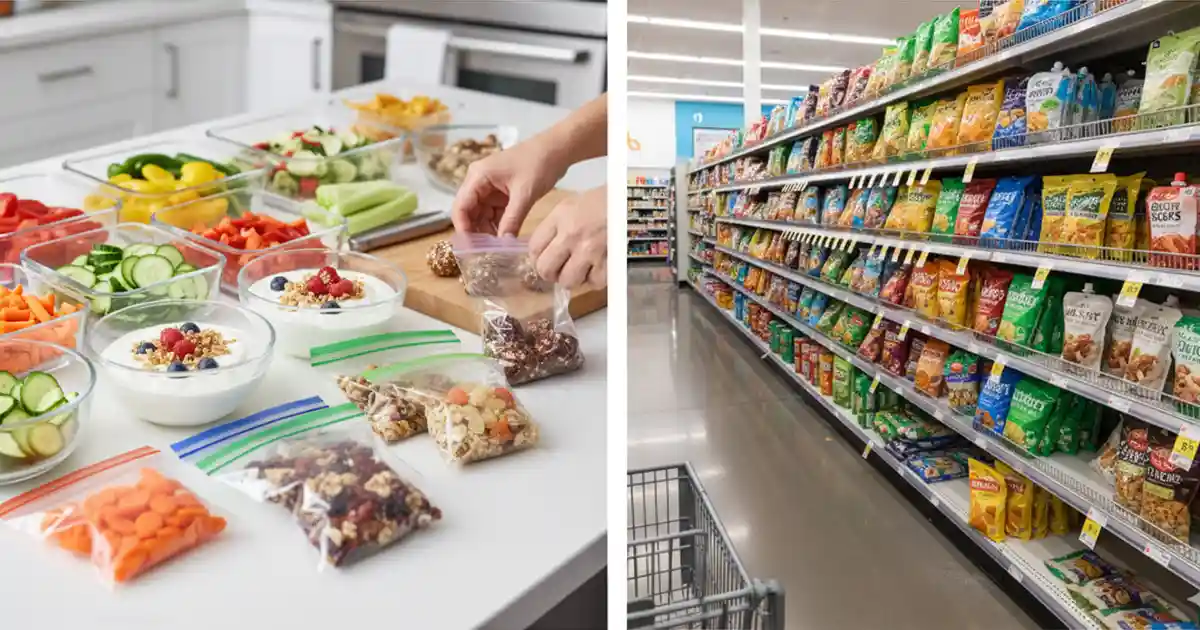
When Store-Bought Wins
Portability and consistency are the two big advantages. A single-serve nut pack has the same calories every time, it’s already portioned, and it fits in a pocket. Homemade snacks require prep time, containers, and refrigeration.
Store-bought also removes the temptation to “just have a little more.” pre-portioned packaging is a psychological tool that actually works.
When Homemade Wins
Homemade snacks almost always beat store-bought on sodium, added sugar, and value. A batch of homemade roasted chickpeas costs about $0.50 and lets you control exactly what goes on them. The equivalent packaged product often has 400mg of sodium and costs $3.00.
Homemade also wins on volume. You can make a massive bowl of cut cucumbers, peppers, and cherry tomatoes for 50 calories total. No packaged snack matches that.
How to Read a Snack Nutrition Label in 30 Seconds
The FDA’s food labeling guidelines give you everything you need to know, but here’s the practical version:
- Check the serving size first. Many “snack packs” list nutrition info for half the bag.
- Look at added sugars. Under 5g is reasonable. Over 8g is a sugar snack, not a real snack.
- Check sodium. Under 250mg per serving is good. Over 400mg means it’s a sodium bomb.
- Look for protein and fiber. If a snack has 0g of both, it won’t keep you full.
I spent ten minutes reading the backs of “healthy” snack bars at a drugstore once. Three out of five top sellers had more sugar than a fun-size Snickers. Front-of-package marketing is almost entirely meaningless.
Best Low Calorie Snacks to Buy at Major US Grocery Stores
| Product | Store | Calories | Why It Works |
|---|---|---|---|
| Chobani Zero Sugar Greek Yogurt | Most grocers | 60–70 cal | High protein, no added sugar |
| Quaker Large Rice Cakes | Walmart, Target | 35 cal each | Versatile base, very low cal |
| Chomps Turkey Jerky Sticks | Target, Whole Foods | 70 cal | High protein, clean label |
| Good & Gather Seaweed Snacks | Target | 25 cal/pack | Super low cal, satisfying crunch |
| Kirkland Unsalted Almond Packs | Costco | 160 cal/oz | Filling, clean ingredient list |
Calorie data verified via USDA FoodData Central and product nutrition labels.
How to Build the Perfect Low Calorie Snack: The Pairing Formula
✓ Quick Answer
The most satisfying low calorie snacks pair a high-fiber or high-volume food with a protein or healthy fat source. This combination slows digestion, suppresses hunger hormones, and keeps you full far longer than either food alone.
This is the section that actually changes how you snack. Most people pick one food. A smarter approach is pairing two foods strategically, not to add calories, but to dramatically increase how long the snack keeps you satisfied.
The Fiber + Protein Rule for Lasting Fullness
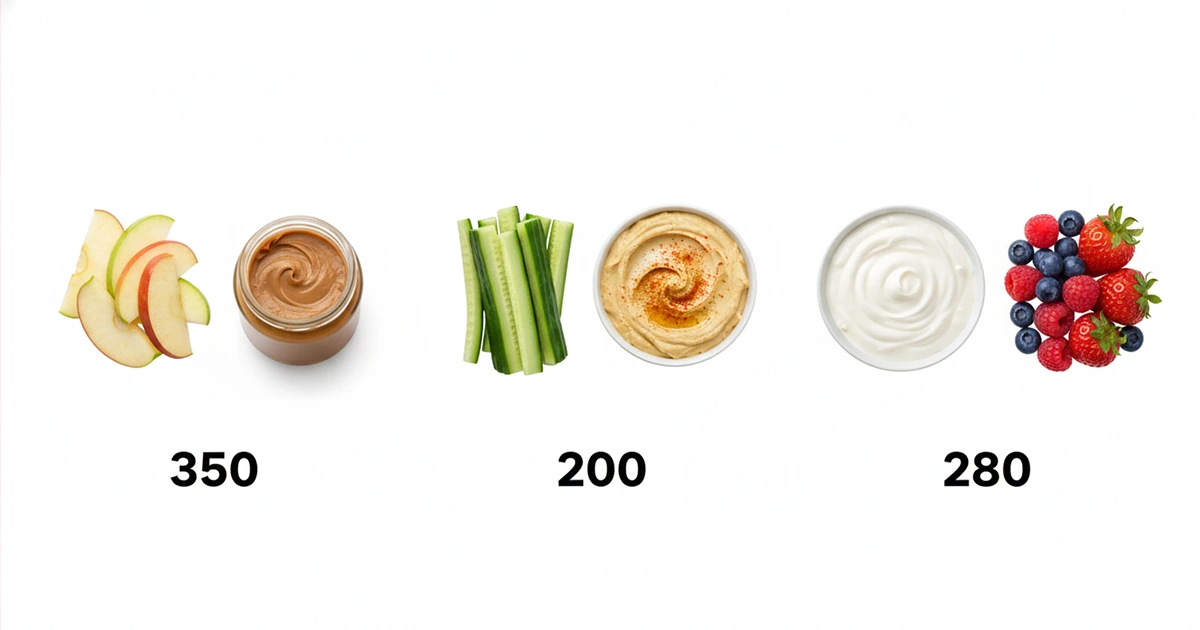
Here’s the formula: [High-Volume/Fiber Food] + [Protein or Healthy Fat] = Satiety
Research from the NIH National Library of Medicine shows that combined macronutrient snacks (carbohydrate + protein) produce a stronger satiety hormone response than single-macronutrient snacks. In practical terms: an apple alone spikes your blood sugar briefly then drops. An apple with almond butter digests slower, keeps blood sugar more stable, and keeps you fuller 30–60 minutes longer.
How to Keep Low Calorie Snack Pairings Under 150 Calories
| High-Volume Base | Calories | + Protein/Fat Add-On | Calories | Total |
|---|---|---|---|---|
| Apple slices (medium apple) | ~80 cal | 1 tsp almond butter | ~30 cal | ~110 cal |
| Cucumber slices (1 cup) | ~15 cal | 2 tbsp hummus | ~50 cal | ~65 cal |
| Plain Greek yogurt (½ cup) | ~65 cal | ½ cup blueberries | ~40 cal | ~105 cal |
| Rice cake (2 plain) | ~70 cal | 1 slice deli turkey | ~30 cal | ~100 cal |
| Celery sticks (4 stalks) | ~25 cal | 1 tbsp peanut butter | ~90 cal | ~115 cal |
Source: USDA FoodData Central
I used to eat a plain rice cake as a snack and then wonder why I was hungry 20 minutes later. Adding a slice of turkey changed everything. Same basic calorie count, completely different satiety. That’s the pairing formula in action.
The trick is building these combos instinctively. After a week of thinking about it consciously, it becomes automatic. You stop grabbing a single food and start thinking in pairs.
For a deeper look at macronutrients and how they affect hunger, check out our guide to macronutrient basics.
Frequently Asked Questions About Low Calorie Snacks
What are the best low calorie snacks under 100 calories?
Great options under 100 calories include a hard-boiled egg (~78 cal), roasted seaweed snack packs (~25 cal), a cup of fresh strawberries (~50 cal), two plain rice cakes (~70 cal), half a cup of shelled edamame (~95 cal), and plain non-fat Greek yogurt (~65 cal for ½ cup). All of these have either protein or fiber, which is what separates a snack that holds you over from one that doesn’t. Calorie data sourced from USDA FoodData Central.
Are low calorie snacks good for weight loss?
Yes, when they replace higher-calorie options. Low calorie snacks don’t automatically cause weight loss on their own, but research published via the NIH shows that protein and fiber-rich snacks reduce hunger at subsequent meals, helping you consume fewer total daily calories. The key is replacing high-calorie impulse snacks (chips, candy, processed granola bars) with planned, lower-calorie options that genuinely satisfy you.
What snacks can I eat a lot of without gaining weight?
High-volume, low-calorie-density foods are your best bet. Think cucumber slices, celery sticks, air-popped popcorn, watermelon, strawberries, and sliced bell peppers. These foods are mostly water and fiber, which fills your stomach without loading up on calories. According to USDA FoodData Central, cucumbers are about 15 calories per cup, you’d have to eat an enormous amount to make a dent in your daily calorie budget.
What is a healthy snack under 200 calories?
Dozens of options qualify. Some of the most satisfying include: low-fat cottage cheese with peach slices (~130 cal), a medium banana with a small almond pack (~265 cal, go half a pack to stay under 200), plain Greek yogurt with berries (~120 cal), single-serve tuna on four whole-grain crackers (~160 cal), and an apple with 1 tbsp almond butter (~110 cal). Each of these combines macronutrients for better fullness than a simple carb snack.
What are good low calorie snacks for late-night cravings?
Late-night snacks work best when they’re small, lower in sugar, and ideally contain some protein. Good picks include air-popped popcorn (~90 cal), a hard-boiled egg (~78 cal), plain Greek yogurt (~65 cal for ½ cup), or a few slices of deli turkey (~45 cal). Avoid high-sugar options late at night, research indexed on PubMed suggests that high glycemic index snacks consumed close to bedtime can interfere with sleep quality and increase next-morning hunger.
What are low calorie snacks high in protein?
The top high-protein, low-calorie options per USDA FoodData Central include: a single-serve tuna pouch (~80 cal, 17g protein), non-fat Greek yogurt (~130 cal, 15–20g protein per ¾ cup depending on brand), cottage cheese (~110 cal, 12–14g protein per ½ cup), a hard-boiled egg (~78 cal, 6g protein), and turkey jerky (~70 cal, 11g protein per ounce). Any of these can anchor a satisfying snack under 200 calories.
Can I snack and still lose weight?
Absolutely. Snacking itself isn’t the issue, unplanned, high-calorie snacking is. Research available through the NIH National Library of Medicine suggests that planned, protein-rich snacks can support weight loss by preventing overeating at main meals. The key is staying within your overall daily calorie target. A 100-calorie protein snack that prevents 300 extra calories at dinner is a clear net win.
What are the best low calorie snacks to buy at the store?
Look for minimal ingredients and honest nutrition labels. Reliable options available at most US grocery stores: Chobani Zero Sugar Greek Yogurt (~60–70 cal), Quaker Rice Cakes (35 cal each), Chomps Turkey Jerky Sticks (~70 cal), single-serve almond packets (~100–160 cal depending on brand), and roasted seaweed snack packs (~25 cal each). Always flip the package and check serving size, a surprising number of “snack-sized” products list nutrition for half the container.
Are rice cakes a good low calorie snack?
They can be, but only if you pair them with something. Plain rice cakes are about 35 calories each and low in both protein and fiber, meaning they won’t keep you full on their own. Topped with a thin layer of nut butter, a slice of turkey, or some avocado, they become a genuinely satisfying snack for under 150 calories. Think of them as a blank canvas, not a standalone snack.
How many calories should a snack be?
The USDA Dietary Guidelines suggest snacks should represent roughly 10–15% of your total daily calorie intake. On a 1,800-calorie plan, that’s approximately 180–270 total snack calories per day, so one or two snacks of 100–150 calories each fits comfortably. If you’re very active or have a higher calorie target, 200-calorie snacks are entirely reasonable.
What are good low calorie snacks for work?
Desk-friendly picks that don’t need much or any refrigeration: single-serve nut packs (~100–160 cal), fresh fruit like a banana (~105 cal) or apple (~95 cal), turkey jerky (~70 cal), roasted chickpeas (~120 cal per ¼ cup), and rice cakes (~70 cal for two). If your office has a fridge, Greek yogurt cups and string cheese are great additions. The key is having them already at your desk, decision fatigue is real, and convenience wins every time.
Are fruits good low calorie snacks?
Yes, most whole fruits are naturally low in calories and high in fiber, vitamins, and water content. Berries, watermelon, apples, oranges, and grapefruit are among the lowest-calorie options. Some fruits like bananas (~105 cal) and mangoes (~100 cal per cup) are slightly more calorie-dense but still nutritionally excellent. Per USDA FoodData Central, a cup of strawberries has just 49 calories with 3 grams of fiber, hard to beat.
What are the cheapest low calorie snacks?
Eating low calorie on a budget is very doable. The most affordable options include bananas (~$0.25 each), eggs (~$0.20 per egg), canned or pouched tuna (~$1.00 per serving), plain oats with cinnamon (~$0.15 per serving), frozen edamame (~$0.50 per serving), and carrots with homemade hummus (well under $1.00 per serving). None of these require a premium grocery store or a big food budget.
What do nutritionists recommend for healthy snacking?
According to Harvard T.H. Chan School of Public Health, the best snacking approach prioritizes whole, minimally processed foods with protein and fiber. Registered dietitians commonly recommend Greek yogurt with berries, apple with nut butter, vegetables with hummus, hard-boiled eggs, and edamame. The consistent theme: combine a fiber source with a protein source to maximize satiety per calorie.
What can I snack on at night without ruining my diet?
Small, protein-focused snacks are best in the evening. A hard-boiled egg, half a cup of plain Greek yogurt, a few slices of turkey, or a small bowl of air-popped popcorn are all solid options under 100 calories. Avoid high-sugar snacks at night, the blood sugar spike and drop can disrupt sleep and increase hunger the following morning. Keep it simple, keep it small, and make sure it has some protein.
Wrapping It Up: Your Low Calorie Snack Game Plan
Snacking well isn’t complicated once you understand the fundamentals. You’re not trying to survive on carrot sticks and willpower. You’re building a practical system of go-to options that taste good, fit your calories, and actually keep you satisfied.
Here’s what we covered:
Key Takeaways:
- Low calorie snacks work best when they combine protein and fiber, not just low numbers on a label.
- Match your snack to your craving type: sweet, savory, crunchy, or portable.
- Use the pairing formula ([high-volume food] + [protein or fat]) to dramatically increase how long your snack holds you over.
- Both store-bought and homemade options can be excellent, the nutrition label is the only thing that matters, not the front-of-package marketing.
Your Next Steps:
- Pick 3–5 snacks from this list that genuinely sound good to you and add them to your next grocery run. Don’t try to overhaul everything at once.
- Set up a snack zone, a shelf in your fridge and a spot in your pantry dedicated to pre-portioned, grab-and-go options. Visibility matters. If it’s easy to access, you’ll choose it.
- Use the pairing formula for one week. Every snack you eat, try to combine one high-volume food with one protein or fat source. Notice the difference in how long you stay full.
You don’t have to choose between feeling satisfied and making smart choices. These 25 snacks prove those two things can absolutely coexist. Start with one or two, build the habit, and let the results speak for themselves.
Disclaimer: This article is for informational purposes only and does not constitute medical or dietary advice. Consult a registered dietitian or healthcare provider before making significant changes to your diet.
Updated: February 2026 | All calorie data verified via USDA FoodData Central
You Might Also Like
Looking for more ways to eat well without counting every calorie? Here are some of our most popular guides:
- Easy Low Calorie Meals Guide: 500+ Easy Recipes & Free Tools (2026), Your go-to resource for building a full week of satisfying, low calorie meals from scratch. Includes free planning tools.
- 25 Best High Protein Low Calorie Meals That Keep You Full (2026). If today’s high-protein snacks hit the spot, you’ll love these full meals that max out on protein without blowing your calorie budget.
- 50+ Low Calorie Meals for Weight Loss: Proven Recipes That Keep You Full (2026), A massive collection of weight-loss-friendly recipes that actually taste good, no sad salads required.
- 15 Best Low Calorie Starbucks Drinks, Recommended by Dietitians, Because your morning coffee order can quietly wreck a calorie deficit. Dietitian-approved picks that still taste great.
