
Navigating the world of weight loss can feel overwhelming, especially with so much conflicting information about calorie intake. It’s easy to get confused by rigid rules or quick-fix promises. But here’s the truth: your calorie needs are as unique as you are. This guide will cut through the noise, providing you with evidence-based insights and practical tools to understand how many calories *you* should eat to lose weight safely and sustainably.
Demystifying Calorie Needs for Women
If you’ve ever searched for “how many calories should a woman eat to lose weight,” you’ve likely encountered a dizzying array of advice. From the oft-repeated (and often misleading) 1200-calorie rule to complex dietary regimens, it’s no wonder many women feel lost.
The internet is flooded with conflicting information, making it challenging to discern what’s truly effective and, more importantly, what’s safe for *your* body. At Zailoo, we believe in empowering you with accurate, evidence-based information, free from fads and myths.
Forget the idea of a universal number. Your body is a complex system, influenced by a myriad of factors from your age and activity level to your hormones and unique metabolic rate. What works for one woman might not be right for another, and blindly following generic advice can lead to frustration, nutrient deficiencies, and even harm your metabolism in the long run.
Our goal isn’t to give you a magic number, but to provide you with the understanding and tools to discover *your* personalized calorie needs for healthy and sustainable weight loss.
Throughout this comprehensive guide, we’ll draw upon the latest research and recommendations from leading health organizations such as the Centers for Disease Control and Prevention (CDC), the National Institutes of Health (NIH), the U.S. Department of Agriculture (USDA), the Mayo Clinic, Harvard Medical School, the American Council on Exercise (ACE), the National Strength and Conditioning Association (NSCA), and the Endocrine Society. Our commitment to expertise, education, and compassion ensures you’re receiving the most reliable guidance available.
Why There is No Single Calorie Number for All Women
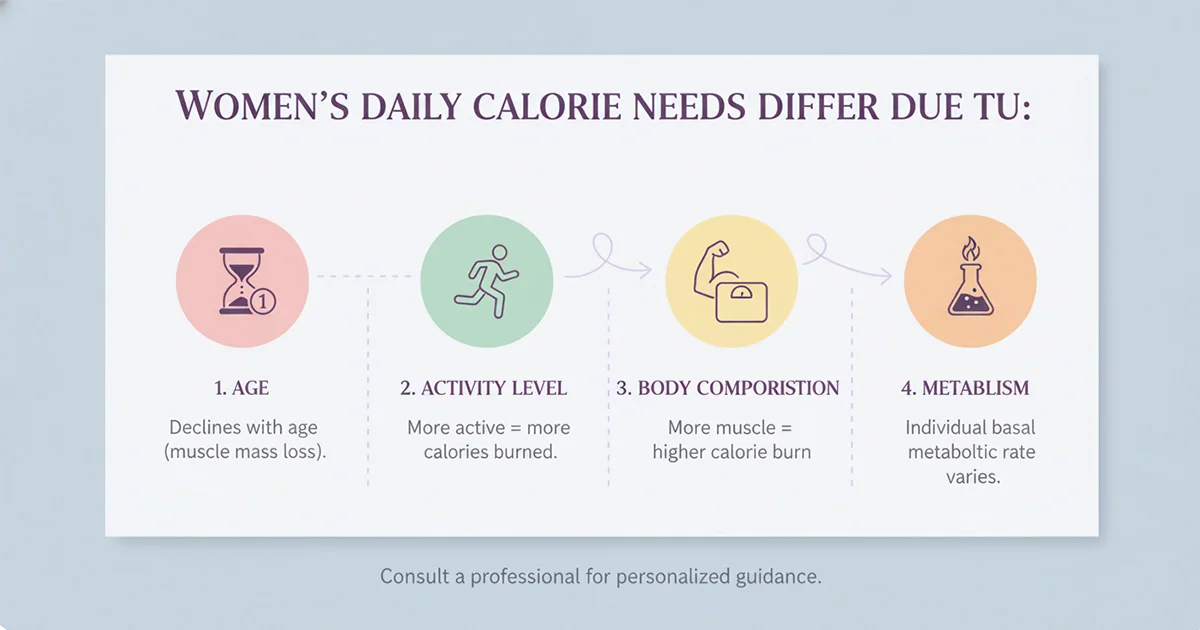
The human body is an intricate marvel, and no two are exactly alike. While it might be convenient to have one calorie number to aim for, the reality is far more nuanced. Several key factors significantly influence your individual calorie needs for weight loss (and maintenance).
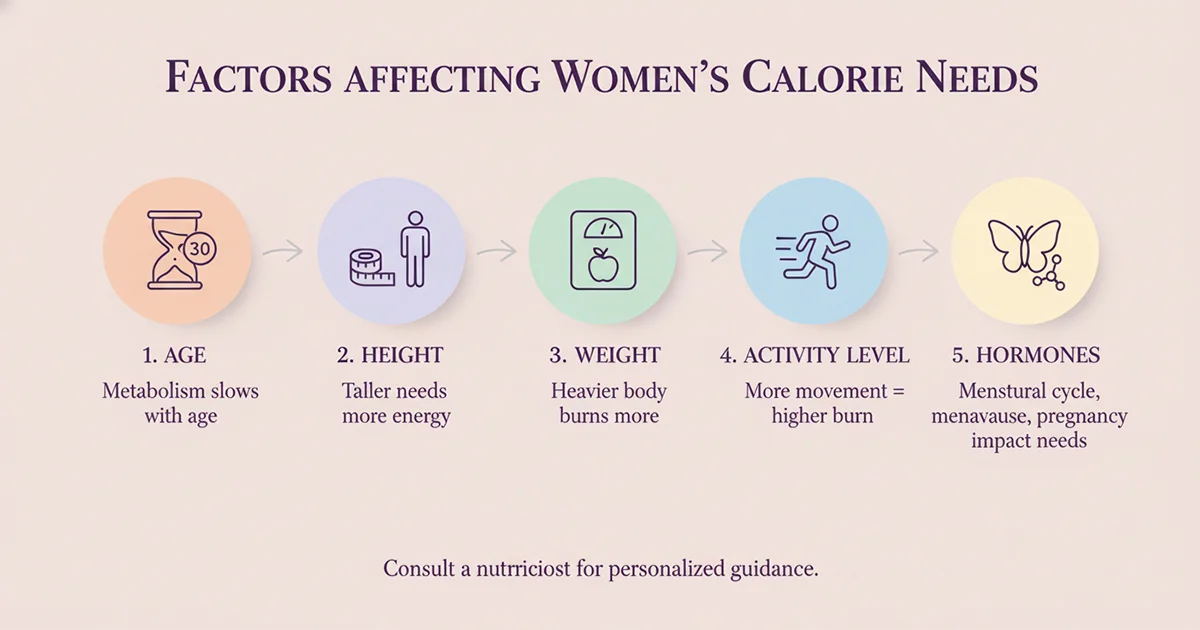
- Age: As women age, particularly after 30, our metabolism naturally tends to slow down. This is partly due to changes in body composition (a decrease in muscle mass) and hormonal shifts. This means that an older woman typically requires fewer calories than a younger woman of the same height, weight, and activity level to maintain her weight or achieve weight loss.
- Height and Weight: Taller and heavier individuals generally require more calories. A larger body has more cells that need energy to function, and it takes more energy to move a heavier body. Therefore, a woman who is 5’9″ and 180 lbs will likely have higher calorie needs than a woman who is 5’2″ and 140 lbs.
- Body Composition: This is a crucial, often overlooked factor. Muscle tissue is metabolically more active than fat tissue, meaning it burns more calories at rest. A woman with a higher percentage of muscle mass will have a higher Basal Metabolic Rate (BMR) – the calories her body burns just to exist – than a woman with the same total weight but a higher percentage of body fat.
- Activity Level: This is perhaps the most obvious factor. A woman who works an active job, exercises regularly, and moves a lot throughout her day will burn significantly more calories than someone with a sedentary desk job and minimal physical activity. This ranges from light activity (e.g., occasional walks) to very active (e.g., daily intense workouts, demanding physical job).
- Hormonal Status: Hormones play a profound role in a woman’s metabolism. Fluctuations during the menstrual cycle, pregnancy, breastfeeding, perimenopause, and menopause can all impact energy expenditure and how the body processes food. Conditions like thyroid disorders (hypothyroidism) can also dramatically slow metabolism, impacting calorie needs.
- Genetics: While not something we can change, genetics do play a role in metabolic rate and how efficiently our bodies store and burn fat. Some individuals naturally have a faster or slower metabolism due to genetic predispositions.
Understanding these variables is the first step toward tailoring a weight loss plan that truly works for you, rather than against you. It underscores why a one-size-fits-all approach to calorie intake is ineffective and often unsustainable.
The Calorie Deficit Explained: The Core of Weight Loss
At its most fundamental level, weight loss boils down to one simple principle: creating a calorie deficit. This means consistently consuming fewer calories than your body burns over a period of time. When this happens, your body taps into its stored energy reserves (primarily fat) to make up the difference, leading to a reduction in body weight.
Think of your body like a car with a fuel tank. If you put less fuel in than you burn driving, your fuel gauge will drop. Similarly, if you take in fewer calories (fuel) than your body expends for daily functions and physical activity, you will lose weight. Conversely, if you consume more calories than you burn, your body stores that excess energy, typically as fat, leading to weight gain.
What is a Safe Calorie Deficit?
While a deficit is necessary, the size of that deficit is crucial for safe and sustainable weight loss. A commonly recommended and safe deficit for most women aims for a loss of 1 to 2 pounds per week. Since one pound of fat is roughly equivalent to 3,500 calories, a deficit of 500 to 1000 calories per day is often targeted. This allows for steady progress without drastic reductions that can harm your health or metabolism. For example, a 500-calorie daily deficit would lead to a loss of approximately one pound per week (500 calories/day * 7 days = 3500 calories/week).
Safe Deficit Guidelines:
- Moderate Deficit (300-500 calories): Ideal for gradual, sustainable weight loss, preserving muscle mass, and minimizing metabolic slowdown. This is generally recommended for most women aiming for 1-1.5 pounds of weight loss per week.
- Larger Deficit (500-1000 calories): Can lead to faster weight loss (up to 2 pounds per week) but requires careful monitoring to ensure adequate nutrient intake and prevent adverse effects. This might be suitable for women with higher starting weights.
- Unsafe Deficits (more than 1000 calories below maintenance, or below 1200 calories total): These are generally not recommended without strict medical supervision. Extremely low-calorie diets can lead to nutrient deficiencies, muscle loss, hormonal imbalances, fatigue, and potential health complications. They are also often unsustainable, leading to rebound weight gain.
It’s important to remember that this is an estimation. Your body isn’t a perfect calculator, and metabolic adaptations can occur over time. However, understanding the principle of a calorie deficit is the foundation of any effective weight loss strategy.
Ready to Calculate Your Personalized Calorie Deficit?
Our easy-to-use calculator takes into account your unique factors to help you find a safe and effective calorie target for weight loss.
Calculate Your Calorie Deficit Now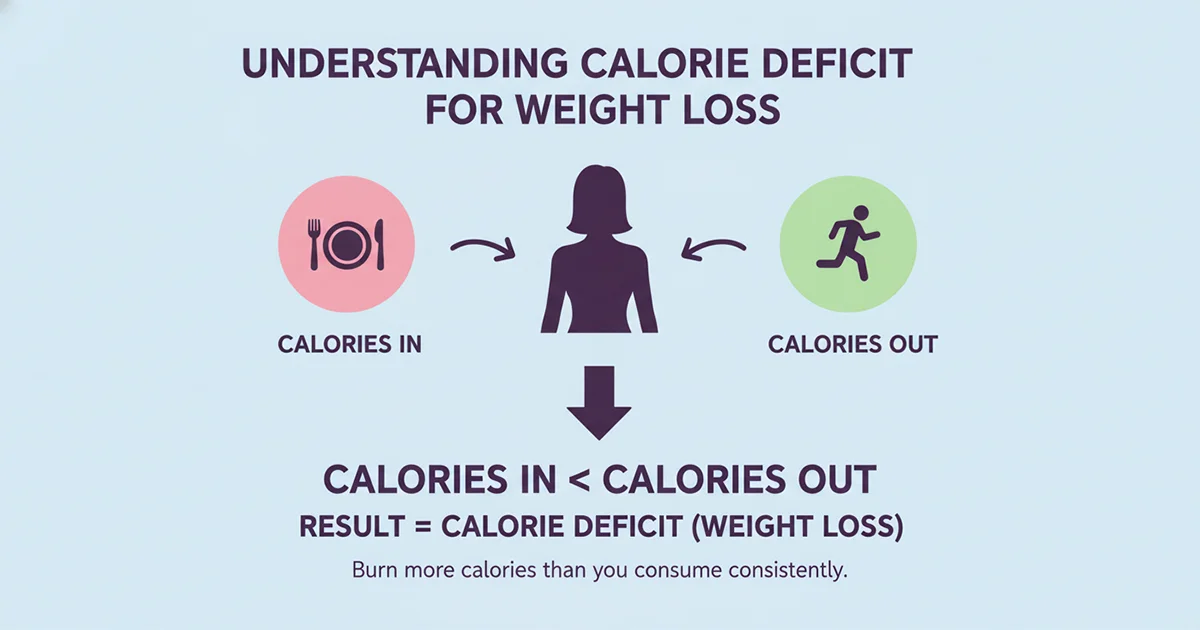
Average Calorie Ranges for Women: A General Guideline
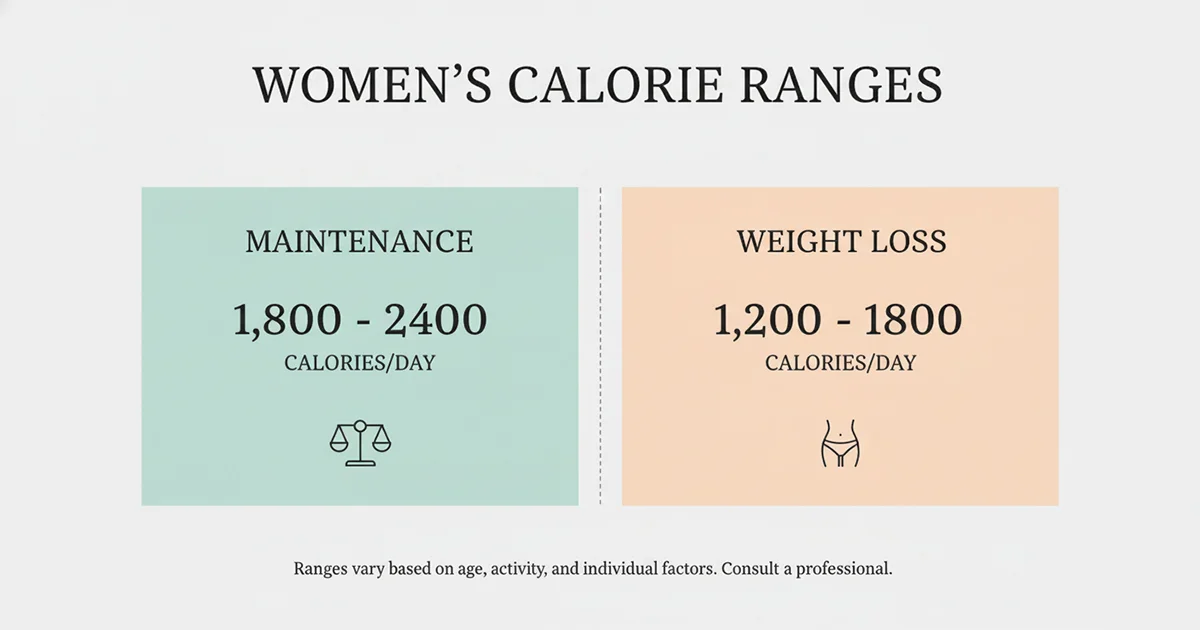
While we emphasize that individual needs vary, it can be helpful to have a general understanding of average calorie ranges for women. These ranges are typically based on age and activity level and come from reputable sources like the USDA’s Dietary Guidelines for Americans and the Institute of Medicine (IOM) recommendations. However, these are broad estimates and should not replace personalized calculations.
Maintenance Calorie Ranges (to maintain current weight):
- Sedentary (minimal physical activity):
- Ages 19-30: 1,800-2,000 calories
- Ages 31-50: 1,800 calories
- Ages 51+: 1,600 calories
- Moderately Active (light exercise 3-5 days/week):
- Ages 19-30: 2,000-2,200 calories
- Ages 31-50: 2,000 calories
- Ages 51+: 1,800 calories
- Active (moderate to vigorous exercise daily):
- Ages 19-30: 2,200-2,400 calories
- Ages 31-50: 2,200 calories
- Ages 51+: 2,000-2,200 calories
Weight Loss Calorie Ranges (for a 500-calorie deficit):
To lose weight safely, women generally aim for a calorie intake that creates a 300-500 calorie deficit below their maintenance level. This typically places the daily intake in the following ranges for a healthy, sustainable loss of 1-1.5 pounds per week. Always remember to never drop below 1200 calories without medical supervision, as this can be dangerous.
- Sedentary:
- Ages 19-30: 1,300-1,700 calories
- Ages 31-50: 1,300-1,500 calories
- Ages 51+: 1,100-1,300 calories
- Moderately Active:
- Ages 19-30: 1,500-1,900 calories
- Ages 31-50: 1,500-1,700 calories
- Ages 51+: 1,300-1,500 calories
- Active:
- Ages 19-30: 1,700-2,100 calories
- Ages 31-50: 1,700-1,900 calories
- Ages 51+: 1,500-1,700 calories
Important Disclaimer: These are very general averages. Your individual body size, muscle mass, and unique metabolism will cause your personal needs to fall within or even outside these ranges. Use these as a starting point for understanding, but always prioritize personalized calculation and professional guidance.
The Dangers of Eating Too Few Calories: More Harm Than Good
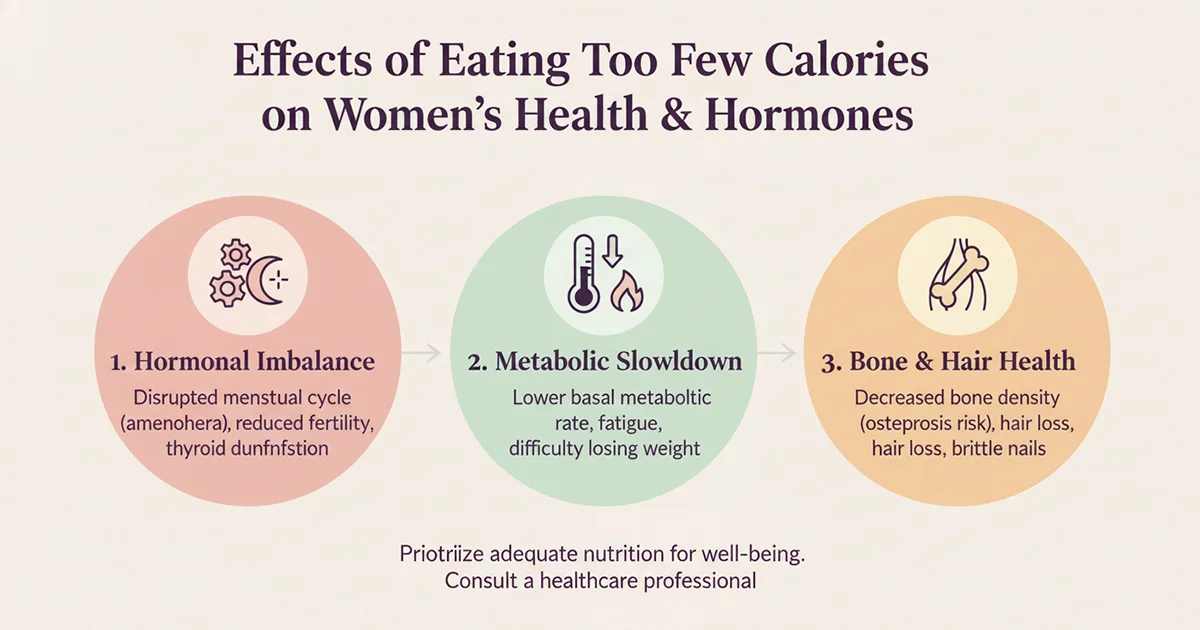
In the pursuit of weight loss, it can be tempting to drastically cut calories in hopes of faster results. However, consistently eating too few calories, especially below 1200 per day for most adult women, can have serious detrimental effects on both your physical and mental health. The body is designed for survival, and extreme calorie restriction triggers a complex cascade of responses to conserve energy, often backfiring on your weight loss goals and harming your overall well-being.
Physical Health Consequences:
- Metabolic Slowdown: When calorie intake is too low, your body thinks it’s starving. It conserves energy by reducing your Basal Metabolic Rate (BMR), making it harder to lose weight and easier to regain it once you increase your intake. This is often referred to as “metabolic adaptation.”
- Muscle Loss: Your body prioritizes fat storage for survival. With insufficient calorie intake, it starts to break down muscle tissue for energy, further reducing your metabolism. The American Council on Exercise (ACE) emphasizes that preserving muscle mass is crucial for a healthy metabolism.
- Nutrient Deficiencies: It becomes incredibly difficult to consume all the essential vitamins, minerals, and macronutrients your body needs when your calorie budget is severely restricted. This can lead to fatigue, weakened immunity, brittle hair and nails, and even more serious long-term health issues.
- Hormonal Disruption: For women, inadequate calorie intake can wreak havoc on delicate hormonal balances. This can lead to irregular or absent menstrual cycles (amenorrhea), impacting fertility and bone health. The Endocrine Society highlights the critical role of energy availability for reproductive function.
- Fatigue and Low Energy: Your body simply doesn’t have enough fuel to perform daily tasks, leading to persistent tiredness, lethargy, and an inability to exercise effectively.
- Bone Density Loss: Chronic calorie restriction and associated hormonal imbalances (like low estrogen) can contribute to reduced bone mineral density, increasing the risk of osteoporosis and fractures.
- Gallstones: Rapid weight loss from very low-calorie diets is a known risk factor for developing gallstones, according to the National Institute of Diabetes and Digestive and Kidney Diseases (NIDDK).
Mental and Emotional Consequences:
- Increased Cravings and Binge Eating: Extreme restriction often leads to intense cravings and a higher likelihood of binge eating episodes, creating a frustrating cycle of deprivation and overconsumption.
- Irritability and Mood Swings: Lack of adequate nutrition can significantly impact brain chemistry, leading to irritability, anxiety, and difficulty concentrating.
- Obsession with Food: When calories are severely limited, food can become an all-consuming obsession, dominating thoughts and conversations.
- Disordered Eating Patterns: Chronic severe restriction can be a gateway to developing unhealthy relationships with food and potentially clinical eating disorders.
The Mayo Clinic consistently advises against very low-calorie diets for general weight loss due to these risks. Prioritizing a moderate, sustainable calorie deficit ensures you’re losing weight in a way that supports your overall health and well-being, rather than compromising it.
How to Calculate Your Personal Calorie Needs for Weight Loss
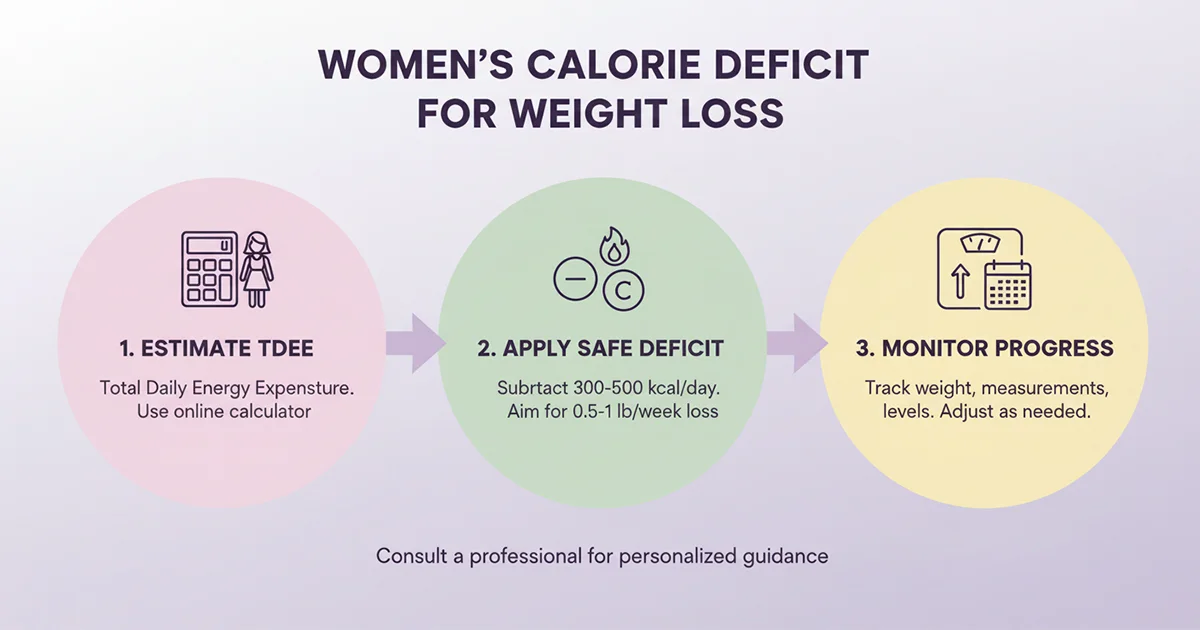
Now that you understand *why* individual calorie needs differ and the importance of a safe deficit, let’s walk through how to calculate a personalized target for yourself. This involves two main steps: estimating your Total Daily Energy Expenditure (TDEE) and then applying a safe calorie deficit.
Step 1: Estimate Your Total Daily Energy Expenditure (TDEE)
Your TDEE is the total number of calories your body burns in a 24-hour period, taking into account all activities. It’s composed of:
- Basal Metabolic Rate (BMR): The calories your body burns at rest just to perform basic life-sustaining functions (breathing, circulation, cell production, etc.).
- Thermic Effect of Food (TEF): The calories burned digesting, absorbing, and metabolizing food (roughly 10% of total calories).
- Non-Exercise Activity Thermogenesis (NEAT): Calories burned from daily movements not considered exercise (walking, fidgeting, cleaning, typing).
- Exercise Activity Thermogenesis (EAT): Calories burned during structured exercise.
While various formulas exist to estimate BMR (like Mifflin-St Jeor or Harris-Benedict), manually calculating TDEE can be complex due to the varying activity factors. The easiest and most accurate way for most women is to use a reliable TDEE calculator. Our TDEE Calculator for Women uses industry-standard formulas and factors in your age, height, weight, and activity level to give you a solid estimate of your daily calorie burn.
Using the TDEE Calculator:
- Input Your Data: Enter your age, height, weight, and select your activity level accurately. Be honest about your activity level – it’s better to slightly underestimate than overestimate.
- Get Your TDEE: The calculator will provide you with an estimated daily calorie intake to maintain your current weight.
Curious About Your TDEE?
Understanding your maintenance calories is the first crucial step in any weight loss journey. Find out yours now!
Estimate Your TDEE NowStep 2: Apply a Safe Calorie Deficit
Once you have your estimated TDEE, you’ll subtract a certain number of calories to create your deficit for weight loss. As discussed, a deficit of 300-500 calories per day is generally recommended for safe and sustainable weight loss (aiming for 1-1.5 pounds per week).
- For a 1 lb/week loss: Subtract 500 calories from your TDEE.
- For a 1.5 lb/week loss: Subtract 750 calories from your TDEE.
- For a 2 lb/week loss: Subtract 1000 calories from your TDEE (only for those with higher starting weights and always ensuring the final intake is not below 1200 calories).
Example: If your TDEE is 2000 calories, and you aim for a 1 lb/week loss, your target daily calorie intake would be 1500 calories (2000 – 500 = 1500).
Important Consideration: Never go below 1200 calories per day unless under strict medical supervision. This minimum threshold ensures you can still obtain adequate nutrients for basic bodily functions. For some women, especially those shorter or very sedentary, even a 500-calorie deficit might bring them close to or below this minimum. In such cases, a smaller deficit (e.g., 250-300 calories) combined with increased activity is a safer and more effective approach.
Step 3: Monitor and Reassess Over Time
Your body is not static. As you lose weight, your TDEE will naturally decrease (because there’s less of you to move!). Your activity levels might change, and your metabolism can adapt. Therefore, it’s essential to:
- Track Progress: Monitor your weight loss over a few weeks. If you’re consistently losing 1-2 pounds per week, you’ve likely found a good target.
- Adjust as Needed: If weight loss stalls for 2-3 weeks, or if you feel consistently fatigued and hungry, it might be time to recalculate your TDEE or slightly adjust your calorie target.
- Listen to Your Body: Pay attention to hunger cues, energy levels, and how you feel. Sustainable weight loss is about nourishing your body, not depriving it.
Special Considerations for Women: Beyond the Averages
While the general principles of calorie deficit apply, certain stages of a woman’s life or specific health situations warrant extra consideration when determining calorie needs for weight loss. These aren’t just minor adjustments; they are critical factors that impact metabolism, hormonal balance, and overall well-being.
Underweight Women: Prioritizing Health Over Weight Loss
For women who are already underweight (typically a Body Mass Index, or BMI, below 18.5), the focus should *never* be on weight loss. In fact, attempting to lose weight when underweight can be extremely dangerous, leading to severe nutrient deficiencies, weakened immune function, hormonal shutdown, and increased risk of bone density loss and other health complications. The CDC emphasizes that a healthy BMI range is crucial. If you are underweight and concerned about your body image, consult with a doctor or registered dietitian immediately. The goal should be to achieve and maintain a healthy weight, which may involve increasing calorie intake and seeking professional guidance.
Perimenopause & Menopause: Shifting Energy Needs and Metabolism
The transition through perimenopause and into menopause brings significant hormonal changes (primarily declining estrogen) that can impact a woman’s metabolism and body composition. Many women report increased difficulty losing weight or even experience weight gain around the abdomen during this time, even without significant changes in diet or activity. Here’s why and what to do:
- Metabolic Slowdown: Estrogen plays a role in regulating metabolism. Its decline can contribute to a natural slowdown in calorie expenditure.
- Muscle Mass Loss: Age-related muscle loss (sarcopenia) accelerates during menopause, further reducing BMR since muscle is more metabolically active than fat.
- Fat Redistribution: Hormonal shifts can cause fat to be stored more predominantly in the abdominal area rather than the hips and thighs, increasing health risks.
For women in perimenopause and menopause, focusing solely on calorie restriction might not be as effective or healthy. Key strategies include:
- Prioritize Protein: Increasing protein intake (e.g., 25-30 grams per meal) helps preserve muscle mass, keeps you feeling full, and has a higher thermic effect than carbs or fat.
- Strength Training: This becomes even more vital. Regular resistance training helps build and maintain muscle mass, counteracting age-related decline and boosting metabolism. The American Council on Exercise (ACE) strongly recommends strength training during this phase.
- Mindful Eating & Quality Calories: Focus on nutrient-dense foods (vegetables, lean proteins, healthy fats) to support hormonal health and satiety, rather than just hitting a calorie number.
- Stress Management & Sleep: Cortisol (the stress hormone) can promote belly fat storage, and poor sleep can disrupt hunger-regulating hormones. Prioritize both.
Highly Active Women: Fueling Performance and Preventing Low Energy Availability
Women who engage in high levels of physical activity – such as competitive athletes, endurance runners, or those with very physically demanding jobs – have significantly higher calorie needs than the average woman. For these individuals, insufficient calorie intake can lead to a condition known as Low Energy Availability (LEA) or Relative Energy Deficiency in Sport (RED-S).
- What is LEA/RED-S? This occurs when the body doesn’t receive enough energy to support both its daily functions and the demands of exercise. Even if not clinically underweight, these women can experience severe health consequences.
- Consequences of LEA/RED-S: These include hormonal disruption (especially menstrual irregularities, impacting bone health), impaired immune function, decreased athletic performance, increased risk of injuries, and psychological distress. The American College of Sports Medicine (ACSM) has extensively documented RED-S.
Highly active women should work closely with a sports dietitian or doctor to ensure their calorie intake adequately supports their activity levels and physiological needs. The focus shifts from just “losing weight” to “optimizing body composition and performance while maintaining health.” A general guideline is to avoid deficits that are too large, especially during periods of intense training, and to prioritize nutrient timing and adequate carbohydrate and protein intake.
Common Myths About Calories and Weight Loss (Busted!)
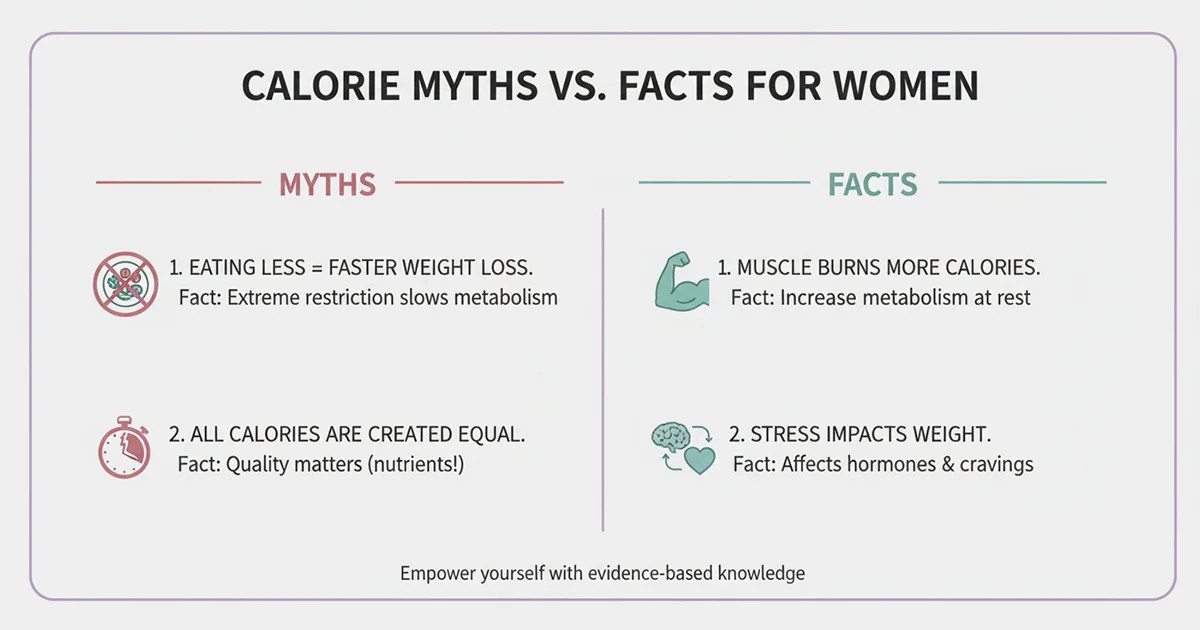
The world of nutrition is rife with misinformation, and calorie counting is no exception. Let’s debunk some common myths that can hinder women’s weight loss progress and foster an unhealthy relationship with food.
Myth 1: The “1200 Calorie Rule” is for Everyone.
Fact: This is one of the most pervasive and harmful myths. While 1200 calories might be a suitable target for some very short, sedentary women, it is far too restrictive for the vast majority of adult women. As discussed, your calorie needs are unique. Consistently eating only 1200 calories can lead to metabolic slowdown, muscle loss, nutrient deficiencies, and make sustainable weight loss incredibly difficult. It’s a number often pulled from outdated, generic diet plans without considering individual factors.
Myth 2: The More Cardio You Do, the Less You Should Eat.
Fact: This mindset can be dangerous, especially for active women. While cardio does burn calories, it also requires energy for performance and recovery. Undereating when highly active can lead to low energy availability (RED-S), muscle loss, hormonal imbalances, fatigue, and increased injury risk. Instead, match your calorie intake to your activity level. Fuel your body appropriately for your workouts, and create a moderate deficit (if needed) through a combination of diet and exercise, not by starving yourself after a run.
Myth 3: Eating Less is Always Better for Weight Loss.
Fact: There’s a point of diminishing returns, and then a point of harm. While a deficit is necessary, an excessive deficit is counterproductive. Your body needs sufficient calories to perform vital functions and to sustain muscle mass. Too little can trigger survival mode, slowing your metabolism, increasing cravings, and making adherence impossible. It’s about eating *enough* to support your body while still being in a moderate deficit.
Myth 4: All Calories are Created Equal.
Fact: While the number of calories dictates weight loss or gain, the *source* of those calories profoundly impacts your health, satiety, and body composition. 500 calories of highly processed, sugary foods will affect your body differently than 500 calories of lean protein, vegetables, and whole grains. Nutrient-dense foods provide essential vitamins, minerals, and fiber, keep you feeling full longer, and support overall health, making adherence to a calorie target much easier and healthier. The Harvard T.H. Chan School of Public Health emphasizes the importance of food quality.
Myth 5: You Can “Starve” Your Metabolism.
Fact: Your metabolism won’t permanently shut down from a diet, but it can *adapt* and slow down (metabolic adaptation). This is your body’s survival mechanism. However, this slowdown isn’t irreversible. By gradually increasing calorie intake back to maintenance levels (reverse dieting), ensuring adequate protein, and incorporating strength training, you can help restore metabolic function and prevent future slowdowns. The key is to avoid extreme, prolonged restriction.
Myth 6: Only Calorie Counting Works for Weight Loss.
Fact: While calorie counting is a highly effective tool for many, it’s not the *only* way to create a deficit. Many individuals successfully lose weight through other methods like mindful eating, portion control, intuitive eating, focusing on whole foods, or specific dietary patterns (e.g., Mediterranean diet) that naturally lead to a calorie deficit without explicit counting. The most effective method is the one you can stick with consistently and that promotes a healthy relationship with food.
Practical Tips for Successful and Sustainable Weight Loss
Knowing your calorie target is a fantastic first step, but how do you actually put it into practice? Sustainable weight loss is about more than just numbers; it’s about building healthy habits and fostering a positive relationship with food and your body. Here are some practical tips to help you succeed:
- Prioritize Whole, Nutrient-Dense Foods: Focus on filling your plate with vegetables, fruits, lean proteins (chicken, fish, tofu, beans), whole grains (oats, quinoa, brown rice), and healthy fats (avocado, nuts, seeds). These foods offer more satiety for fewer calories and provide essential nutrients, making it easier to stick to your calorie goal without feeling deprived.
- Embrace Protein and Fiber: Protein is incredibly satiating and crucial for preserving muscle mass during weight loss. Fiber, found in fruits, vegetables, and whole grains, also helps you feel full and supports digestive health. Aim for a good source of protein and fiber at every meal.
- Hydrate, Hydrate, Hydrate: Sometimes, thirst can be mistaken for hunger. Drink plenty of water throughout the day. It can also help you feel fuller before meals.
- Track for Awareness (Not Obsession): Using a food tracking app for a few weeks can be incredibly insightful. It helps you understand portion sizes, identify hidden calories, and see where your calories are actually coming from. You don’t have to track forever, but occasional tracking can be a powerful learning tool.
- Plan Ahead: Meal prepping or simply planning your meals and snacks can prevent impulsive, calorie-dense choices when hunger strikes. Knowing what you’ll eat helps you stay within your targets.
- Don’t Demonize Any Food: All foods can fit into a healthy diet in moderation. Restrictive mindsets often backfire, leading to cravings and overeating. Practice flexible dieting, allowing for occasional treats within your calorie budget.
- Incorporate Strength Training: Beyond calorie burning, resistance training builds muscle, which boosts your metabolism and improves body composition. The National Strength and Conditioning Association (NSCA) advocates for strength training as a cornerstone of health and weight management.
- Move Your Body Regularly: Find physical activities you enjoy. It doesn’t have to be intense gym sessions. Walking, hiking, dancing, or cycling all contribute to your “calories out” and improve overall well-being.
- Prioritize Sleep: Lack of sleep can disrupt hunger hormones (ghrelin and leptin), leading to increased appetite and cravings. Aim for 7-9 hours of quality sleep per night.
- Manage Stress: Chronic stress can lead to elevated cortisol levels, which can contribute to weight gain, particularly around the abdomen. Find healthy ways to manage stress, such as meditation, yoga, or spending time in nature.
- Be Patient and Consistent: Weight loss is a journey, not a race. There will be ups and downs. Focus on consistency over perfection, celebrate small victories, and remember that sustainable results take time.
- Seek Professional Guidance: If you’re struggling, consider consulting a registered dietitian or a certified personal trainer. They can provide personalized advice and support tailored to your unique needs and health conditions.
Frequently Asked Questions About Women’s Calorie Needs
1. Is 1200 calories safe for women to lose weight?
For most adult women, 1200 calories is too low for safe and sustainable weight loss. While it might lead to quick initial weight loss, it often results in metabolic slowdown, muscle loss, nutrient deficiencies, fatigue, and can be difficult to maintain. It is generally considered a starvation-level diet and should only be undertaken under strict medical supervision for specific, short-term purposes. A moderate calorie deficit (300-500 calories below your TDEE) is almost always a healthier and more effective long-term strategy, as supported by the Mayo Clinic.
2. How fast should women lose weight safely?
A safe and sustainable rate of weight loss for most women is 1 to 2 pounds per week. This rate allows for fat loss while minimizing muscle loss and reducing the risk of nutrient deficiencies or metabolic adaptations that can hinder long-term success. Losing weight too quickly can lead to adverse health effects and often results in rebound weight gain. The CDC recommends this gradual approach.
3. Do calorie needs change with age for women?
Yes, calorie needs typically decrease with age for women. After about age 30, metabolism naturally begins to slow by approximately 1-2% per decade, largely due to a decrease in muscle mass and hormonal shifts. This means that an older woman will generally require fewer calories to maintain her weight than a younger woman of the same height and activity level. This is why factoring in age is crucial when calculating your TDEE.
4. Can eating too little stop weight loss (plateau)?
Yes, eating too little can absolutely contribute to weight loss plateaus. When you severely restrict calories, your body adapts by slowing down your metabolism to conserve energy. This makes it harder to burn fat and can even lead to increased muscle breakdown. Additionally, extreme restriction can make it difficult to get enough nutrients, impact hormone balance, and lead to fatigue that reduces your overall activity level, all of which hinder weight loss. Sometimes, strategically increasing calories (reverse dieting) to a more sustainable level can actually kickstart stalled progress.
5. Should women eat the same calories every day?
No, you don’t necessarily have to eat the exact same calories every single day. While consistency is important, daily fluctuations in appetite or activity are normal. Some women find success with calorie cycling (eating slightly more on workout days and slightly less on rest days) or simply allowing for small daily variations within their weekly average. The key is that your *average* calorie intake over the week or month creates the desired deficit for weight loss. Focus on overall trends rather than daily perfection.
6. Is calorie counting necessary for weight loss?
Calorie counting is a highly effective tool for understanding your intake and creating a precise deficit, and many find it very useful, especially initially. However, it is not strictly “necessary” for everyone. Many women successfully lose weight through other strategies like mindful eating, focusing on whole, unprocessed foods, practicing portion control, or using visual cues for serving sizes. The most important thing is to consistently create a calorie deficit in a way that is sustainable and healthy for you.
7. What role do hormones play in a woman’s calorie needs and weight loss?
Hormones play a significant role. Estrogen, progesterone, thyroid hormones, insulin, leptin, and ghrelin all influence metabolism, appetite, fat storage, and energy expenditure. Fluctuations due to the menstrual cycle, pregnancy, perimenopause, menopause, or conditions like PCOS or hypothyroidism can alter calorie needs and make weight loss more challenging. For instance, declining estrogen in menopause can slow metabolism and promote abdominal fat storage. Addressing hormonal imbalances with medical professionals can be crucial for effective weight management.
8. Can stress impact a woman’s ability to lose weight, even with a calorie deficit?
Absolutely. Chronic stress leads to elevated levels of cortisol, the “stress hormone.” High cortisol can increase appetite, especially for high-sugar, high-fat foods, and can promote fat storage, particularly around the abdominal area. It can also disrupt sleep, which further impacts hunger-regulating hormones. Even if you’re technically in a calorie deficit, unmanaged stress can make adherence incredibly difficult and potentially hinder fat loss, making stress management a vital component of any weight loss plan.
Conclusion: Your Personalized Path to Sustainable Weight Loss
Understanding how many calories a woman should eat to lose weight is not about finding a magic number; it’s about understanding *your* unique body and its needs. We’ve explored why a one-size-fits-all approach fails, the critical role of a safe calorie deficit, and the dangers of extreme restriction. We’ve also highlighted the special considerations for women at different life stages and debunked common myths that can derail your progress.
Remember, sustainable weight loss is a journey of self-discovery, consistency, and kindness to your body. It’s about nourishing yourself with nutrient-dense foods, moving in ways you enjoy, prioritizing sleep, managing stress, and adjusting your approach as your body changes. It’s not about perfection, but about progress.
Empower yourself with the right tools and knowledge. Use the insights from this guide as your foundation, and let our calculators provide you with a personalized starting point. Your health and well-being are worth the informed effort.
Ready to Take the Next Step?
Utilize our specialized tools to pinpoint your ideal calorie targets for healthy, sustainable weight loss.