In a world saturated with quick-fix diets and extreme weight loss promises, it’s easy for women to feel lost and overwhelmed. We’re constantly bombarded with messages that push for faster, harder, and more restrictive approaches to our bodies. But when it comes to sustainable health and genuine well-being, “safe” matters so much more than “fast.”
Diet culture often misleads women into believing that aggressive calorie restriction is the only path to weight loss, ignoring the unique complexities of female physiology and the long-term impact on our health. This article aims to cut through the noise, providing clear, evidence-based guidance on what constitutes a safe calorie deficit specifically for women.
If you’ve felt confused, frustrated, or even fearful about calorie advice, you’re not alone. Here, we’ll explore what a calorie deficit truly means, why women need a tailored approach, how to identify a safe range for your individual body, and crucial signs that your approach might be too aggressive. Our goal is to empower you with the knowledge to make informed, gentle decisions for your health journey, free from judgment or unrealistic expectations.
What Is a Calorie Deficit? (Simple Explanation for Women)
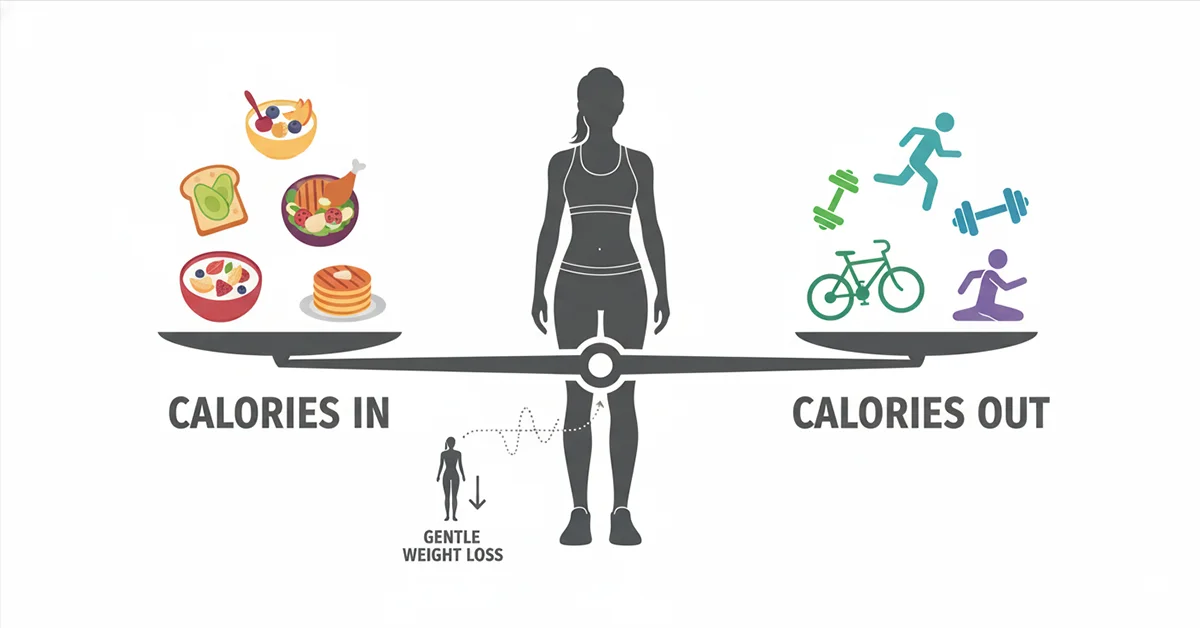
At its core, a calorie deficit is a simple concept: you consume fewer calories than your body uses for energy. Think of calories as units of energy your body gets from food and drinks. Your body needs a certain amount of energy just to exist, to breathe, pump blood, digest food, and keep your organs functioning. This is your Basal Metabolic Rate (BMR).
Beyond BMR, you burn additional calories through daily activities, exercise, and even fidgeting. The total number of calories your body uses in a day is called your Total Daily Energy Expenditure (TDEE). When the calories you eat (calories in) are less than the calories your body uses (calories out), you create a deficit. To make up the difference, your body starts to tap into its stored energy, primarily from fat reserves, which leads to weight loss.
It’s important to clarify that a calorie deficit is not the same as starvation. A safe deficit aims for a moderate reduction that encourages your body to use stored energy while still providing sufficient nutrients for essential bodily functions. Starvation, on the other hand, involves extreme and prolonged deprivation that can harm your metabolism and overall health. Common myths women often believe include:
- “I have to eat as little as possible to lose weight.” (False, this can backfire)
- “All calorie deficits are equally effective.” (False, size and duration matter)
- “If I’m not constantly hungry, my deficit isn’t working.” (False, gentle deficits should still feel sustainable)
Why Women Need a Different, Safer Approach
Women’s bodies are remarkably complex, and our physiology means we often respond differently to calorie restriction than men. This isn’t about weakness; it’s about unique hormonal landscapes and evolutionary adaptations.
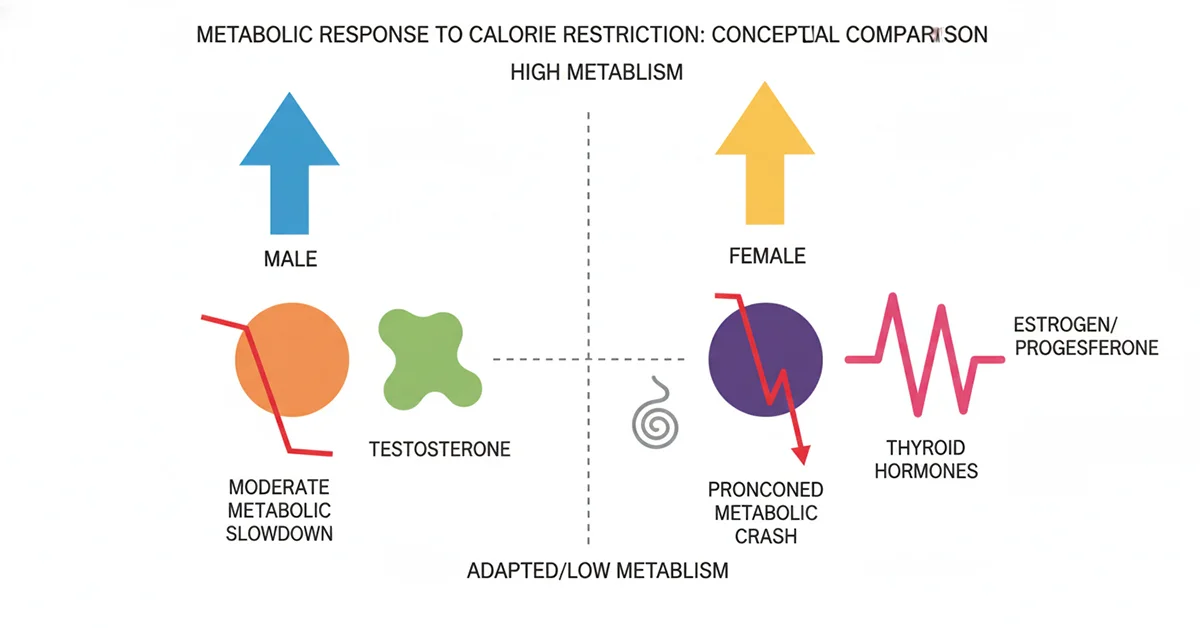
Our bodies are highly sensitive to energy availability, largely due to the intricate dance of female hormones, particularly estrogen and progesterone. When calories become too low, or the deficit is too aggressive, our bodies can perceive this as a threat or a period of scarcity.
This can trigger a stress response, leading to an increase in cortisol, our primary stress hormone. Elevated cortisol levels, especially chronically, can actually hinder weight loss, promote fat storage (particularly around the midsection), and disrupt other essential bodily functions, including sleep and mood.
Furthermore, women’s bodies are incredibly efficient at adapting to lower energy intake. This is an an evolutionary survival mechanism; in times of famine, our bodies become very good at conserving energy to protect reproductive function.
This means that an aggressive deficit that might work for a man in the short term can quickly cause a woman’s metabolism to slow down, making further weight loss difficult and potentially leading to plateaus or even weight regain once normal eating resumes.
Aggressive deficits can also impact our menstrual cycle, thyroid function, and bone density, particularly over time. The National Institutes of Health (NIH) emphasizes that energy deficiency can lead to significant hormonal disruptions in women, affecting everything from reproductive health to metabolic function.
The Cleveland Clinic also highlights how extreme dieting can negatively impact female hormones and overall well-being. This is why a gentle, sustainable, and respectful approach to a calorie deficit is paramount for women’s long-term health, rather than just focusing on the number on the scale.
What Is Considered a Safe Calorie Deficit for Women?
General Safe Range (Science-Based)
For most women, a safe calorie deficit typically falls within a modest percentage reduction from their maintenance calories, rather than a fixed number. Aiming for a deficit of **15-25% below your Total Daily Energy Expenditure (TDEE)** is generally considered a safe and sustainable starting point.
This range allows for steady weight loss without triggering the severe metabolic and hormonal adaptations that can arise from more aggressive restriction.
- **15% deficit:** This is a very gentle starting point, often ideal for those who prefer a slower pace, are new to calorie awareness, or have less weight to lose.
- **20% deficit:** A common and effective range for many women, typically leading to a sustainable rate of weight loss.
- **25% deficit:** This can be effective for some but should be approached with caution and careful monitoring, especially for smaller women or those with lower activity levels.
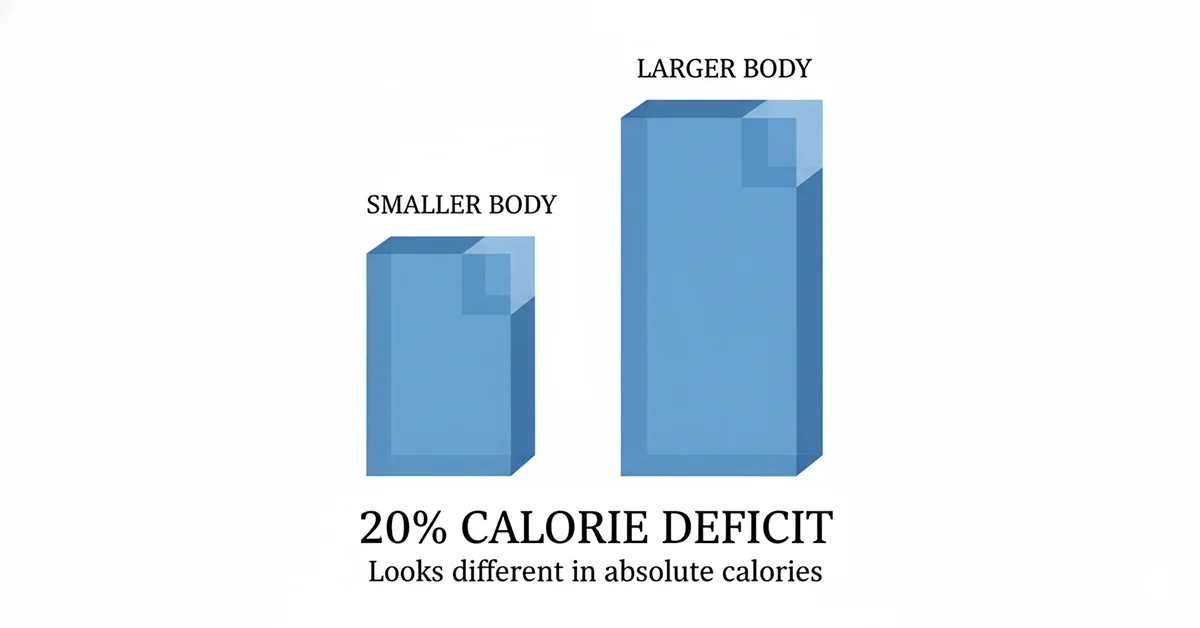
Using percentages rather than arbitrary fixed numbers is safer because it accounts for individual variations in body size and metabolic rate.
For example, a 20% deficit for a woman whose TDEE is 2000 calories would be 400 calories (eating 1600 calories), whereas for a woman whose TDEE is 2500 calories, it would be 500 calories (eating 2000 calories).
Both are the same percentage reduction but result in different absolute calorie targets, tailored to their individual needs.
Why the “500 Calorie Rule” Isn’t Always Safe for Women
You may have heard the common guideline to create a 500-calorie deficit to lose about one pound per week. This rule originated from a general calculation that 3,500 calories equals roughly one pound of fat, meaning a 500-calorie daily deficit over seven days would result in a one-pound loss. While mathematically sound in theory, this “rule” isn’t universally safe or appropriate for all women.
The main reason it fails for many women, particularly smaller or shorter women, is that their baseline calorie needs (TDEE) are often lower. For a woman with a TDEE of 2000 calories, a 500-calorie deficit means eating 1500 calories, which is generally reasonable.
However, for a petite woman with a TDEE of only 1600 calories, a 500-calorie deficit would mean eating just 1100 calories per day. This is often too low, potentially falling below her Basal Metabolic Rate (BMR) and putting her at risk for nutrient deficiencies, metabolic slowdown, and hormonal disruption.
Eating too few calories consistently can lead to fatigue, irritability, difficulty concentrating, and a cascade of negative effects on your body. It can also make it incredibly difficult to maintain the deficit long-term, often leading to rebound weight gain once the diet becomes unsustainable. This highlights why a percentage-based approach, which scales with your individual needs, is a safer and more effective strategy for women.
Safe Deficit Depends on Your Body (Not a Universal Number)
Height, Weight, and Age
These are fundamental factors that influence your Basal Metabolic Rate (BMR), the calories your body burns at rest. Generally:
- **Taller, heavier women** typically have higher BMRs because they have more tissue to maintain, meaning they can safely operate with a larger absolute calorie intake and potentially a larger absolute deficit.
- **Shorter, lighter women** usually have lower BMRs. A smaller body simply requires fewer calories to function, so their safe deficit will involve a lower absolute calorie intake.
- **Age** also plays a significant role. As women age, particularly after 30, our metabolism naturally tends to slow down. This means our BMR can decrease, and we generally require slightly fewer calories than we did in our younger years to maintain the same weight.
Activity Level
Your activity level directly contributes to your Total Daily Energy Expenditure (TDEE). The more active you are, the more calories you burn each day, and therefore, the higher your maintenance calories will be. This means:
- **Highly active women** (e.g., those who exercise intensely several times a week intensely, or have physically demanding jobs) will have a higher TDEE and can safely maintain a higher calorie intake, even within a deficit.
- **Sedentary women** (e.g., those with desk jobs and minimal intentional exercise) will have a lower TDEE. Their safe calorie deficit will naturally involve a lower absolute calorie intake compared to an active woman.
It’s important to accurately assess your activity level. Overestimating your activity can lead to setting too high a calorie target, hindering weight loss, while underestimating it can lead to an overly aggressive deficit.
Current Health Status
Your overall health is paramount and directly impacts how your body responds to a calorie deficit. For example:
- **Hormonal conditions** like Polycystic Ovary Syndrome (PCOS) or thyroid disorders can significantly affect metabolism and how your body processes calories. Women with these conditions may need a highly individualized approach, often guided by a healthcare professional or registered dietitian.
- **Perimenopause and Menopause:** During these phases, hormonal shifts can impact metabolism, body composition, and how easily weight is lost or gained. A gentle, sustainable deficit is often more appropriate than an aggressive one.
- **Stress levels:** Chronic stress can elevate cortisol, which can counteract weight loss efforts and make your body more resistant to a calorie deficit.
Considering these factors, tools like a TDEE Calculator for Women and a Calorie Deficit Calculator for Women can be incredibly helpful. They provide educated estimates based on your individual data, serving as a starting point for understanding your unique needs. Remember, these are tools for guidance, not rigid prescriptions. Always listen to your body and adjust as needed.
When a Calorie Deficit Is NOT Safe for Women
While a calorie deficit can be a valuable tool for weight management, there are critical circumstances when it is NOT safe or advisable for women. Prioritizing your health and well-being above all else is essential.
- **Underweight Women:** If you are already underweight (typically defined as a Body Mass Index or BMI below 18.5), entering a calorie deficit can be dangerous. It can exacerbate health risks associated with being underweight, such as nutrient deficiencies, weakened immune function, bone loss, and hormonal imbalances. In this situation, the focus should be on healthy weight gain and nutritional rehabilitation, always under medical supervision.
- **History of Disordered Eating:** For women with a current or past history of disordered eating (such as anorexia nervosa, bulimia nervosa, or binge eating disorder), calorie counting and intentional restriction can be highly triggering and lead to a relapse. In these cases, the focus should be on healing your relationship with food, developing intuitive eating patterns, and seeking professional support from therapists, dietitians specializing in eating disorders, and medical doctors. Their guidance is crucial for long-term recovery and health.
- **Missed Periods (Amenorrhea) or Irregular Cycles:** If you are experiencing missed periods or significantly irregular menstrual cycles (not due to pregnancy, menopause, or birth control), an overly aggressive calorie deficit or chronic under-eating could be a contributing factor. This is a clear sign of hormonal disruption, often linked to insufficient energy intake (low energy availability). Continuing a deficit in this state can worsen the issue and impact fertility, bone density, and overall endocrine health.
- **Chronic Fatigue, Persistent Low Energy, or Dizziness:** While some initial adjustments are normal, ongoing and severe fatigue, pervasive low energy, or frequent dizziness are warning signs that your body isn’t getting enough fuel. These symptoms indicate that your body is struggling to meet its basic energy demands, even for essential functions, and a calorie deficit is likely too aggressive or simply not appropriate at this time.
- **Specific Medical Conditions:** Certain medical conditions, such as active cancer treatment, severe chronic diseases, or conditions requiring specific nutrient intake, may make a calorie deficit unsafe. Always consult with your healthcare provider to understand if a calorie deficit is appropriate and safe given your unique medical history.
In any of these situations, the priority shifts from weight loss to health preservation and recovery. Listen to your body’s signals, and if you experience any of these red flags, pause any deficit attempts and seek guidance from a qualified healthcare professional.
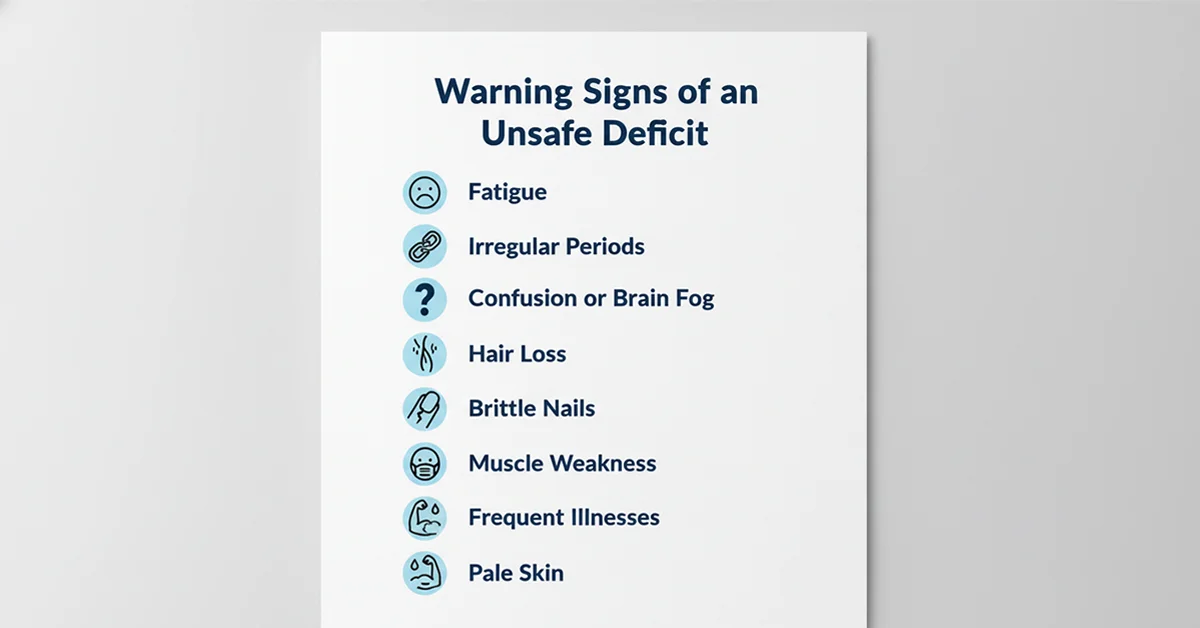
Signs Your Calorie Deficit Is Too Aggressive
Knowing the difference between a gentle, sustainable deficit and an overly aggressive one is crucial for women’s health. Your body is constantly sending you signals; learning to listen to them is more important than rigidly adhering to a number. If you’re experiencing any of these signs, your calorie deficit might be too aggressive:
Physical Signs
- **Persistent and Extreme Fatigue:** Feeling constantly drained, even after adequate sleep. This is beyond typical daily tiredness.
- **Chronic Hunger and Cravings:** While some hunger is normal in a deficit, insatiable hunger or intense cravings (especially for high-calorie foods) are signs your body is signaling severe energy deprivation.
- **Hair Loss or Brittle Nails:** Nutrient deficiencies caused by inadequate calorie intake can manifest in noticeable changes to hair and nail health.
- **Dizziness or Lightheadedness:** Especially when standing up quickly, this indicates your body isn’t getting enough fuel to maintain stable blood sugar and blood pressure.
- **Cold Intolerance:** Feeling unusually cold all the time, even in mild temperatures, can be a sign your metabolism is slowing down to conserve energy.
- **Compromised Immune Function:** Getting sick more frequently or taking longer to recover from illness.
- **Constipation:** Insufficient fiber and overall food intake can slow down digestion.
Hormonal Signs
- **Irregular or Missed Periods (Amenorrhea):** This is a critical red flag for women, indicating significant hormonal disruption due to low energy availability.
- **Decreased Libido:** A low sex drive can be a sign of hormonal imbalance stemming from inadequate caloric intake.
- **Sleep Disturbances:** Difficulty falling asleep, staying asleep, or waking up feeling unrefreshed, often linked to stress hormones (cortisol) that can be elevated during aggressive dieting.
- **Mood Swings or Increased Irritability:** Hormonal imbalances can profoundly affect mood and emotional regulation.
Mental & Emotional Signs
- **Obsession with Food:** Constantly thinking about food, meal planning, or feeling anxious around eating occasions.
- **Increased Stress and Anxiety:** Feeling generally on edge, irritable, or overwhelmed, even by minor stressors.
- **Difficulty Concentrating or “Brain Fog”:** Your brain needs consistent energy, and a severe deficit can impair cognitive function.
- **Social Withdrawal:** Avoiding social situations involving food due to anxiety about sticking to your diet.
- **Feelings of Deprivation and Guilt:** Constantly feeling deprived, followed by guilt if you “give in” to cravings.
If you recognize several of these signs, it’s a strong indication that your current calorie deficit is too aggressive for your body. It’s time to re-evaluate, potentially increase your calorie intake slightly, and consult with a healthcare professional or registered dietitian. Listening to your body’s wisdom is always more reliable than a strict number on a diet plan.
Safe vs Unsafe Calorie Deficit (Comparison Table)
Understanding the distinction between a safe and unsafe calorie deficit is crucial for women’s long-term health and sustainable weight management. This table highlights key differences:
| Increased anxiety, irritability, mood swings, depression, food obsession. | Safe Calorie Deficit | Unsafe (Aggressive/Extreme) Calorie Deficit |
|---|---|---|
| **Energy Levels** | Generally stable, mild fatigue during adjustment period, quickly improves. | Persistent, severe fatigue; exhaustion; “crashing” energy. |
| **Hormonal Health** | Supports hormonal balance; menstrual cycle remains regular. | Disrupts hormones; irregular or missed periods; low libido. |
| **Sustainability** | Feels manageable long-term; allows for social eating; flexible. | Feels like deprivation; difficult to maintain for more than a few days/weeks; restrictive. |
| **Weight Regain Risk** | Lower risk; teaches sustainable habits; slow, steady loss. | High risk of rapid weight regain (rebound); yo-yo dieting cycle. |
| **Hunger & Cravings** | Manageable hunger; occasional cravings; generally satisfied. | Chronic, intense hunger; insatiable cravings; preoccupation with food. |
| **Nutrient Intake** | Allows for diverse, nutrient-dense foods; meets micronutrient needs. | High risk of nutrient deficiencies; restricted food groups. |
| **Metabolism** | Maintains metabolic rate; gradual adaptation. | Significant metabolic slowdown; body conserves energy aggressively. |
| **Mental & Emotional Well-being** | Improved self-esteem; feeling in control; positive outlook. | Increased anxiety, irritability, mood swings, depression; food obsession. |
| **Sleep Quality** | Generally unaffected or improved. | Increased anxiety, irritability, mood swings, depression, and food obsession. |
| **Physical Appearance (e.g., Hair/Nails)** | Generally healthy. | Hair loss, brittle nails, dull skin. |
How to Find Your Personal Safe Calorie Deficit
Finding your personal safe calorie deficit is a process of understanding your body, using evidence-based tools, and prioritizing sustainability. It’s not about following a rigid, universal rule, but rather about creating an approach that respects your individual physiology.
1. Understand Your Maintenance Calories (TDEE)
The first step is to get an estimate of how many calories your body needs just to maintain its current weight. This is your Total Daily Energy Expenditure (TDEE), which includes your Basal Metabolic Rate (BMR) plus the calories you burn through all daily activities and exercise. While no calculation is 100% precise, it provides an excellent starting point.
- **Use a reliable calculator:** Our TDEE Calculator for Women can help you estimate this based on your age, height, weight, and activity level. Be honest about your activity level – overestimating can lead to an ineffective deficit.
- **Track (optionally):** For a few days, you could track your food intake and weight without trying to lose or gain. If your weight stays stable, your average daily calorie intake during that period is a good approximation of your maintenance calories.
2. Use a Gentle, Percentage-Based Range
Once you have an estimate of your TDEE, apply a gentle percentage reduction to determine your deficit target. As discussed earlier, a **15-25% reduction from your TDEE** is generally considered safe and effective for women.
- **Calculate your target:** Multiply your TDEE by (1 – percentage deficit). For example, if your TDEE is 2000 calories and you aim for a 20% deficit: 2000 * (1 – 0.20) = 2000 * 0.80 = 1600 calories per day.
- **Start conservatively:** If you’re unsure, begin with a smaller deficit (e.g., 15-20%) and observe how your body responds. You can always adjust slightly if needed.
- **Utilize tools:** Our Calorie Deficit Calculator for Women can automate this calculation for you, providing a recommended range based on your inputs.
3. Avoid Hard Minimums and Prioritize Nutrient Density
While calorie targets are helpful, avoid rigidly adhering to absolute minimums, especially those below 1200 calories without medical supervision. For most women, eating below this level makes it challenging to meet essential nutrient needs, even with the most careful food choices.
- **Focus on whole foods:** Prioritize nutrient-dense foods like lean proteins, plenty of vegetables, fruits, whole grains, and healthy fats. These foods provide essential vitamins, minerals, and fiber, helping you feel full and satisfied even with fewer calories.
- **Listen to your body:** Pay attention to hunger cues, energy levels, mood, and sleep. If you’re consistently feeling deprived, exhausted, or irritable, your deficit might be too aggressive, even if the numbers seem “correct.” Your body’s signals are your most important guide.
- **Be patient:** Sustainable weight loss is a marathon, not a sprint. Aim for a gradual loss of 0.5 to 1.5 pounds per week. This slower pace is more likely to preserve muscle mass, support metabolic health, and be maintained long-term.
Remember, this is an iterative process. Your needs may change over time due to activity levels, age, or metabolic adaptations. Regularly reassess and adjust your approach, always prioritizing your health and well-being.
Why This Website Does NOT Recommend Extreme Dieting
At [Your Website Name], our editorial philosophy is firmly rooted in a health-first approach, especially when it comes to women’s well-being. We understand the immense pressure women face from societal norms and diet culture to pursue rapid, often extreme, weight loss. However, our commitment to you, our reader, is to provide safe, sustainable, and evidence-based guidance that genuinely supports your long-term health, not just temporary results.
We do not recommend or endorse extreme dieting practices for several critical reasons:
- **Harm to Hormonal Health:** As detailed in this article, aggressive calorie restriction can severely disrupt delicate female hormonal balance, leading to issues like irregular periods, decreased fertility, thyroid dysfunction, and elevated stress hormones (cortisol). Our priority is to protect and nurture your endocrine system.
- **Metabolic Slowdown and Rebound:** Extreme diets often trigger a protective response in the body, slowing metabolism and increasing the likelihood of rapid weight regain once the diet is discontinued. This “yo-yo” dieting cycle is detrimental to both physical and mental health.
- **Nutrient Deficiencies:** Very low-calorie diets make it incredibly challenging to consume adequate vitamins, minerals, and macronutrients essential for bodily functions, energy, mood, and long-term health.
- **Mental and Emotional Toll:** Extreme dieting is often accompanied by obsessive thoughts about food, guilt, anxiety, mood swings, and can contribute to or trigger disordered eating patterns. We believe in fostering a positive, intuitive relationship with food and your body.
- **Lack of Sustainability:** Any diet that is too restrictive or unpleasant is simply not sustainable. Our focus is on helping you build healthy habits that you can maintain for life, leading to lasting results and genuine well-being.
- **Scientific Integrity (EEAT):** As an authoritative women’s health resource, we adhere strictly to Google’s EEAT (Experience, Expertise, Authoritativeness, Trustworthiness) guidelines. This means all our content is grounded in scientific evidence, vetted by experts, and designed to provide trustworthy, safe advice that truly benefits our audience. We take our responsibility to your health very seriously.
Our goal is to empower you with knowledge and tools to make informed, gentle decisions for your body, respecting its unique needs and inherent wisdom. We believe true health and confidence come from nurturing your body, not punishing it with deprivation. Trust us to guide you towards a path of sustainable wellness, where safety and self-care always come first.
Frequently Asked Questions (FAQ)
Is 1,200 calories safe for women?
For most adult women, a consistent intake of 1,200 calories per day is often too low to meet basic nutritional needs and support metabolic health, especially without medical supervision. While it might be appropriate for very short, sedentary women, or under specific clinical guidance, it generally risks nutrient deficiencies, metabolic slowdown, and hormonal disruption. It’s usually safer to aim for a higher, more sustainable calorie target derived from a percentage-based deficit of your TDEE.
Can a calorie deficit affect hormones?
Yes, absolutely. An overly aggressive or prolonged calorie deficit can significantly affect female hormones. It can disrupt the delicate balance of estrogen and progesterone, leading to irregular or missed periods. It can also elevate cortisol (stress hormone) and impact thyroid function, both of which play crucial roles in metabolism, mood, and overall well-being. For women, prioritizing hormonal health is paramount.
How fast should women lose weight safely?
For most women, a safe and sustainable rate of weight loss is **0.5 to 1.5 pounds per week**. This gradual pace allows your body to adapt without severe metabolic or hormonal stress, helps preserve muscle mass, and promotes the development of sustainable healthy habits. Faster weight loss often results from overly aggressive methods that are difficult to maintain and increase the risk of rebound weight gain.
Should petite women eat fewer calories?
Yes, petite (shorter and lighter) women generally have a lower Basal Metabolic Rate (BMR) and Total Daily Energy Expenditure (TDEE) compared to taller or heavier women. This means their maintenance calorie needs are lower, and consequently, their safe calorie deficit will involve a lower absolute calorie intake. The “500 calorie rule” can be particularly problematic for petite women, as it might push their intake well below healthy minimums.
Can I be healthy without a calorie deficit?
Yes, you can absolutely be healthy without intentionally creating a calorie deficit. A calorie deficit is primarily a tool for weight loss. If you are already at a healthy weight, the focus should be on maintaining that weight through balanced nutrition and regular physical activity, which means consuming calories roughly equal to your TDEE. Many women also prioritize intuitive eating and body neutrality, focusing on overall wellness rather than calorie counting.
Final Takeaway: Safety Is the Strategy
Navigating the world of calories, weight, and health can feel like a minefield for women, often leaving us feeling inadequate or confused. But remember, your journey is unique, and your body deserves a gentle, informed approach. When it comes to a calorie deficit, safety isn’t just a consideration; it’s the fundamental strategy for true, lasting health and well-being.
Instead of chasing extreme results or adhering to rigid, universal rules, empower yourself with the knowledge to understand your body’s individual needs. Listen to its signals, prioritize nutrient-dense foods, and choose a sustainable pace that supports your hormonal health, energy levels, and mental peace. Your body is not a problem to be solved, but a complex, beautiful system to be nurtured.
Trust in the power of gradual progress and gentle consistency. By putting safety first, you’re not just working towards a healthier weight; you’re building a foundation for a healthier, more vibrant life. Explore our TDEE Calculator for Women and Calorie Deficit Calculator for Women as educational tools to guide your informed decisions, and embark on a path that truly honors your well-being.
DISCLAIMERS (MANDATORY)
This article is not a replacement for medical advice. Always consult a qualified healthcare professional for personal health decisions, especially before making significant changes to your diet or exercise routine, or if you have any underlying health conditions or concerns.